🎖️ The Thanksgiving of the Berlin Airlift
1948 • Hope from the Sky
How candy bombers turned enemies into friends
A true story of generosity and courage—when American pilots delivered not just food, but hope and sweetness to children in a starving city.
🏚️ A City in Ruins
In 1948, just three years after World War II, much of Europe still lay in rubble. The city of Berlin, once grand with theaters and cathedrals, was divided between the nations that had defeated Germany: the United States, Britain, France, and the Soviet Union.
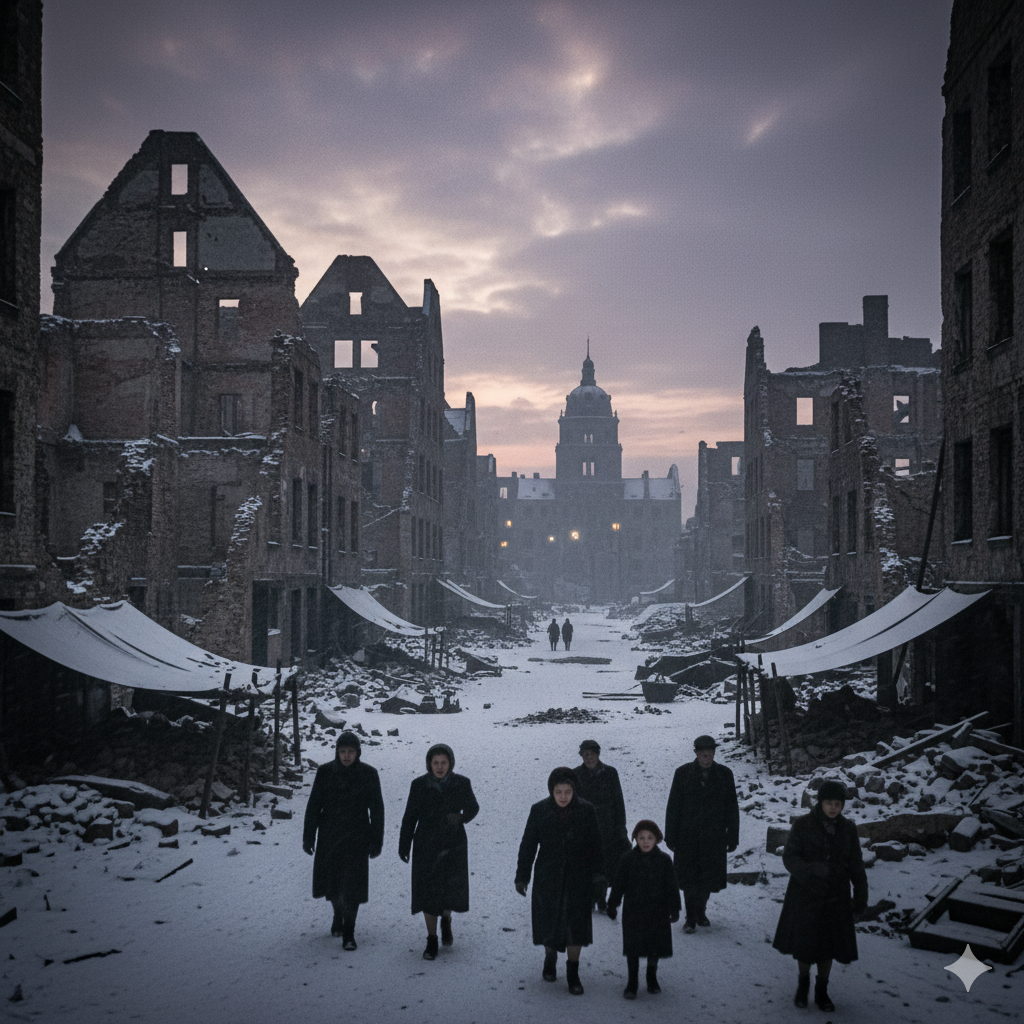
Broken buildings and snowy streets in 1948
When the Soviets tried to take full control, they closed every road and railway into West Berlin, cutting off more than two million people from food and fuel. This action was called a blockade.
The people of Berlin faced hunger and a freezing winter. Their only hope came from the sky.
✈️ Operation Vittles
Instead of surrendering the city, the Allies launched a bold plan. Pilots would fly planes—hundreds every day—to deliver supplies directly into West Berlin.
They called it the Berlin Airlift. Cargo planes thundered in every few minutes, landing on short runways made of crushed brick. Each plane carried sacks of flour, powdered milk, coal, and sometimes fruit from faraway farms.
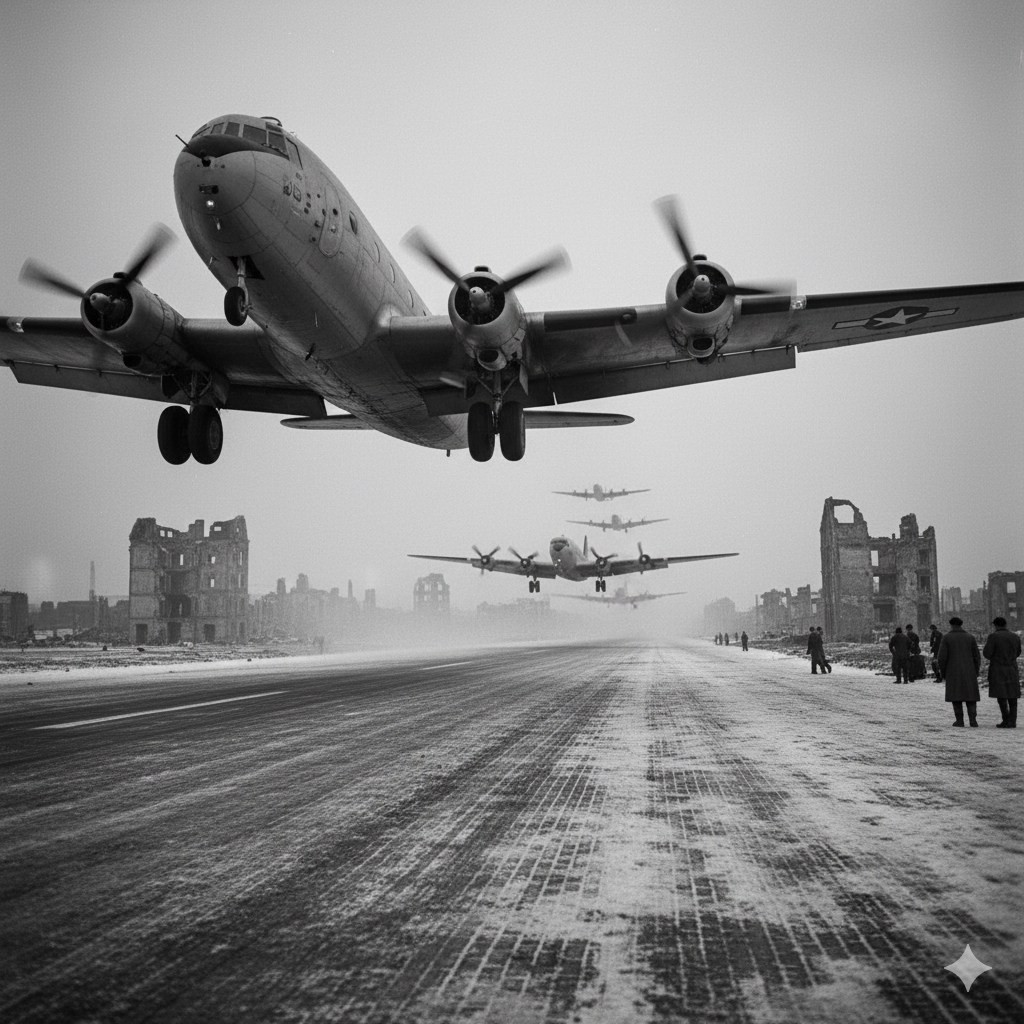
C-54 cargo planes landing one after another
Children lined the fences, waving at the noisy silver planes that swooped low like giant birds bringing life instead of war.
🍬 The Candy Bomber
One of those pilots was Lieutenant Gail Halvorsen from Utah. One day, while resting near the runway, he met a group of German children who stood quietly behind the fence, sharing smiles but never begging.
He pulled two sticks of gum from his pocket and tore them into strips so everyone could have a taste. The children passed the tiny pieces from hand to hand, taking turns smelling the wrapper.
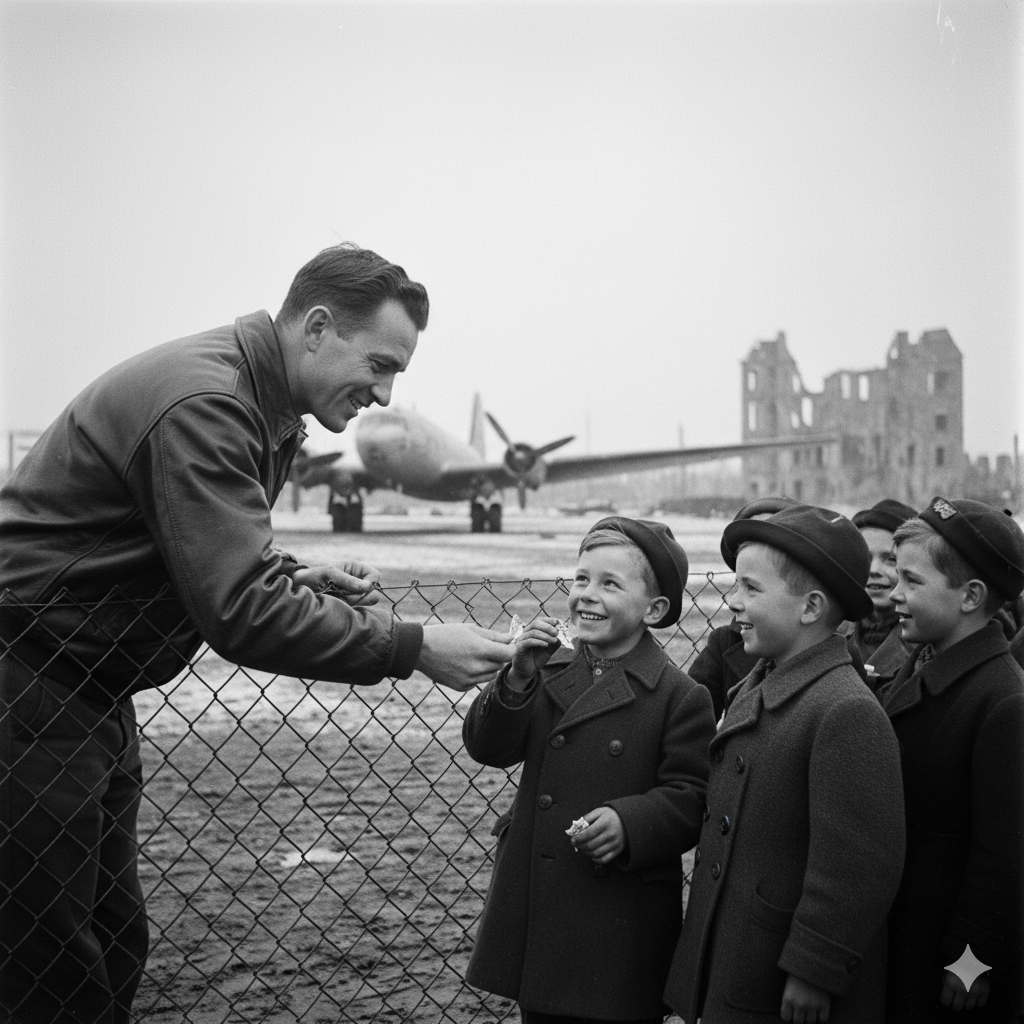
The pilot handing gum to smiling kids at the fence
Halvorsen's heart swelled. He promised, "Tomorrow I'll drop candy from my plane. Watch for the wings that wiggle!"
He kept his word. As his plane approached the next day, he wiggled the wings and tossed out handkerchief parachutes filled with chocolates and chewing gum.
The sky rained sweetness. Word spread quickly—Berliners called him "Onkel Wackelflügel," Uncle Wiggly Wings.
🦃 A Thanksgiving from the Sky
As November arrived, American crews decided to share their own holiday: Thanksgiving. Inside the cargo planes, alongside flour and coal, they packed turkeys, cranberries, canned pumpkin, and candy—a taste of home for soldiers and a gift of gratitude for Berlin's people.
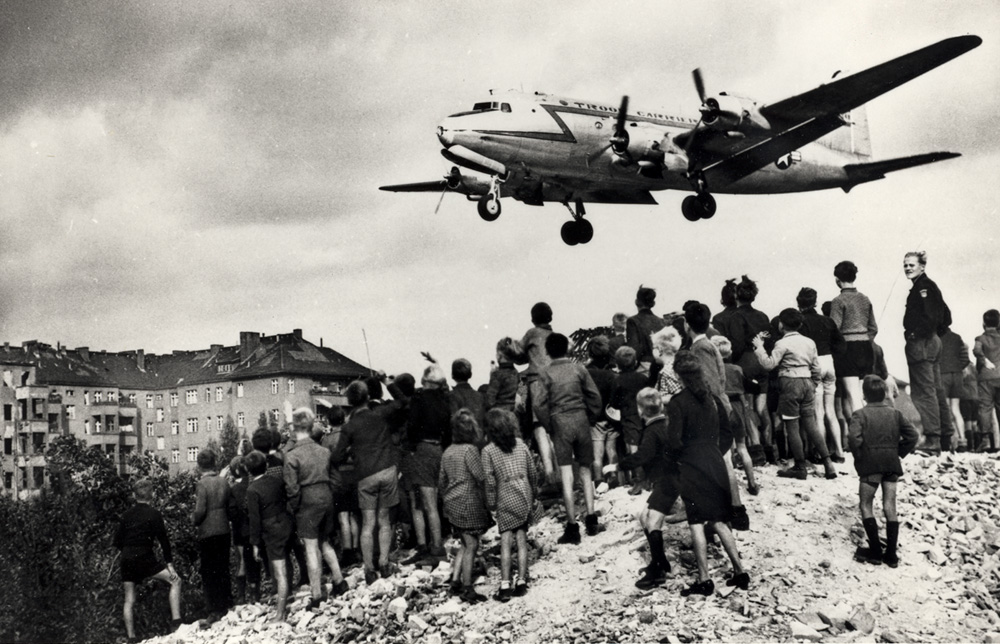
Dozens of small white parachutes drifting from a plane
At Tempelhof Airport, German children watched as the first "Thanksgiving flights" arrived. One pilot joked, "This is the biggest turkey delivery in history."
The Berliners cooked what they could and invited their neighbors—sometimes American soldiers—to join them. For a few hours, laughter replaced sirens. The smell of roasting meat mixed with the scent of smoke and hope.
🌍 Gratitude Beyond Borders
By the time the blockade ended in May 1949, the airlift had delivered more than 2.3 million tons of supplies in over 277,000 flights. No city in history had ever been saved this way.
Lieutenant Halvorsen continued dropping candy until the final mission, later saying, "It wasn't the chocolate that mattered. It was showing the kids that someone cared."
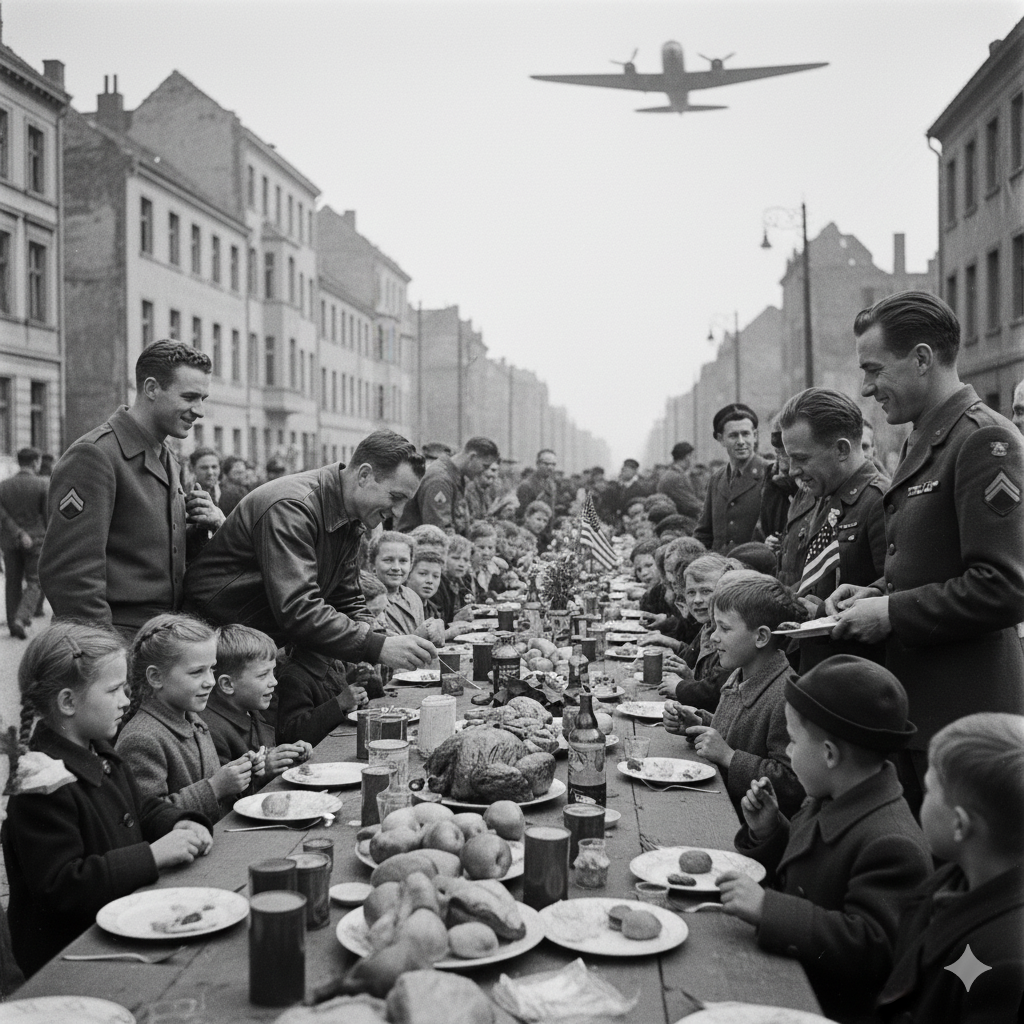
Soldiers and families sharing food amid rebuilt streets
In the years that followed, Berlin rebuilt. The people never forgot the kindness of the pilots who turned the sky into a bridge of friendship. Every Thanksgiving since, Berlin schools have told the story of "The Candy Bombers."
It reminds the world that gratitude doesn't stop at a border—it soars above it.
💬 Discussion Questions
1. Why was the Berlin Airlift needed after World War II?
2. How did Gail Halvorsen's simple act of sharing candy become a symbol of hope?
3. What makes giving meaningful even when you have little to spare?
4. How does this story connect to Thanksgiving's message of gratitude and unity?
5. What modern examples show kindness between nations or communities today?
🔬 Mini Activity: Paper-Parachute Candy Drop
Goal: Re-create the Candy Bomber's gesture while learning basic aerodynamics.
What You Need:
- Tissue or thin paper squares
- String
- Tape
- A small candy or paper "cargo"
- A step stool or safe high place
Steps:
- Cut a paper square about 8 inches wide.
- Tie or tape four short strings to its corners.
- Gather the strings and tape them to the candy.
- Drop from shoulder height—watch the parachute glide down!
Lesson: The parachute slows the fall, showing how simple design and compassion can turn something ordinary into an act of care.
Part of the November History Reading Collection
📅 1948 • Berlin, Germany