A Feast for Friends
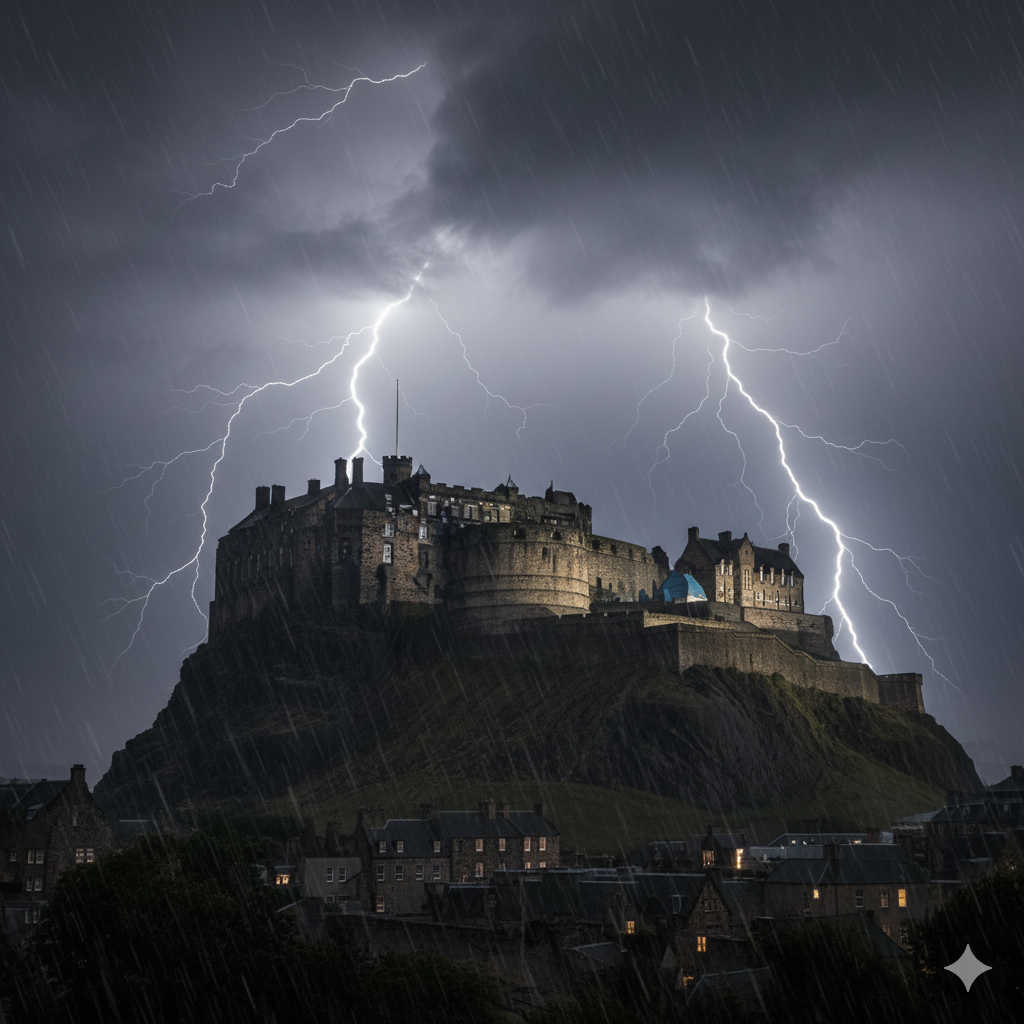
Edinburgh Castle rising above Scotland on a stormy night in 1440
Long ago in 1440, the great stone towers of Edinburgh Castle rose above a stormy Scottish sky. Inside those cold walls lived Scotland's king, James II. He was only 10 years old, and he felt very alone.
Young King James missed his parents dearly. His best friends were two teenage brothers from the powerful Douglas family — William (age 16) and David (age 8). The three boys spent their days riding horses, playing games, and learning about how to rule a kingdom together.
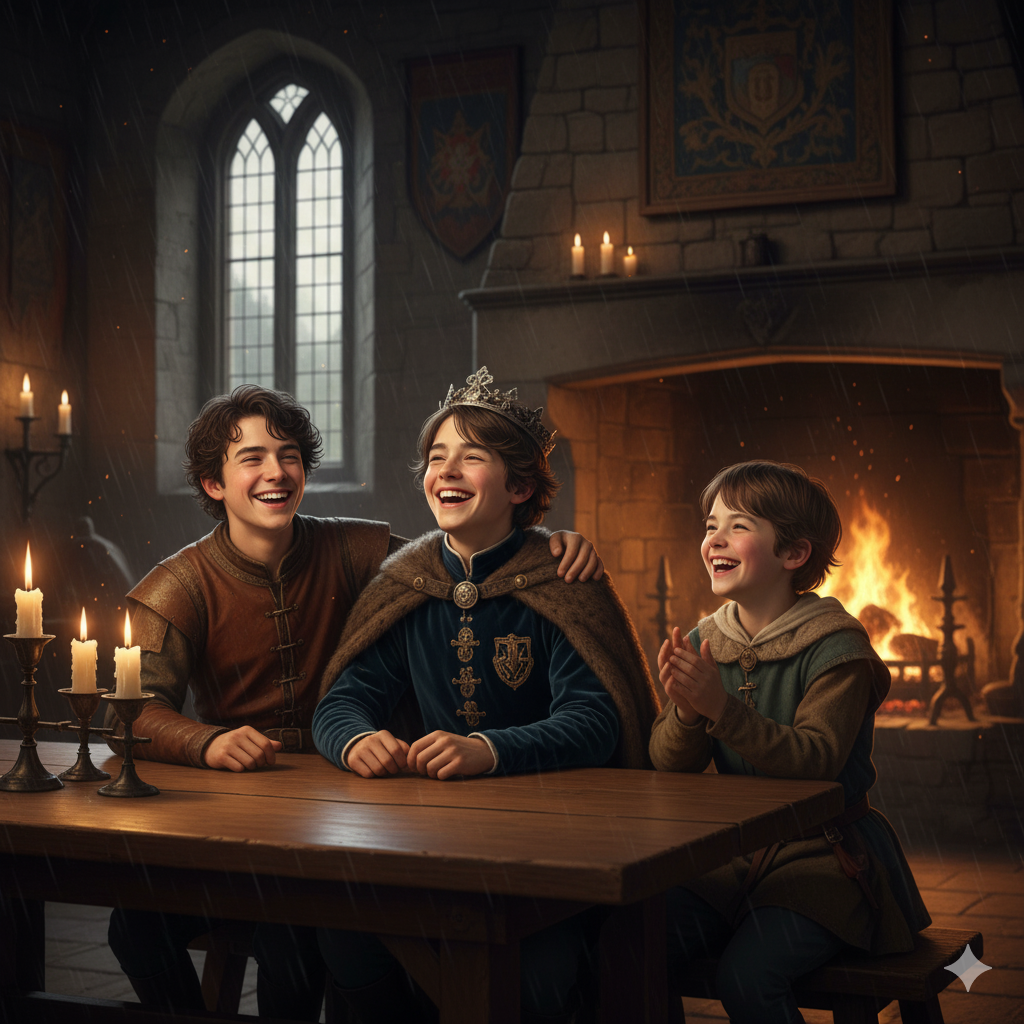
The young king and his Douglas friends, unaware of the dark plot forming around them
One day, the king's guardiansPeople responsible for protecting and guiding a young person — powerful noblesPeople of high rank in society, with wealth and land who helped run Scotland while James was young — invited the Douglas brothers to a grand feastA large celebration meal with lots of food and guests in the castle's great hall.
The invitation promised music, laughter, and the finest food in all of Scotland. The Douglas brothers dressed in their finest silk tunics, excited for a night of celebration with their friend the king.
They never imagined what was waiting for them beneath the cheerful music and flickering torchlight.
The Unseen Plot
While the boys planned for fun, darker plans were being made in the castle's shadowy corners. Some of the king's advisorsPeople who give guidance or warnings to a leader had grown afraid of the Douglas family.
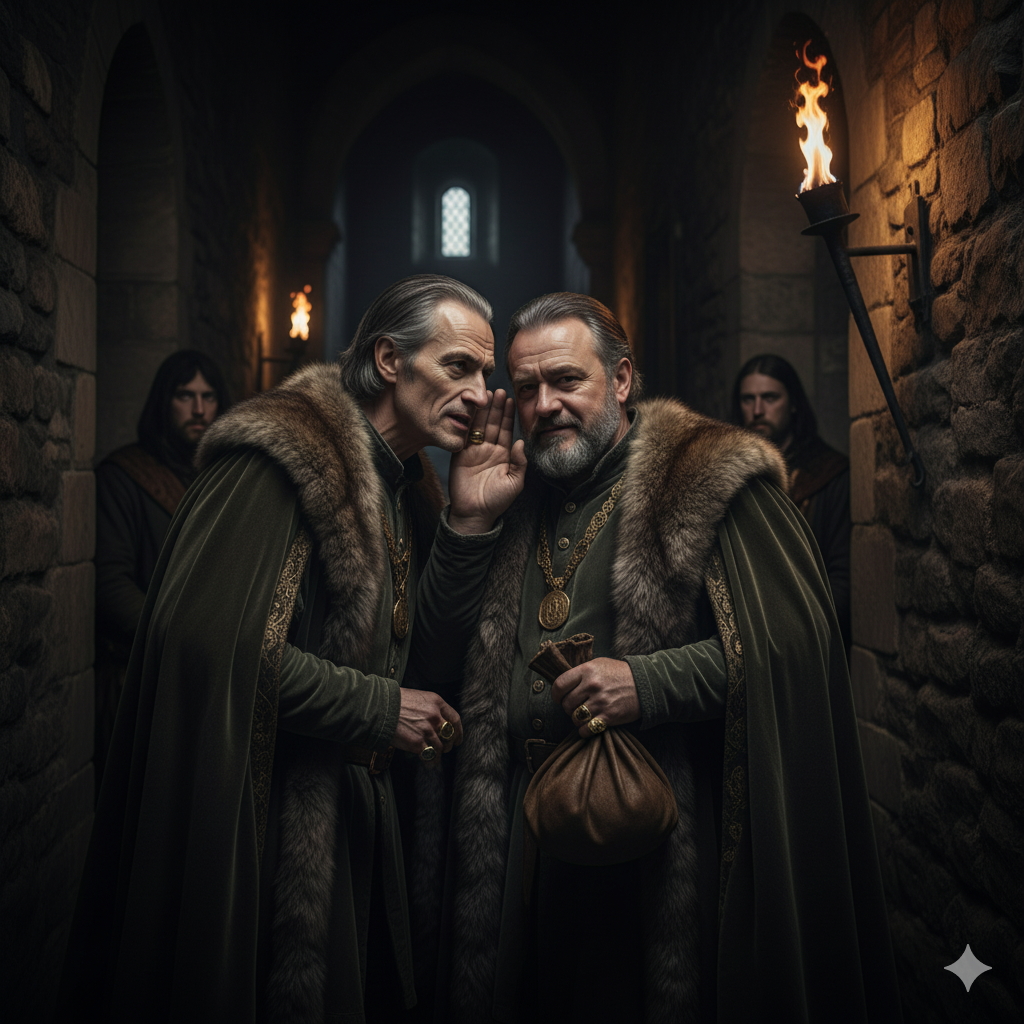
The king's advisors plotting in the shadows, driven by fear and hunger for power
"The Douglases control too much land,"
"They have the largest army in Scotland,"
"If they control the boy king, they'll control all of Scotland."
Fear can make people do terrible things. The advisors decided the Douglas brothers were too dangerous to live — even though they were just children and friends of the king. They made a plan as cold and hard as Scottish steel.
They would invite the brothers to a feast. And at that feast, they would send a signal — a secret symbolAn object or image that represents an idea or message that would seal the boys' fate.
The Feast Turns to Horror
The great hall blazed with light as music and laughter filled the air
That evening, Edinburgh Castle's great hall blazed with light. Hundreds of candles flickered on the stone walls. Servants carried huge platters of roasted boar, fresh fish, warm bread, and berries swimming in sweet wine sauce.
Harps and flutes filled the air with music. Young King James sat at the head of the long table, smiling and laughing with William and David Douglas. For a few hours, it felt like everything was right in the world.
Then suddenly, the music stopped.
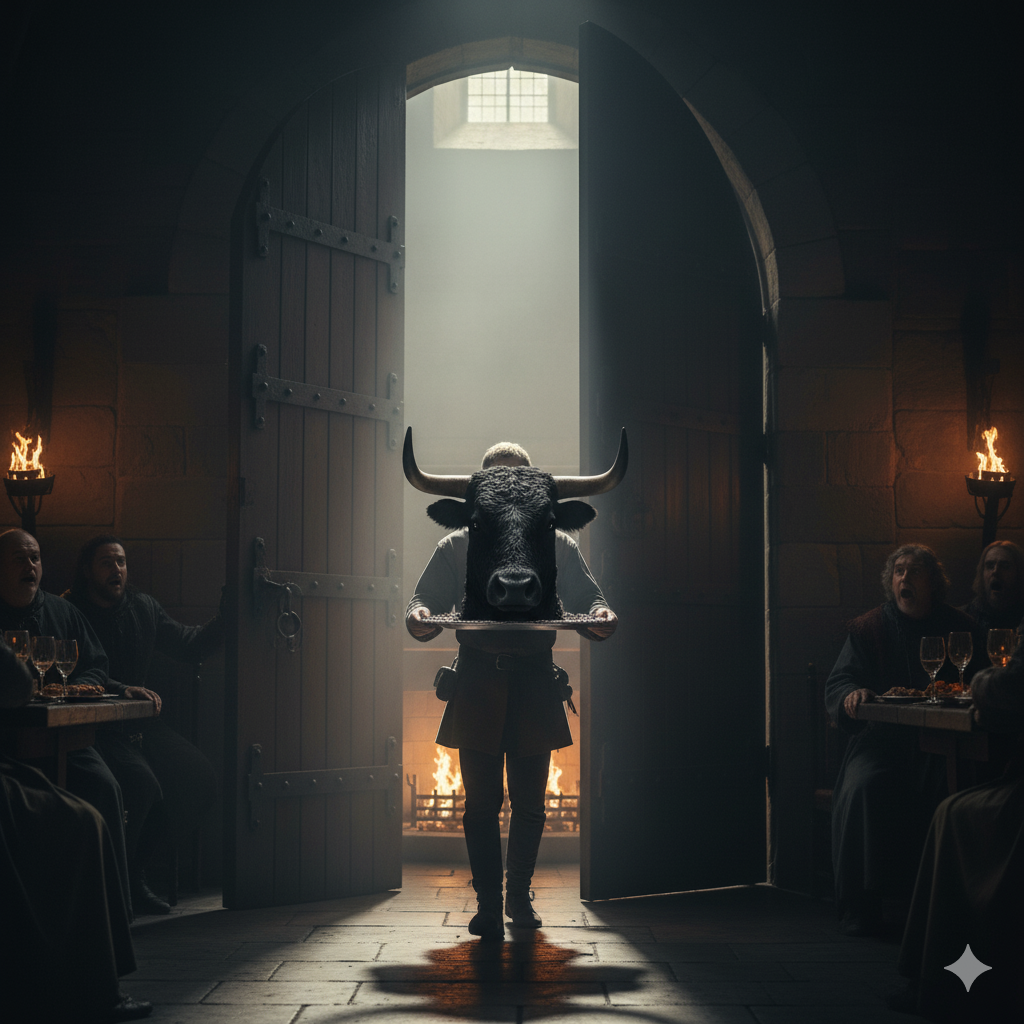
The moment of horror: A black bull's head — the symbol of death — is placed before the Douglas brothers
In medieval Scotland, everyone knew what this meant.
The great wooden doors creaked open. A servant walked slowly into the hall, carrying a silver tray. On that tray sat something dark and terrible — the severed head of a black bull.
Everyone in the hall froze. Forks clattered to plates. Conversation died.
"Death was coming."
Before young King James could even ask what was happening, drums began to beat. Soldiers in armor marched into the hall, their boots echoing like thunder. They grabbed William and David Douglas, ignoring the boys' terrified screams and the king's confused shouts.
The brothers were dragged from the hall, their silk clothes torn, their voices echoing off the stone walls. That very night, in the cold castle courtyardAn open space surrounded by walls or buildings under a rain-soaked sky, both boys were executedKilled as punishment, often ordered by a ruler.
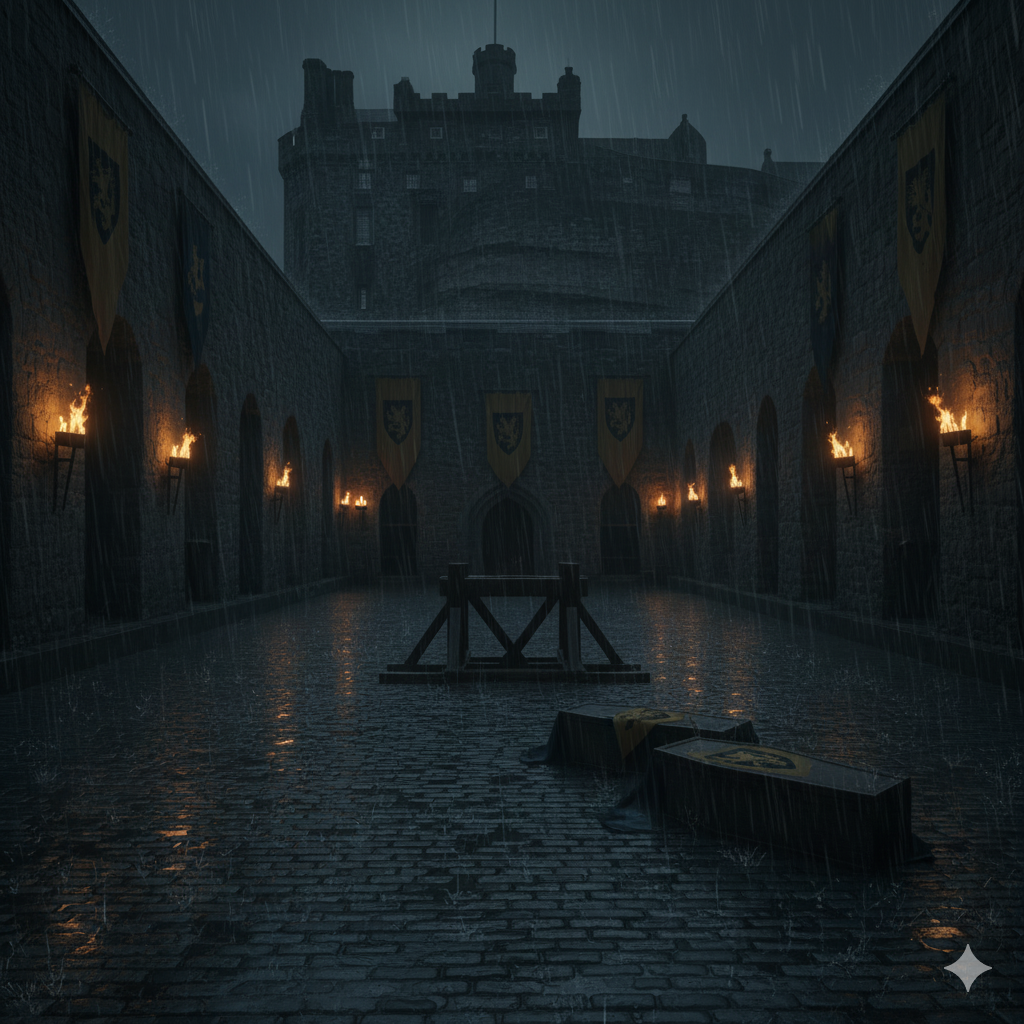
The courtyard where the Douglas brothers met their tragic end
Their cries haunted the castle walls, carried away by the Scottish wind.
The Boy King's Nightmare
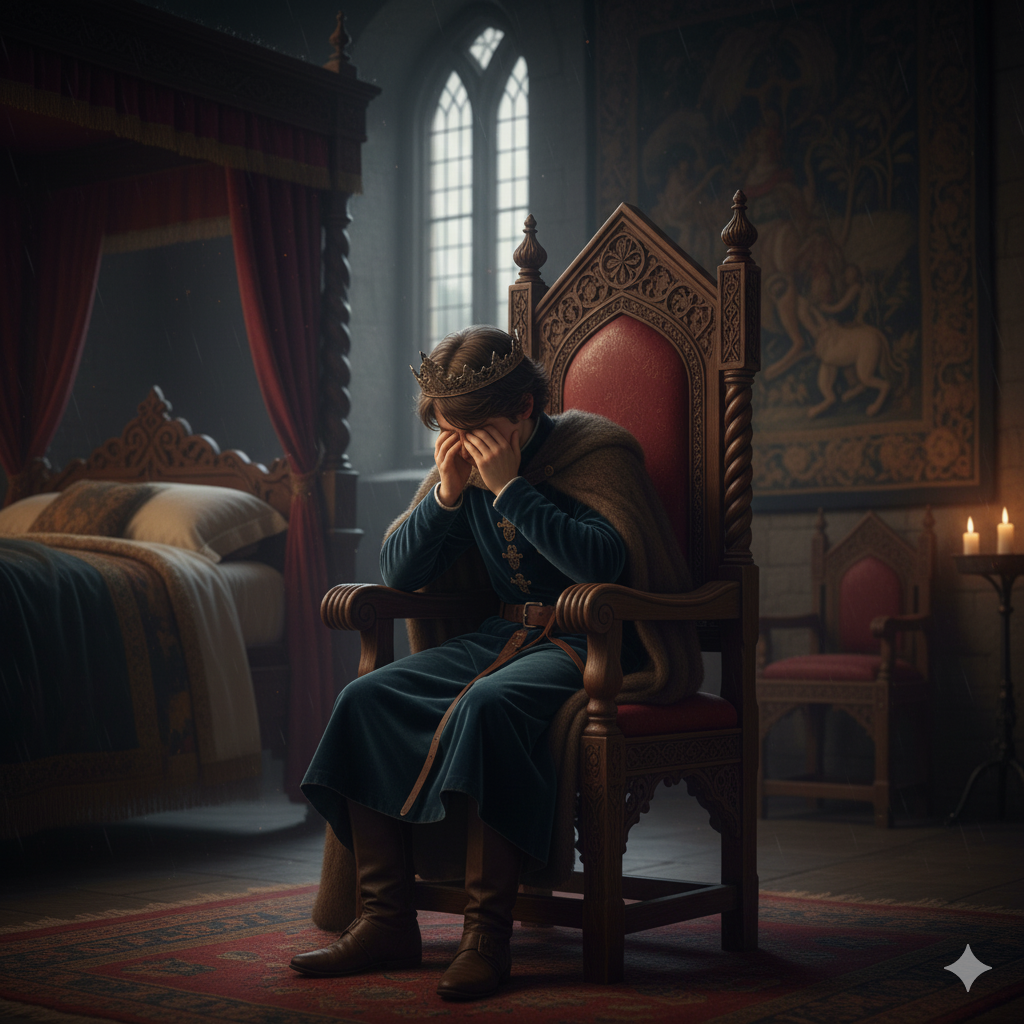
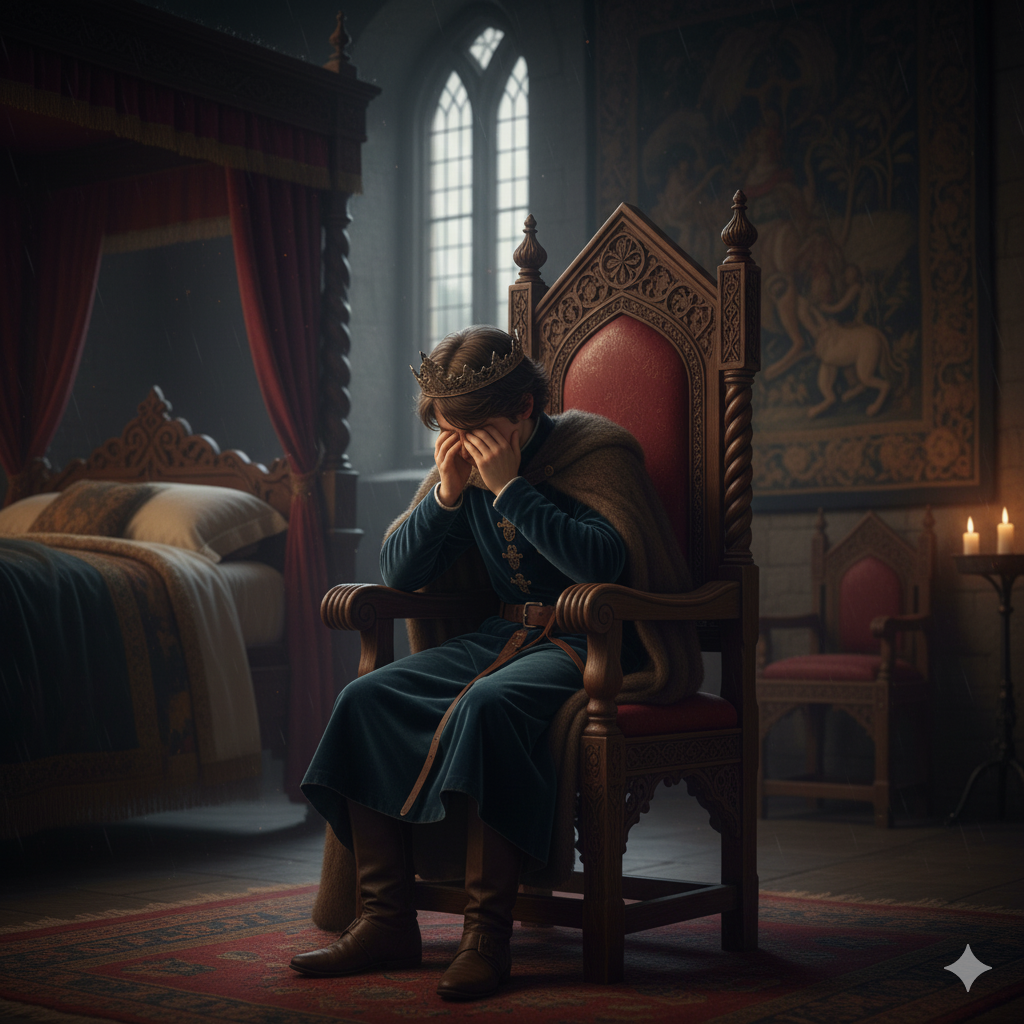
King James II, powerless to save his friends, haunted by what he witnessed
The next morning, 10-year-old King James II sat alone in his chamber, shaking with anger and grief. His best friends were gone. He had been powerless to save them.
"This was for Scotland's safety," his advisors told him coldly.
"The Douglases were too powerful," they explained.
"You must understand, Your Majesty — sometimes kings must make hard choices."
But James hadn't made this choice. He was just a child, and powerful men had used his name to commit murder.
For many nights after, James could not sleep. Every time he closed his eyes, he saw the black bull's head and heard his friends' screams. The great hall, once filled with laughter, now felt haunted and cold.
Some said that after that terrible night, no music ever sounded quite right in Edinburgh Castle again.
A Dark Legacy
The Black Dinner of 1440 became one of Scotland's most infamous betrayalsBreaking trust or turning against someone who believed in you. It showed how fear of powerThe ability to control or influence others could turn friends into enemies and turn a celebration into a nightmare.
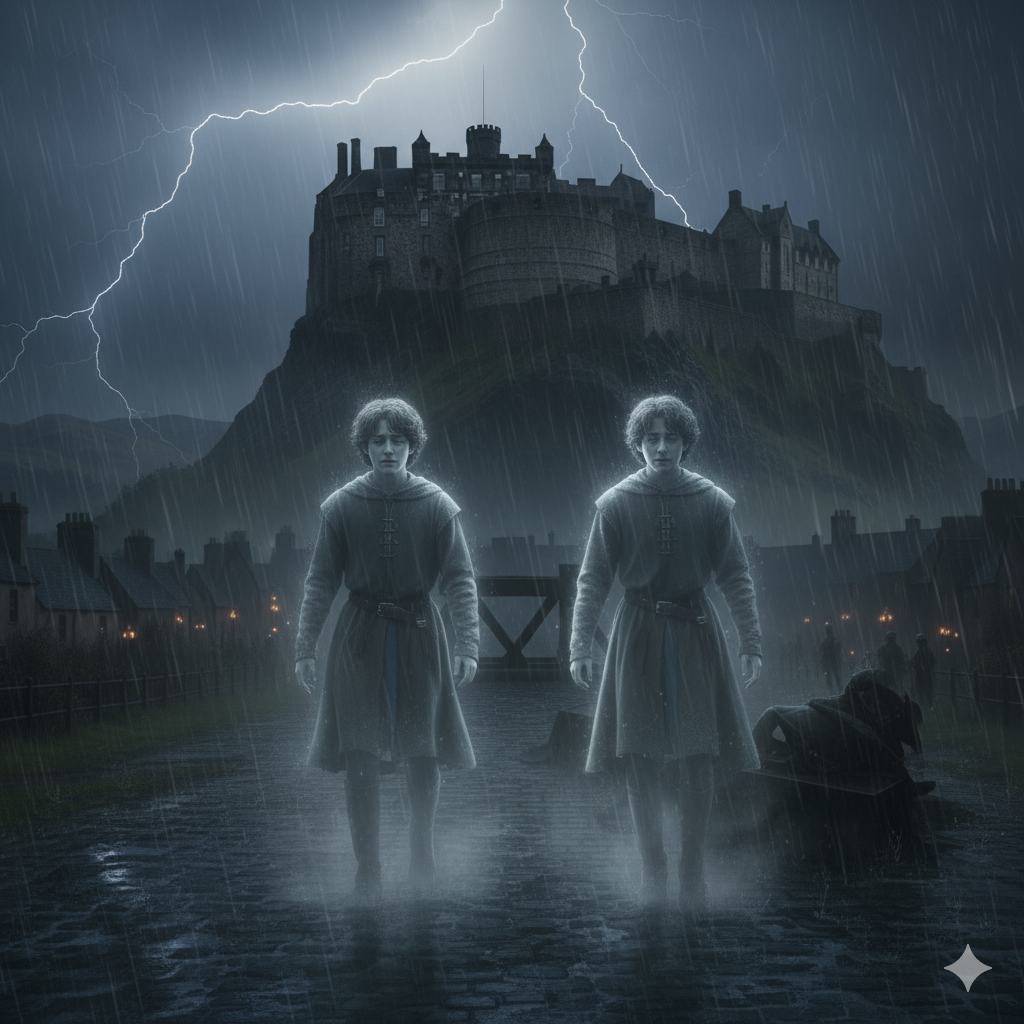
Legend says the Douglas brothers' ghosts still walk Edinburgh Castle on stormy nights
Centuries later, historians study the Black Dinner as a lesson about trust, power, and the terrible things people do when they're afraid. The event even inspired similar scenes in books and stories — including a famous scene in Game of Thrones known as "The Red Wedding."
Legend says the ghosts of William and David Douglas still walk the stone corridors of Edinburgh Castle on stormy nights, forever seeking justiceFair treatment and the righting of wrongs for a betrayalBreaking trust or turning against someone that should never have happened.
"Real history isn't just dates and battles — it's about real people, their choices, and the heavy price of betrayal."
The Black Dinner reminds us that real history isn't just found in textbooks. It's about real people — their friendships, their loyaltyFaithfulness and support to a person or cause, and the terrible consequences when fear and power corrupt those who should protect the innocent.
💬 Discussion Questions
Why did the nobles fear the Douglas family so much?
Think about: power, control, and what happens when one family becomes very strong
How did symbols like the black bull's head communicate messages in medieval times?
Compare to: emojis, hand signals, or secret codes today
What do you think young King James learned from this terrible event?
Consider: trust, power, and being careful who you listen to
How does the Black Dinner teach us about the dangers of fear and power?
Think about: what people do when they're scared of losing control
If you were in the castle that night, what would you have done?
Consider: Would you speak up? Stay silent? Try to warn the Douglas brothers?
Why do you think this story is still remembered 600 years later?
Think about: What makes this story stick in people's minds?
🔬 Mini Activity: The Power of Secret Symbols
Goal: Explore how people in medieval times used symbols to send hidden messages.
What You Need:
- Paper and colored pencils or markers
- A list of feelings/messages (danger, friendship, fear, peace, help, stop)
Steps:
- Create Your Symbol System - Assign each feeling a color or symbol
- Red rose = danger
- White dove = peace
- Black crow = death warning
- Green leaf = friendship
- Yellow sun = help needed
- Blue water = safety
- Write a Secret Message - Use only your symbols and colors
Example: Draw a black crow + red rose = "Death and danger are near!"
- Trade and Decode - Give your message to a friend or family member. Can they figure it out?
- Connect to History - Discuss how the black bull's head at the Black Dinner was this kind of symbol
💡 The History:
Before phones, texts, or emails, people used objects, flags, animals, and colors to send messages. The black bull's head at the Black Dinner was more than just frightening — it was a deliberate symbol that everyone in medieval Scotland would recognize immediately. Symbols were powerful because they could communicate without words, and sometimes carried more weight than any spoken threat.
🤔 Reflection Question:
Why might symbols be more powerful than just saying something out loud? Think about how seeing the black bull's head must have felt compared to someone simply saying "You're in danger."