🦃 The First Thanksgiving
Plymouth Colony, Massachusetts • 1621
When survival depended on helping one another
In the autumn of 1621, a group of English settlers and Native Americans gathered for a feast that would become one of America's most cherished traditions. This is the story of courage, friendship, and the first Thanksgiving — a moment when two very different peoples chose courage over fear, and gratitude over despair.
⛵ The Journey Across the Sea
In September 1620, one hundred and two passengers set sail from England on a small wooden ship called the Mayflower. They were called Pilgrims — men, women, and children who sought the freedom to worship in their own way.
For sixty-six days, they crossed the stormy Atlantic Ocean, tossed by waves as high as houses. Food spoiled. People became sick. Yet every night, someone still whispered a prayer of hope.
The Mayflower battled fierce storms for 66 days crossing the Atlantic
When they finally sighted land in November, they fell to their knees and thanked God. They had arrived in a place they called New England — though it looked nothing like the home they had left behind. Cold winds swept over rocky shores. Winter was coming.
They built small shelters from mud and timber, but the cold bit through every crack. By spring, half of the Pilgrims had died from sickness and hunger.
Still, the survivors refused to give up. They had made a promise to begin anew — and they meant to keep it.
🤝 A Stranger in the Clearing
One crisp March morning in 1621, the Pilgrims were startled when a tall Native man walked boldly into their village. He spoke a single word that amazed them:
"Welcome!"
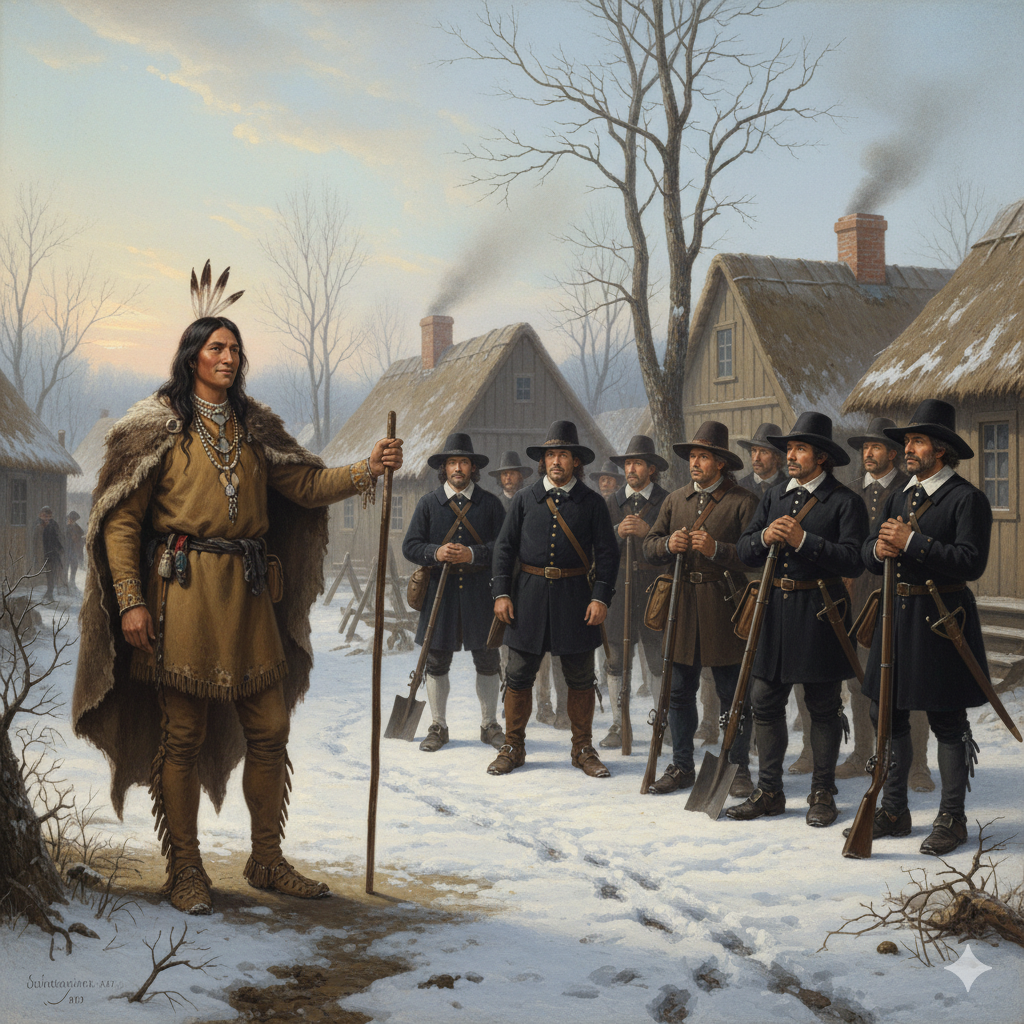
Samoset's unexpected arrival astonished the settlers
His name was Samoset, a leader from the Abenaki tribe. He had learned some English from fishermen who traded along the coast.
The Pilgrims treated him kindly, offering food and gifts. Days later, Samoset returned with another man — Tisquantum, whom they called Squanto.
Squanto had an incredible story: years earlier, he had been kidnapped by English traders and taken across the ocean. He learned their language, escaped, and returned home — only to find that his people, the Patuxet, had died from disease.
Now, seeing the weak and struggling Pilgrims, Squanto chose to help.
🌽 Planting Hope
Under Squanto's guidance, the settlers learned how to survive. He showed them how to plant corn by burying a small fish beside each seed to make the soil rich. He taught them to catch eels, gather cranberries, and find herbs that cured sickness.
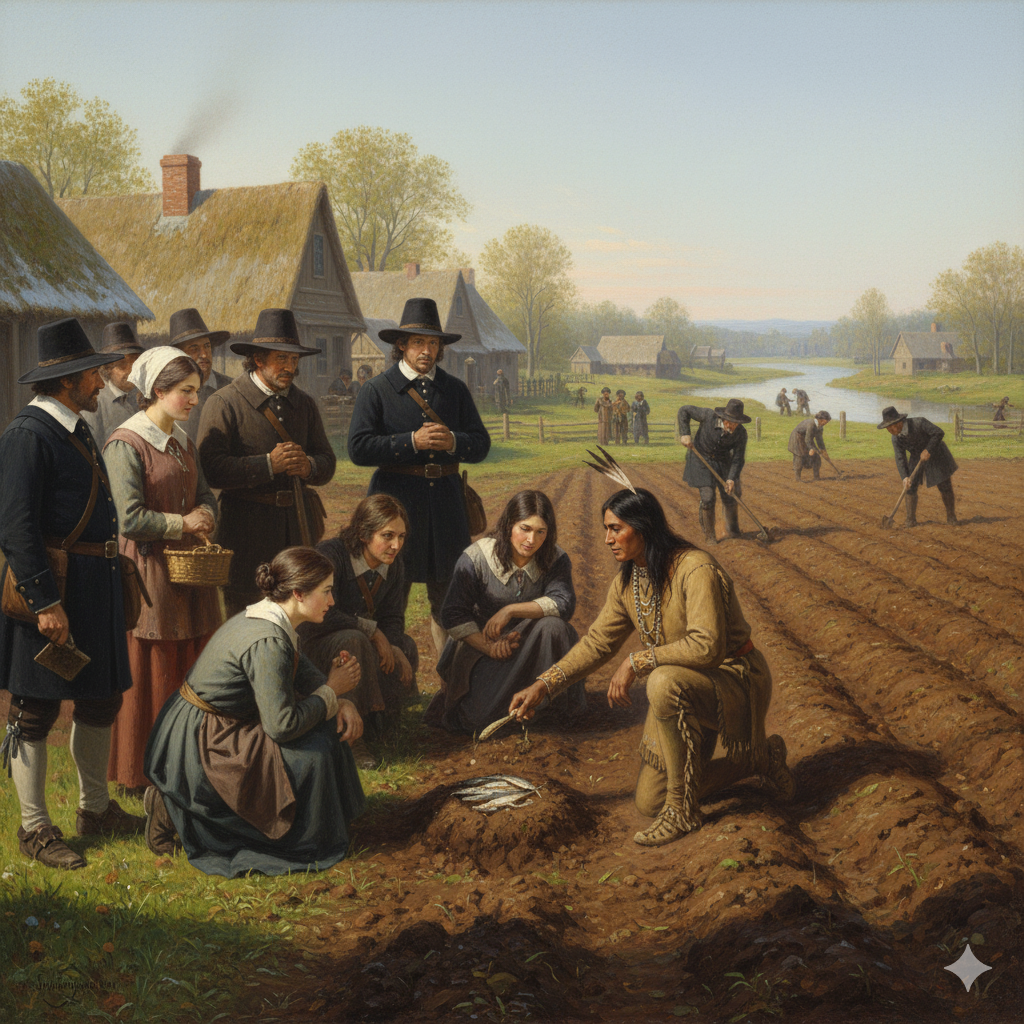
Squanto taught the Pilgrims Native American farming techniques
That spring, Governor William Bradford signed a peace treaty with Chief Massasoit of the Wampanoag Nation. The two groups promised to protect each other and share what they could.
As the sun warmed the fields, green shoots of corn grew tall. The Pilgrims looked out across their rows of crops and realized something they had not felt in months: hope.
🍂 The Harvest Feast
When autumn came, the harvest was abundant — corn, beans, pumpkins, and wild turkeys. To celebrate, Governor Bradford declared a feast of thanksgiving.
They invited Massasoit and ninety of his men to join them. For three days, the clearing was filled with laughter, games, and the smell of roasting meat.
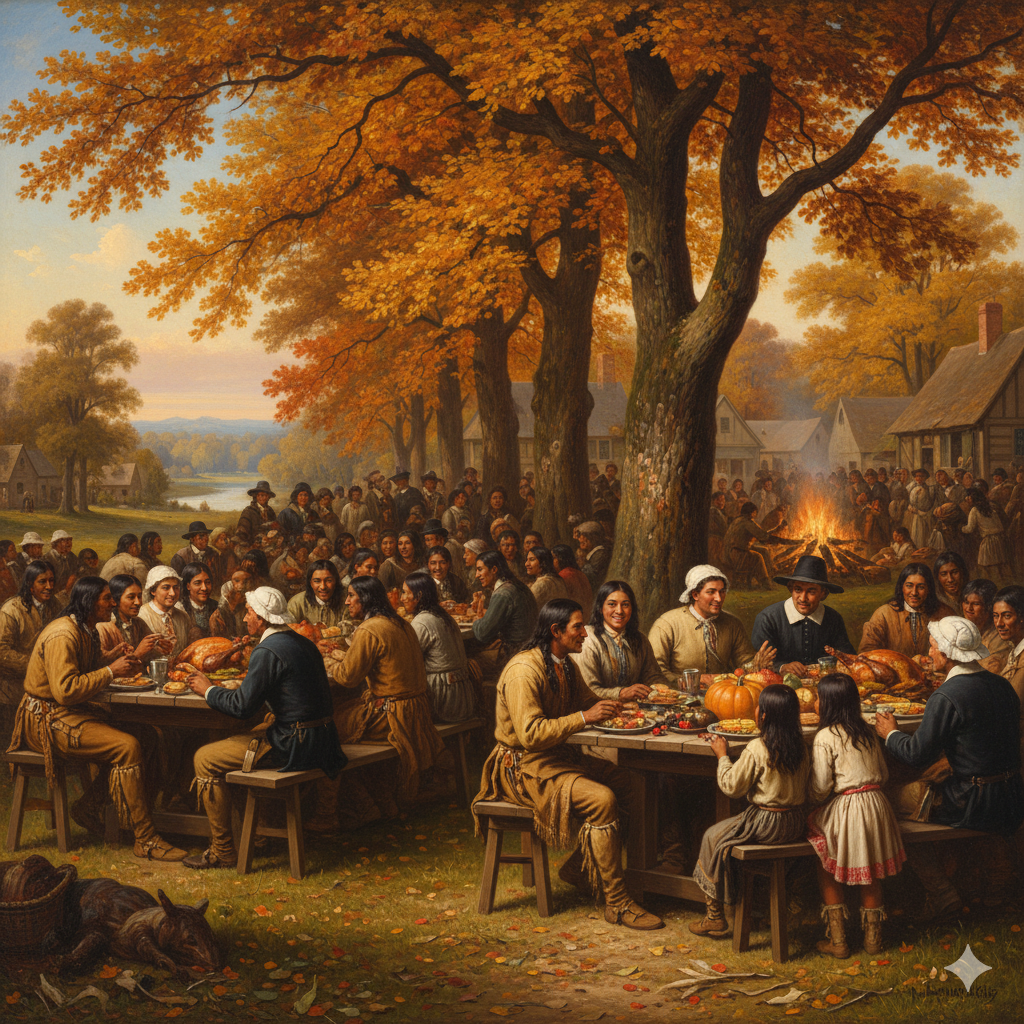
Pilgrims and Wampanoag shared a three-day celebration of peace and plenty
The Wampanoag brought five deer as gifts. The Pilgrims shared pies made from squash and berries. Drums and flutes echoed through the forest. Children ran between the tables, chasing each other through the leaves.
That night, under a sky full of stars, the Pilgrims and the Wampanoag gave thanks — not just for food, but for friendship.
⭐ Seasons of Change
Though peace would not last forever, that moment in 1621 became a lasting symbol of cooperation and gratitude.
For the Pilgrims, it was a lesson that survival was not possible without the kindness of others. For the Wampanoag, it was a chance to show generosity and balance in a rapidly changing world.
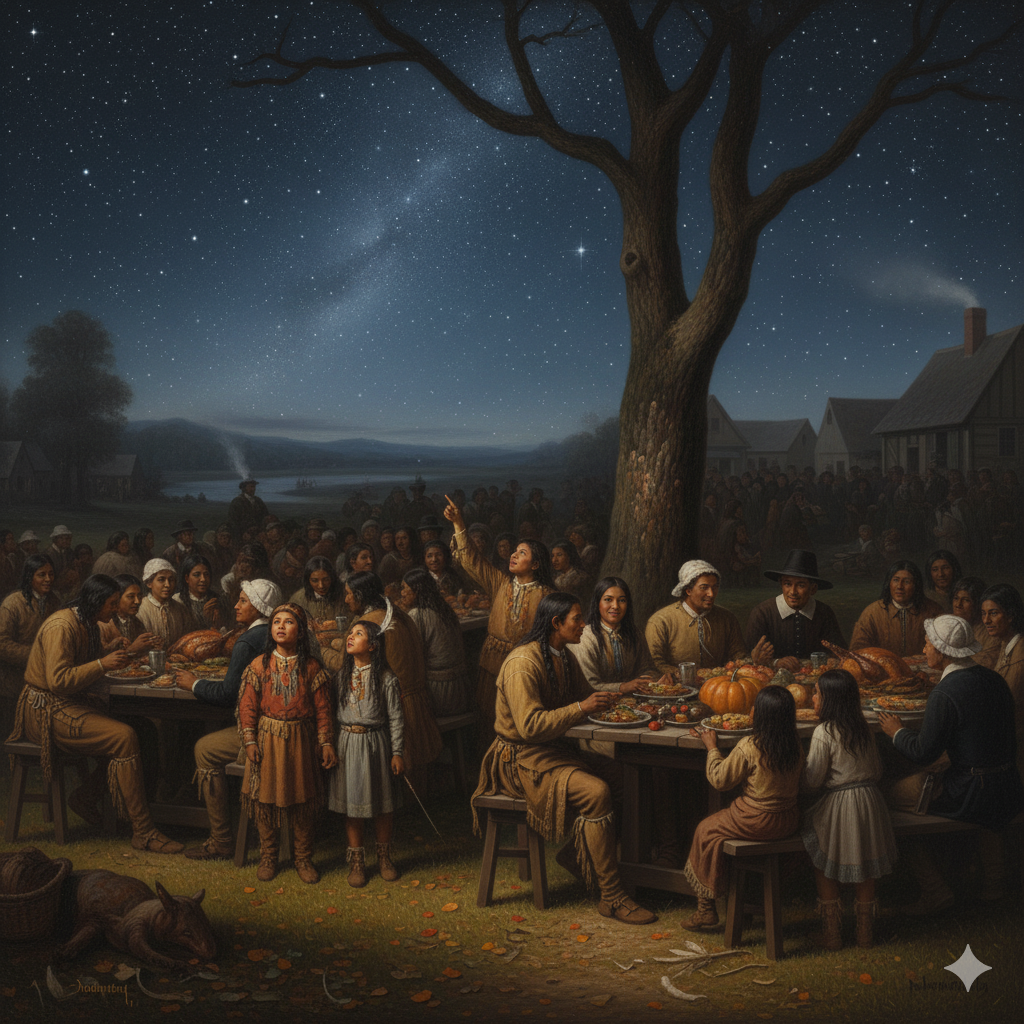
Under the November stars, two peoples shared hope for the future
Centuries later, Americans remember that first Thanksgiving as a day to gather, to share, and to be grateful — not just for harvests, but for each other.
When you sit at your own Thanksgiving table, remember that the first feast began not with abundance, but with help, courage, and hope.
💬 Discussion Questions
1. Why was it difficult for the Pilgrims to survive their first winter?
2. What did Squanto teach the Pilgrims, and why was his help so important?
3. What do you think the Wampanoag people gained from their friendship with the settlers?
4. How does the story of the first Thanksgiving remind us to be grateful today?
5. If you could invite someone from history to your Thanksgiving table, who would it be — and why?
🔬 Mini Experiment: Growing Gratitude
Goal: Understand how plants grow and why Native planting methods worked so well.
What You Need:
- 2 small pots or cups
- Potting soil
- Corn or bean seeds
- A small piece of fish or crushed eggshells
Steps:
- Fill both pots with soil.
- In the first pot, plant your seed normally.
- In the second, mix in a bit of fish or eggshells before planting (to mimic natural fertilizer).
- Place both in sunlight and water regularly.
- Watch over several weeks and record which grows stronger!
💡 Lesson:
Squanto's wisdom used nature's own cycle — fish feeding the soil, soil feeding the plants, and the plants feeding people. Gratitude begins with understanding the gifts around us.