Sparks in the Night
Thomas Farriner's bakery on Pudding Lane, where a single spark would change London forever
In September of 1666, London slept beneath a sky of soot. Houses were built of dry timberWood prepared for building, stacked close together like matchsticks.
In the small bakery of Thomas Farriner on Pudding Lane, a spark leapt from an oven and landed on the floor. Farriner thought he had stamped it out — but as the family climbed into bed, the flame began to crawl up the wall.
By morning, the city was burning.
The fire spread so quickly that Farriner and his family barely escaped through an upstairs window. Their maid, too frightened to climb out, became one of the fire's first victims.
"A single spark can become an inferno when conditions are right."
London in 1666 was a tinderbox waiting to burn. The summer had been hot and dry. Wooden houses with thatched roofs crowded together in narrow lanes. Water was scarce.
And on that September night, the wind began to blow.
A City of Flames
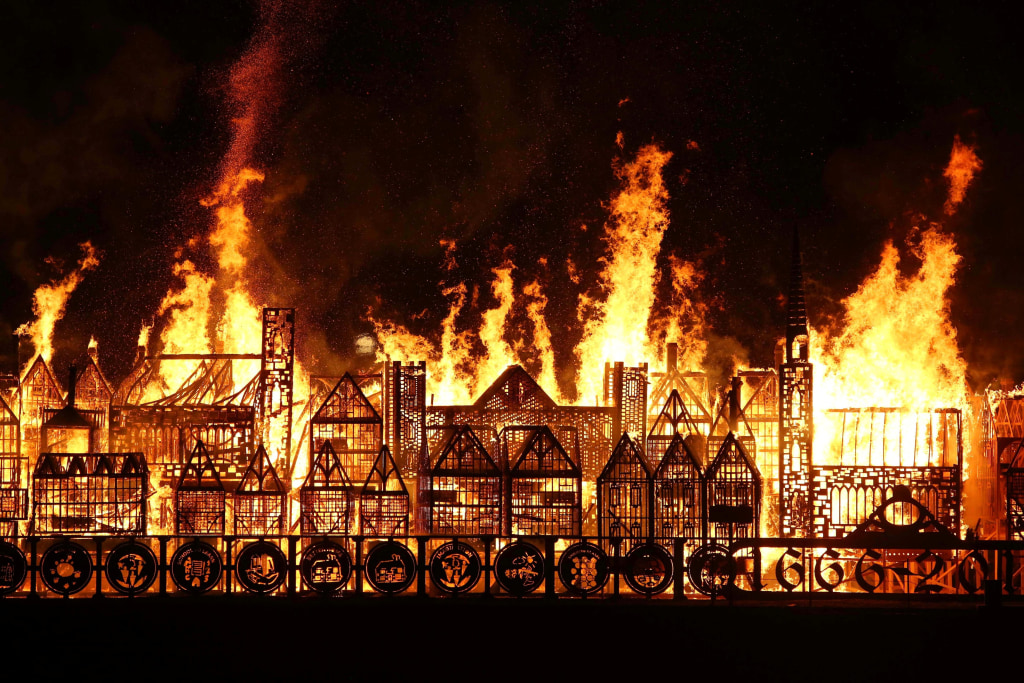
The Great Fire consumed London's skyline, turning night into day with its terrible glow
The wind howled through narrow streets, fanning the fire from house to house. Roofs crackled, beams snapped, and smoke rolled like storm clouds.
People grabbed whatever they could carry — children, pets, and prayer books — and fled toward the River Thames. Boats overflowed with families as barrels of gunpowder exploded in the distance.
Londoners shouted:
"God save us! The city is lost!"
The heat was so intense that stone walls cracked. Lead from church roofs melted and ran down the streets like rivers. The famous cathedralA large, important church of St. Paul's — one of London's oldest and grandest buildings — collapsed in a roar of flames and falling timber.
EmbersSmall glowing pieces of coal or wood in a dying fire flew through the air like deadly fireflies, landing on rooftops blocks away and starting new fires. The flames seemed unstoppable.
Wealthy merchants watched helplessly as their shops burned. Bakers, blacksmiths, and booksellers saw their life's work turn to ash in hours.
For three terrifying days, the fire raged on, consuming everything in its path.
The Fight to Stop the Fire
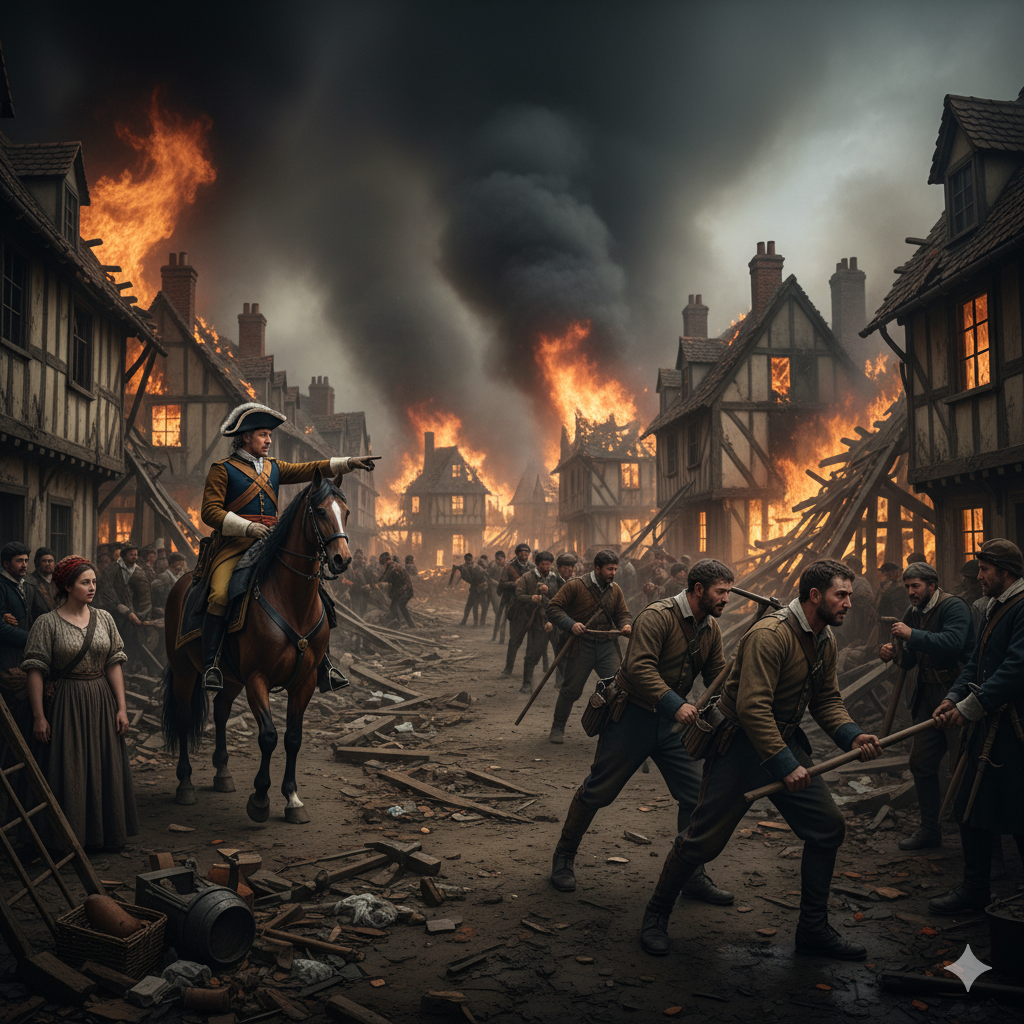
King Charles II ordered desperate measures — tearing down whole streets of houses to create firebreaks
The city had no fire engines like today. Buckets, leather hoses, and fire hooks were all they had. Men pulled down houses to stop the flames from spreading, but the wind carried burning embersSmall glowing pieces of coal or wood in a dying fire across the gaps.
Finally, King Charles II himself rode through the burning streets, his face blackened with soot. He ordered soldiers to create firebreaksA gap made to stop a fire from spreading — whole rows of houses torn down before the flames could reach them.
It was desperate work, but it worked.
The King even joined the effort himself, passing buckets of water and encouraging the exhausted firefighters. His bravery inspired the people to keep fighting.
On the fourth day, the wind finally died down. The fire began to weaken. Men with fire hooks pulled down the last burning beams. Water brigades doused the final flames.
After four days and four nights, the Great Fire finally died, leaving most of London in ashes.
Ashes and New Beginnings
Over 13,000 homes were destroyed, along with churches, shops, and St. Paul's Cathedral. Entire neighborhoods vanished overnight.
Yet miraculously, fewer than ten people were recorded dead. Most Londoners had escaped to the fields outside the city walls.
But there was an unexpected blessing hidden in the tragedy.
The fire also burned away the plagueA deadly disease that spreads quickly germs that had haunted the city for years. The terrible Black Death, which had killed thousands just months before, finally ended.
The flames had purified London, making it healthier than before.
When rebuildingTo construct again after destruction began, the people made sure it would never happen again. Houses were made of brick and stone instead of wood. Streets were widened. Building codes were created.
Sir Christopher Wren, the great architectA person who designs buildings, designed new streets and a magnificent new St. Paul's Cathedral — the same cathedral that still stands today, one of London's most famous landmarks.
From disaster came a better, safer city.
The Flame of Change
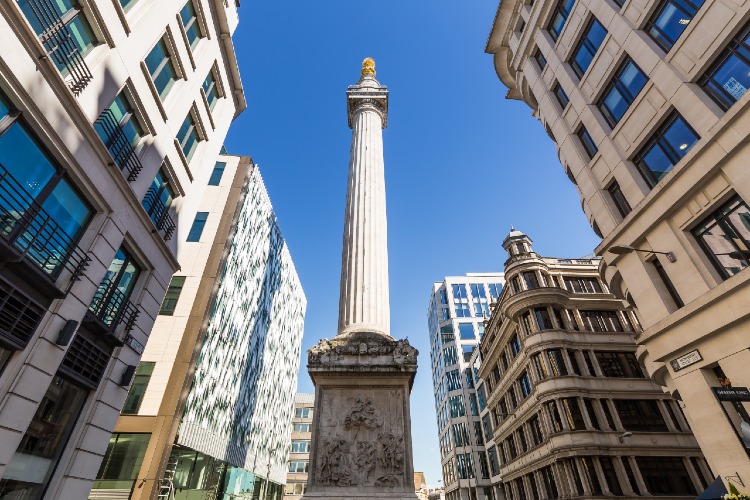
The Monument stands 202 feet tall — exactly the distance from its base to where the fire began on Pudding Lane
The people of London learned that even tragedy can bring progress.
Fire turned fear into innovationA new idea or method that improves something, and ashes into hope.
New fire brigades were formed. Building regulations were enforced. London became a model for city planning across Europe.
The disaster taught the world valuable lessons about fire safety, urban planning, and community resilience that we still use today.
If you ever visit modern London, you can still see a tall column near Pudding Lane — the MonumentA structure built to remember an event or person to the Great Fire — standing as a reminder that courage and rebuilding light the way after any storm.
"Out of the ashes, a greater city rose."
The Great Fire of London shows us that disasters can be turning points. What seems like the end can become a new beginning.
And sometimes, the brightest light comes after the darkest night.
💬 Discussion Questions
Why did London's wooden houses make the fire spread so quickly?
Think about how wood burns compared to stone or brick.
How did the Great Fire lead to improvements in city design?
Consider the changes made during rebuilding and why they matter.
What lessons can we learn about safety and teamwork from this event?
How did King Charles II and the people work together?
How might life have felt for children who lost their homes?
Imagine watching everything you know turn to ash.
Why do you think people chose to rebuild instead of leaving the city?
What does this tell us about human resilience and hope?
🔬 Mini Experiment: How Fire Spreads
Goal: Understand how materials affect how fast fire spreads.
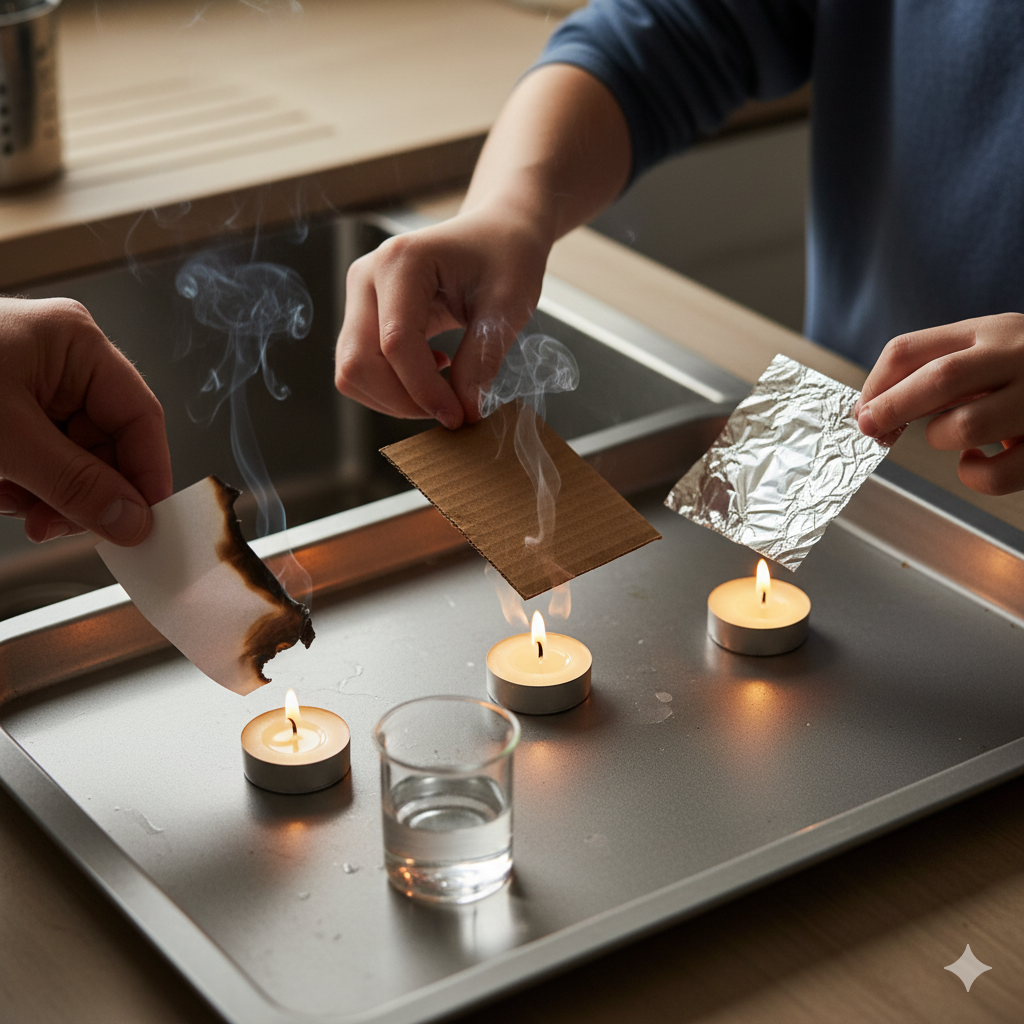
Different materials react to heat in different ways — understanding this helps us build safer buildings
What You Need:
- Three small candles (or tea lights)
- Small squares of paper, cardboard, and aluminum foil
- Adult supervision required!
- A tray or sink for safety
Steps:
- Light the candles safely on a tray or sink with an adult
- Hold each material above (not touching!) the flame
- Watch how quickly the paper warms up and might char
- Notice how cardboard begins to smoke
- Observe how foil reflects the heat and doesn't burn
- Never let any material catch fire — just test the heat resistance
🔥 The Science:
Wood and paper catch fire easily — just like old London's timber houses — while brick, metal, or stone resist flames. That's why London rebuilt with safer materials after 1666. Modern building codes still use these principles to keep us safe!
⚠️ Safety Warning:
NEVER do this experiment without an adult present. Keep water or a fire extinguisher nearby. Do not let any materials actually catch fire — we're only testing how they react to heat!