The Desert That Hid a Secret
The blazing desert of Egypt, where King Tut's tomb remained hidden for over 3,000 years
In the blazing desertA hot, dry area of land with very little rain or plants of Egypt, sand stretched farther than the eye could see. The sun burned overhead like an angry eye, and the heat shimmered in waves across the dunes.
Beneath all that sand lay secrets — secrets of kings who had ruled thousands of years ago, when pharaohsKings and queens of ancient Egypt, believed to be part god were believed to be half-god, half-human.
For more than 3,000 years, one tombA place where someone is buried, often with treasures or offerings had remained untouched — that of a boy king named Tutankhamun, or King Tut. While other tombs had been robbed and ransacked by thieves, his resting place stayed hidden, sealed, forgotten.
In 1922, a British archaeologistA scientist who studies the past by digging up artifacts and ancient sites named Howard Carter and his team dug through the Valley of the Kings. Day after day, week after week, they searched and found nothing but rocks and empty sand.
Carter's sponsor, Lord Carnarvon, was growing impatient. The funding was running out. This would be their last season of digging.
But one morning in November, something extraordinary happened. Carter's water boy tripped over a stone step hidden beneath the sand. The team rushed over and began clearing away centuries of debris.
Beneath it, they found a sealed doorway covered in ancient hieroglyphsThe picture writing used by ancient Egyptians to record their history — symbols of birds, snakes, and suns. Carter brushed away the dust with trembling hands and whispered:
"At last."
The Doorway to the Afterlife

Howard Carter and Lord Carnarvon examining artifacts from King Tut's tomb, 1922
When Carter returned with Lord Carnarvon a few days later, they carefully broke the ancient seal. The air that rushed out smelled dry and strange — like time itself had been trapped inside.
By flickering candlelight, they peered through a small opening into the darkness beyond. The flame danced in the stale air — and then Carter saw it.
Gold. Everywhere.
"Can you see anything?" Lord Carnarvon asked nervously from behind.
"Yes," Carter replied quietly. "Wonderful things."
Inside the tomb were golden statues of gods, jeweled chests, carved chariots, alabaster vases, and furniture fit for royalty. Every wall was covered in painted scenes — gods with animal heads, boats sailing through the underworld, and a young king standing before the sun.
And at the center of it all stood a massive golden coffin, shaped like a man and covered in brilliant blue and gold. Inside lay the mummified body of Tutankhamun, who had died when he was only 18 years old — over 3,000 years ago.
The tomb had been sealed for over thirty centuries — perfectly preservedKept safe from decay or destruction over a long time, as if time had stopped the moment the door was locked.
But as Carter examined the entrance more closely, he noticed something that made his blood run cold. Carved on a clay tablet near the doorway were ancient words — translated, they read:
"Death shall come swiftly to those who disturb the king's peace."
Carter hesitated. Then he stepped inside anyway.
The Shadow of the Curse
The cobra — sacred symbol of the pharaohs — appears as a dark omen
Soon after the tomb was opened, strange events began to unfold — events that would make headlines around the world.
Back in Cairo, Howard Carter kept a pet canary in a cage. He loved its cheerful song. But one night, a cobra — the sacred symbol of the pharaohsKings and queens of ancient Egypt, believed to be part god — slithered into his home. By morning, the canary was dead, swallowed whole.
Carter's workers whispered nervously. "The serpent of the king has taken revenge."
Then something even worse happened.
Lord Carnarvon, the wealthy sponsor who had helped fund the excavationThe act of carefully digging up and studying old sites and buried objects, was bitten by a mosquito on his cheek. The bite became infected. Within days, he grew feverish and weak.
On April 5, 1923 — just five months after the tomb was opened — Lord Carnarvon died suddenly in a Cairo hotel room.
At the exact moment of his death, all the lights in Cairo went out. No one ever found out why.
And back in England, thousands of miles away, Carnarvon's dog let out a long, mournful howl — and died.
Newspapers around the world exploded with headlines: "THE CURSE OF THE MUMMY'S TOMB!" — "ANCIENT PHARAOH STRIKES FROM BEYOND THE GRAVE!"
People everywhere became obsessed with the idea that disturbing King Tut's resting place had unleashed an ancient curse.
Over the next few years, several other people connected to the excavation fell ill or died under mysterious circumstances. A radiologist who X-rayed the mummy died suddenly. An Egyptian prince who visited the tomb was assassinated shortly after. Even a secretary who worked on cataloging the artifactsObjects made by people in the past, like tools, pottery, or jewelry took his own life, leaving a note that mentioned the curse.
The world was gripped with fear. Many believed the curse was real — that the ancient Egyptians had the power to punish anyone who dared disturb the dead.
But Howard Carter never believed it. He knew the truth.
Scientists later discovered that the tomb walls were covered in ancient moldA type of fungus that grows in damp or sealed places and can cause illness spores and possibly toxic bacteria — dangerous to humans after being sealed away for thousands of years. Breathing in the ancient air could have made people sick.
The "curse" might not have been magic — but it was still deadly.
The Truth Buried Beneath
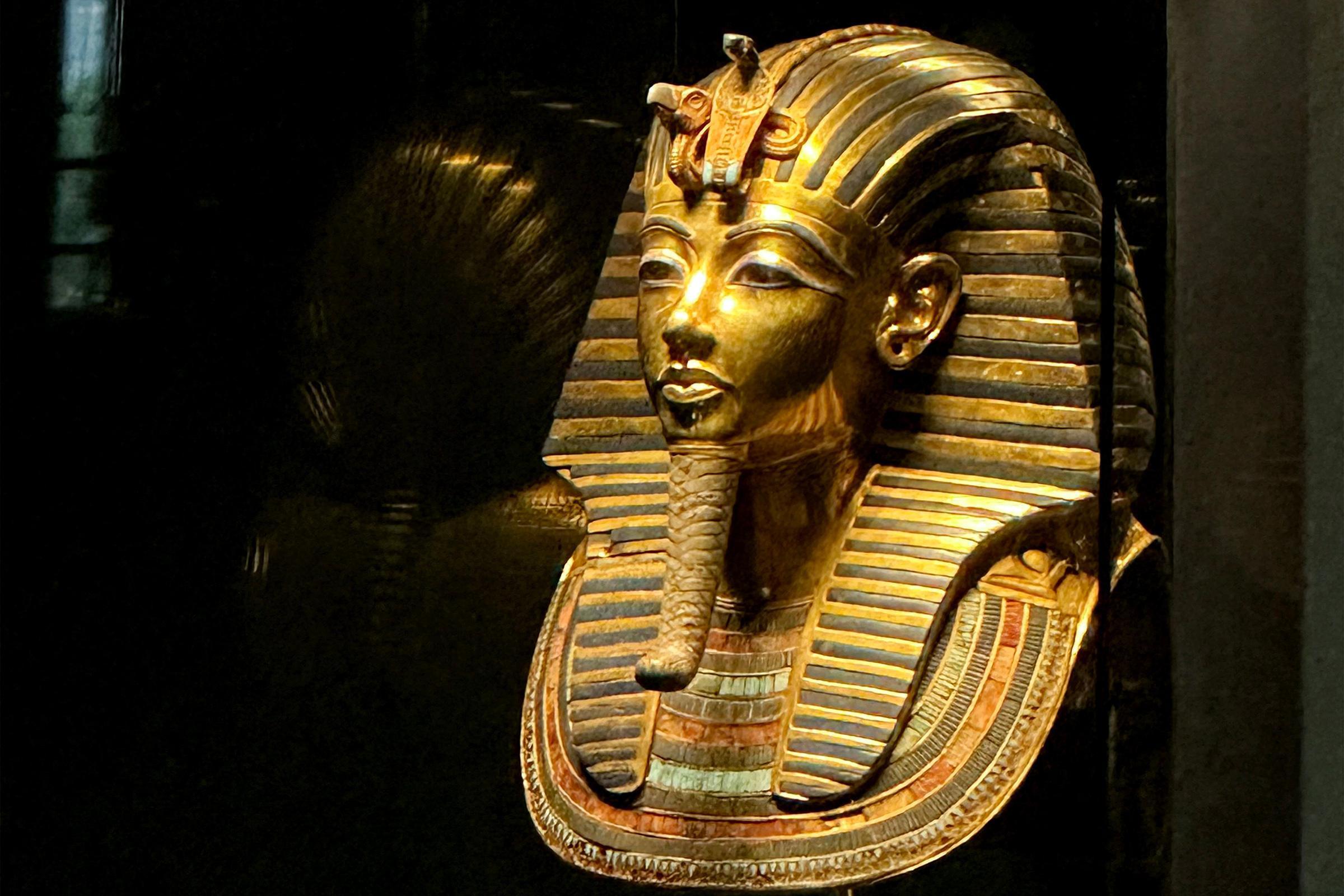
The famous golden mask of King Tutankhamun — one of the most iconic artifacts ever discovered
Howard Carter himself lived another 17 years after opening the tomb, still studying and cataloging the treasures he had found. He worked carefully, respectfully, and methodically — treating the ancient objects as priceless gifts from the past.
He never believed in curses. He believed in science, respect, and discovery.
"The only curse," he once said, "is the gift of discovery — it never lets you rest."
The treasures of King Tut — over 5,000 objects in total — were eventually placed in museums around the world, with most displayed in the Egyptian Museum in Cairo. Millions of people still visit them every year, staring in awe at the golden mask of the boy king who ruled Egypt when he was just nine years old and died at eighteen.
His life was short. But his legacy became eternal.
Even today, people debate the curse. Some say it was just coincidence — that Lord Carnarvon's death was simply bad luck, and the others died of natural causes or unrelated accidents.
Others swear that disturbing the dead should never be taken lightly — that there are forces in this world we don't fully understand.
But one thing is certain: the discovery of King Tut's tomb changed everything.
The Legacy of the Boy King
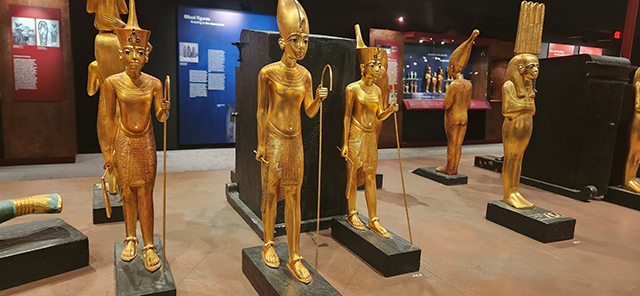
Some of the thousands of artifacts recovered from King Tut's tomb, now displayed in museums worldwide
Tutankhamun's tomb taught the world more about ancient Egypt than any other discovery in history. It revealed how people lived, dressed, worshiped, ate, played, and dreamed in the age of pyramids and pharaohsKings and queens of ancient Egypt, believed to be part god.
The jewelry showed us their artistry. The furniture revealed their craftsmanship. The food sealed in jars told us what they ate. The paintings on the walls gave us a window into their beliefs about death and the afterlife.
Even the moldA type of fungus that grows in damp or sealed places and can cause illness and bacteria found inside taught modern scientists about ancient preservationThe act of keeping something from decaying or being destroyed techniques and the dangers of sealed environments.
The "curse" may not have been real magic — but it reminded everyone of something important: the power of respect.
Respect for history. Respect for science. Respect for those who came before us.
And respect for the mysteries we may never fully understand.
King Tut was just a boy when he became pharaoh. He ruled for only ten years. He wasn't a great warrior or a famous builder like other Egyptian kings.
But because his tomb was hidden — and because Howard Carter refused to give up — Tutankhamun became the most famous pharaohA king of ancient Egypt of all time.
His golden mask is now one of the most recognizable images in the world. His story has been told in books, movies, and museums across every continent.
The boy king who was nearly forgotten became immortal.
Sometimes, the smallest voices echo the longest.
💬 Discussion Questions
Why do you think people in 1922 were quick to believe in a "mummy's curse"?
Think about what people knew about science back then compared to now.
How did Howard Carter's discovery change our understanding of ancient Egypt?
Consider what we learned from the artifacts, paintings, and preserved items.
What dangers might real archaeologists face when entering an old tomb?
Think beyond curses — what are the real scientific risks?
If you were an archaeologist, what ancient civilization would you want to explore?
Ancient Rome? The Maya? Vikings? What mysteries would you want to solve?
How can stories like this teach us to separate myth from fact?
What evidence supports the curse? What evidence contradicts it?
🔬 Mini Experiment: The Power of Preservation
Goal: Understand how ancient tombs could preserve items for thousands of years.
What You Need:
- Two small pieces of bread or apple slices
- Two plastic bags or small jars with lids
- Salt or baking soda
- Labels and a marker
Steps:
- Put one piece of bread or apple in a bag by itself. Label it "No Preservation"
- Cover the other piece completely with salt or baking soda, then seal it in the other bag. Label it "Preserved"
- Place both bags in a safe spot at room temperature
- Wait three days and observe the difference
- Record what you see — color changes, mold growth, texture
🧪 The Science:
Salt and dry air prevent bacteria and mold from growing — just like the hot, dry desert air preserved the treasures in King Tut's tomb for over 3,000 years. Ancient Egyptians even used salt (called natron) to preserve mummies!