🚢 The Voyage of the Mayflower
Atlantic Ocean • 1620
When 102 souls crossed an endless ocean for freedom
Written for a 20-minute classroom or bedtime read, this story captures courage, faith, and survival through vivid narrative and emotional pacing — perfectly suited for November lessons on gratitude and perseverance.
⚓ The Ship of Dreams
In September 1620, the Mayflower waited in a gray harbor in England. The ship was only about the length of a modern basketball court — small, creaking, and already crowded.
On board were 102 passengers: farmers, servants, carpenters, mothers with babies, and a group who called themselves Pilgrims. They were leaving behind everything they knew to seek freedom — freedom to worship in peace, to raise their children by their own faith.
The Mayflower pulling away under gray clouds as families wave farewell
As the anchor lifted, the wind filled the sails, and the coastline faded into mist. Children pressed their faces against the wooden rails, watching their homeland disappear. No one knew what waited across the vast Atlantic Ocean.
⛈️ Storms and Shadows
The sea soon turned wild. Towering waves crashed over the deck, soaking everyone. The ship rolled, groaned, and leaked through its wooden seams. For sixty-six days, the passengers endured storms so fierce that they had to sleep sitting up, tied to their bunks to avoid being thrown.
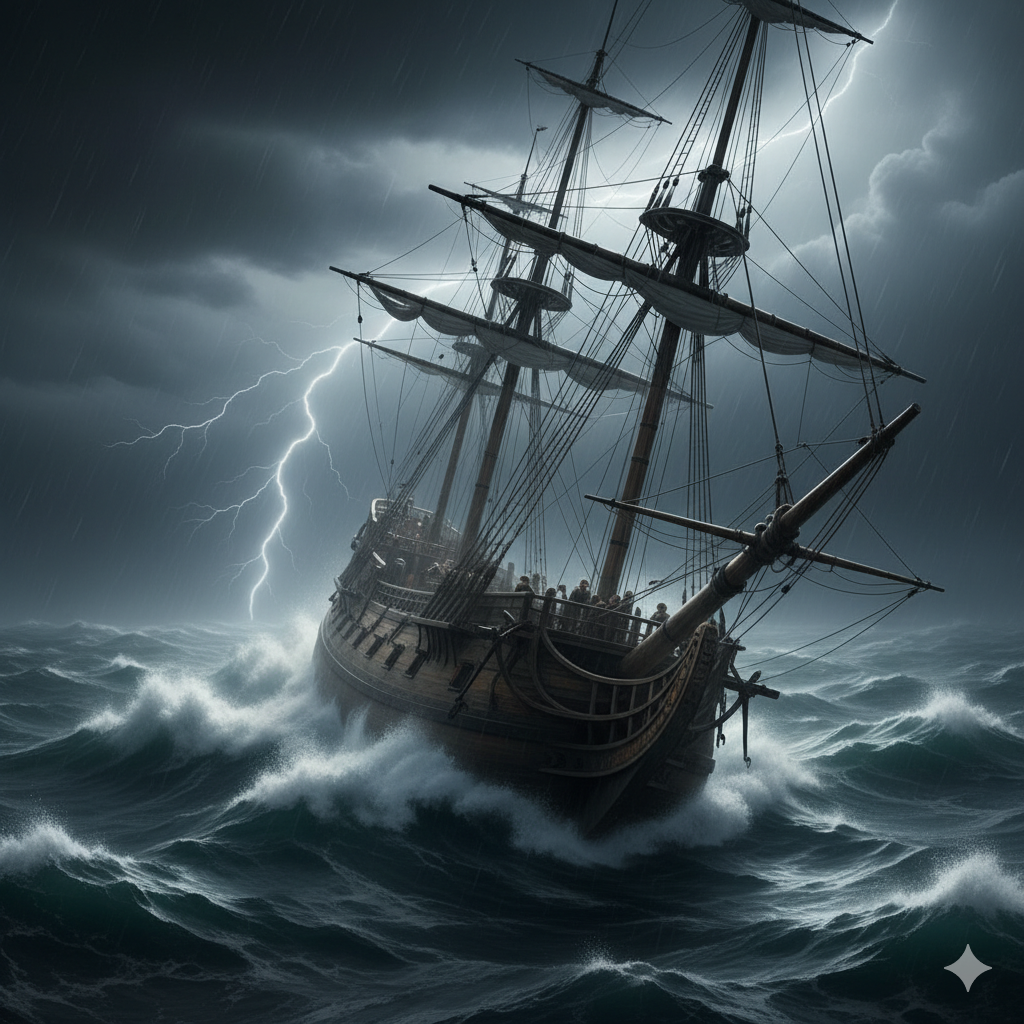
Lightning flashing over angry waves as the ship lists in the wind
Food ran low. Bread turned moldy and water stale. Rats skittered across the planks at night. When the wind howled, people prayed and sang softly to steady their hearts.
A young servant named John Howland was thrown overboard one day — but miraculously, he caught a rope trailing in the waves and was pulled back. The passengers called it a sign: they were meant to survive.
A man clinging to a rope amid towering waves
🔭 A Cry of "Land!"
On November 9, 1620, after weeks of sickness and salt spray, someone shouted from the lookout:
"Land ho!"
Sailors pointing from the crow's nest at dawn's first light
The passengers rushed to see a distant line of dark hills. They wept and hugged one another. But it wasn't Virginia, where they had hoped to settle. Strong winds had blown them far north — to a wild, cold place they would name Cape Cod.
Before stepping ashore, the men gathered and signed a promise called the Mayflower Compact — an agreement to live by fair laws and help one another. It was the first self-government in their new world.
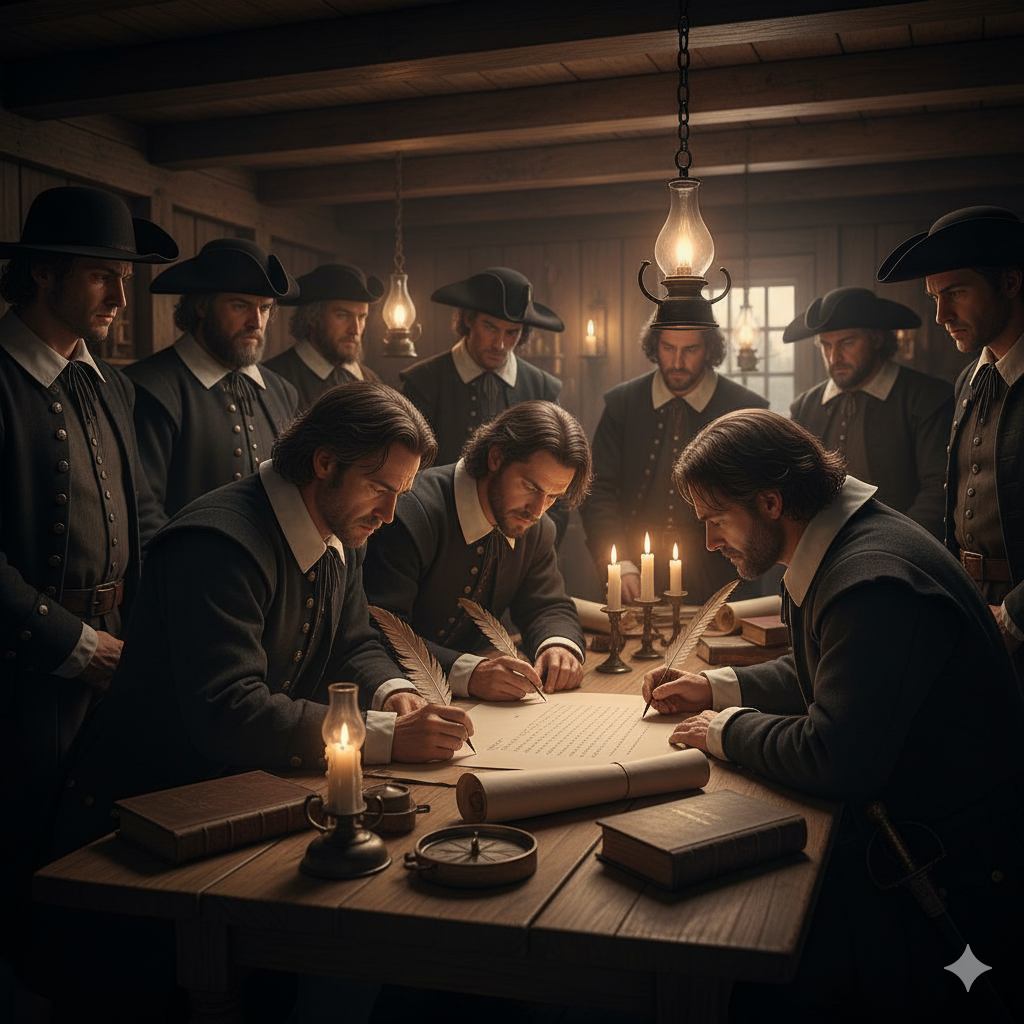
Men gathered around a table, feather quills in hand, candles flickering
❄️ The Harsh New Shore
When they finally landed, snow covered the ground and icy wind whipped from the sea. There were no houses, no crops, only endless forest.
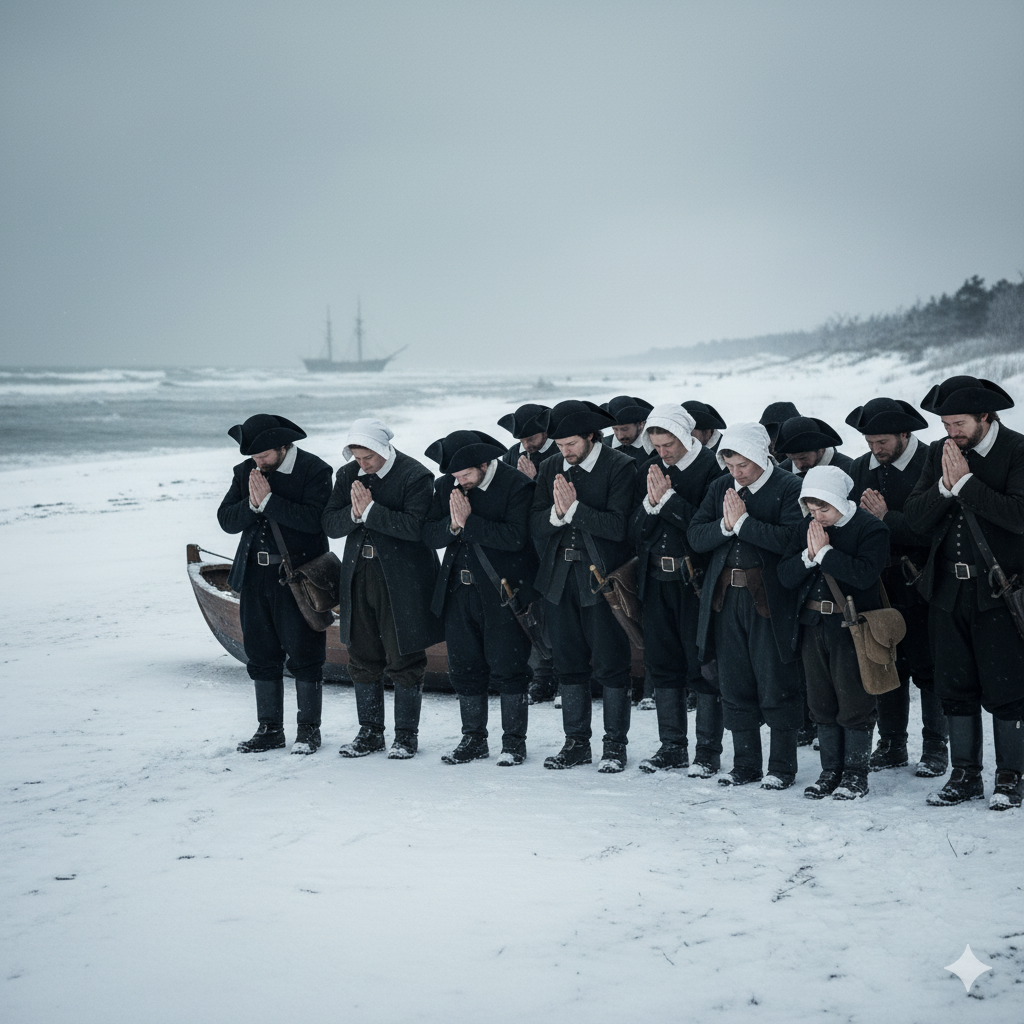
Pilgrims stepping onto a snowy beach, heads bowed in prayer
They built small shelters from fallen trees and cooked whatever they could hunt or gather. Many grew sick. By spring, nearly half had died — yet those who survived found strength in their faith and their friendship.
They gave thanks for each sunrise, each seed that sprouted, each new sign of life. And they built what they called Plymouth Colony — the beginning of a new chapter in American history.
⭐ The Spirit of the Voyage
The Mayflower never sailed again for passengers. Its wooden hull was later broken up for scrap. But its legacy sailed on.
Those who crossed the ocean taught later generations that courage is not the absence of fear — it's facing the storm anyway. They believed that freedom was worth the risk of the sea, the cold, and the unknown.
Every Thanksgiving, when ships and stars decorate classroom walls, remember: once, 102 souls dared to trust the wind and chase a dream across an endless ocean.
💬 Discussion Questions
1. What challenges did the Mayflower passengers face on their voyage?
2. Why do you think they were willing to risk so much for freedom?
3. What was the Mayflower Compact, and why was it important?
4. How would you have felt living for months on such a small ship?
5. How does this story connect to the spirit of Thanksgiving today?
🔬 Mini Experiment: How Waves Work
Goal: Explore how wind creates waves and why sailing was so dangerous in the 1600s.
What You Need:
- A shallow pan of water
- A straw
- A small paper "boat"
Steps:
- Fill the pan halfway with water.
- Blow gently across the surface through the straw — watch waves form.
- Blow harder and see how the "ship" rocks or tips.
💡 Lesson:
Wind transfers energy to water, forming waves. The Pilgrims faced storms that could toss even large ships like toys. Understanding nature's forces helps explain their courage.