🕯️ The Orphan's Thanksgiving
New York City • November 1910
A true story of compassion, kindness, and the miracles of gratitude
A heartwarming, true-to-era Thanksgiving story of compassion, kindness, and gratitude — perfect for November classroom readings or family reflections.
🏙️ The City of Smoke and Snow
In the winter of 1910, New York City was a place of both glitter and gloom. Electric lights gleamed on Fifth Avenue, where ladies in fur coats stepped into grand theaters. But just a few streets away, narrow alleyways filled with smoke from coal stoves, the clatter of horses pulling wagons, and the cries of newsboys selling papers for a penny.
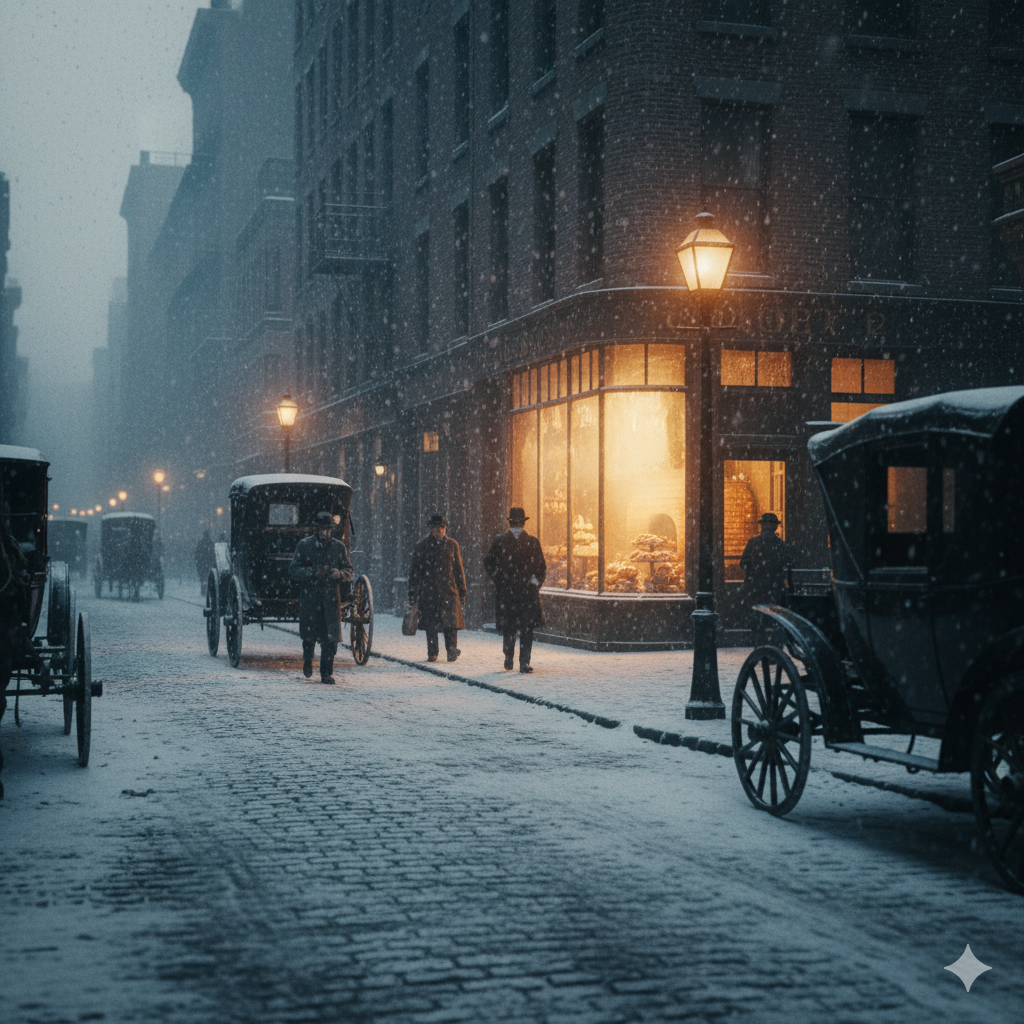
Dim lamplight, a bakery window glowing warmly
In one of those streets stood the Willow Street Home for Orphans, a tall brick building with drafty windows and the faint smell of coal smoke seeping through the walls. Inside lived forty children — some no older than five, others nearly grown — all under the care of Miss Clara Jenkins, a woman with kind eyes, graying hair pulled back in a tight bun, and hands worn from years of washing, mending, and comforting.
Thanksgiving was coming. The children whispered about it at night, dreaming of feasts they'd heard about from the older boys who remembered better days. But this year, there was no turkey, no butter, no pies. Only a few loaves of stale bread and a pot of thin vegetable stew simmering on the old iron stove.
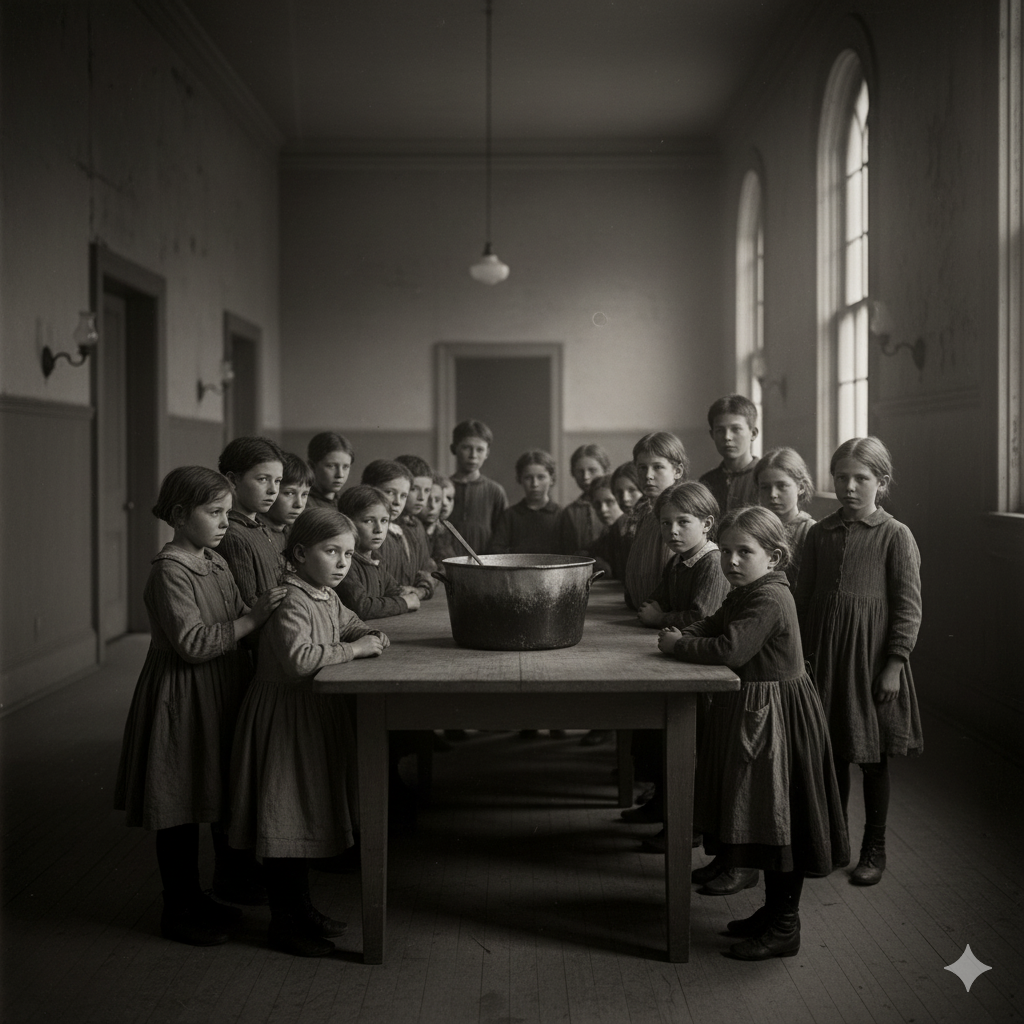
Children gathered near an empty table with a pot of stew
Miss Jenkins stood at the window, watching snow begin to fall. She sighed deeply. "We'll be thankful for what we have," she told the children that evening, her voice gentle but firm. The children nodded bravely, though their eyes were hollow with hunger and their stomachs growled softly in the cold room.
🥖 The Man at the Bakery
Just two blocks away, Mr. Samuel Rourke, a baker with a big gray mustache and a flour-dusted apron, was closing up his shop for the evening. His bakery window displayed golden pies with latticed crusts, warm rolls still steaming from the oven, and cakes topped with sugar roses that looked almost too beautiful to eat.
But lately, business had been slow. The wealthy folks ordered from fancy bakeries uptown, and the working families could barely afford bread. Mr. Rourke worried he might lose his bakery — the same shop his father had built with his own hands thirty years before.
That evening, as he swept the floor and dimmed the lamps, he noticed a thin shadow outside. A boy, maybe eight years old, pressed his face against the cold glass, breath fogging the window. His coat was too small, patched at the elbows, and his cap had a hole.
The baker opened the door, letting warm air rush into the street. "Well now, young man," he said with a tired smile, "have you ever seen a pie this perfect?"
The boy shook his head slowly, eyes wide. "No, sir. It smells like... like happiness."
Mr. Rourke laughed softly — a sound that surprised even himself. He hadn't laughed in weeks. He reached for a small loaf of bread from the cooling rack and wrapped it in brown paper. "Take this to your family, son."
The boy's face fell. "I don't have one, sir. I live at the orphanage on Willow Street."
The baker's smile faded. He handed the boy the bread and watched him run off into the snow. For a long time, Mr. Rourke stood in the doorway, staring at the white flakes falling like feathers. Then, slowly, he turned back inside and lit the lamps again.
🥧 The Night of Pies and Coats
Late into the night, the baker worked like a man inspired. He stoked the oven until it roared. He kneaded dough until his arms ached. He rolled crusts, filled pies with pumpkin, apple, and sweet molasses, and baked until the air smelled like autumn itself.
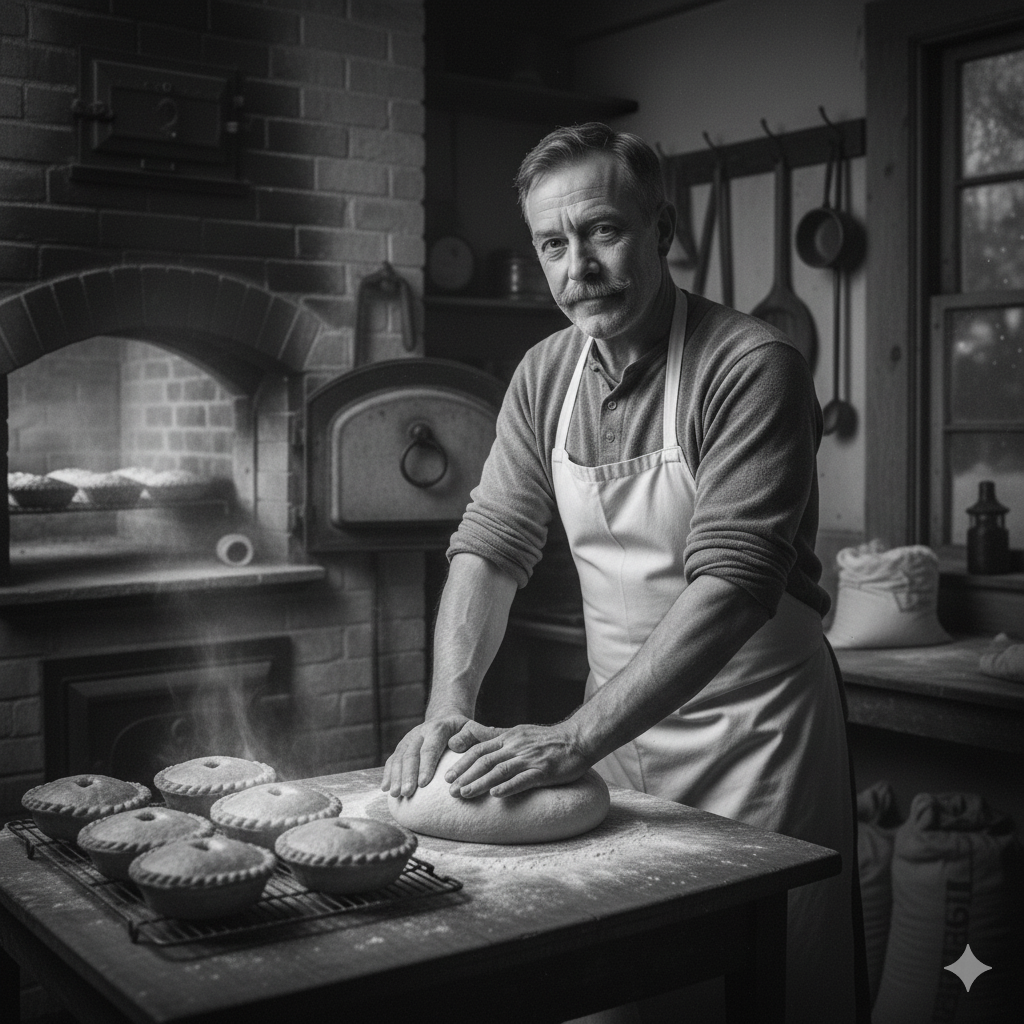
A man covered in flour, kneading dough beside glowing pies
As the moon rose high over the city, he bundled the pies into wicker baskets, carefully wrapping each one. Then he climbed the narrow stairs to the attic above his shop, where he kept old belongings in dusty trunks. He pulled out warm wool coats — ones his own children had worn before they'd grown and moved away to find their fortunes.
There were forty coats in all. Forty small miracles. He brushed off the dust, folded them carefully, and loaded everything into his old wooden wagon. The snow fell heavier now, muffling the sound of the wheels as he pulled the wagon through the empty streets.
When he reached the orphanage, he stacked the pies and coats on the front steps. He left no note — only a simple card written in careful handwriting:
"For the children. From a friend."
Then, before anyone could see him, he disappeared into the snowy night, pulling his empty wagon behind him.
✨ A Morning of Wonder
When the orphans woke the next morning, something was different. A delicious smell — warm, sweet, and impossible — drifted up the stairs. At first, they thought they were dreaming. But then little Mary tugged on Miss Jenkins's sleeve and whispered, "Something smells like pies."
The children rushed to the front door — and gasped. There, stacked high as their heads, were pies. Golden crusts gleaming in the morning light. Loaves of bread still faintly warm. And beside them, a pile of wool coats in browns and blues and grays, one for every child.
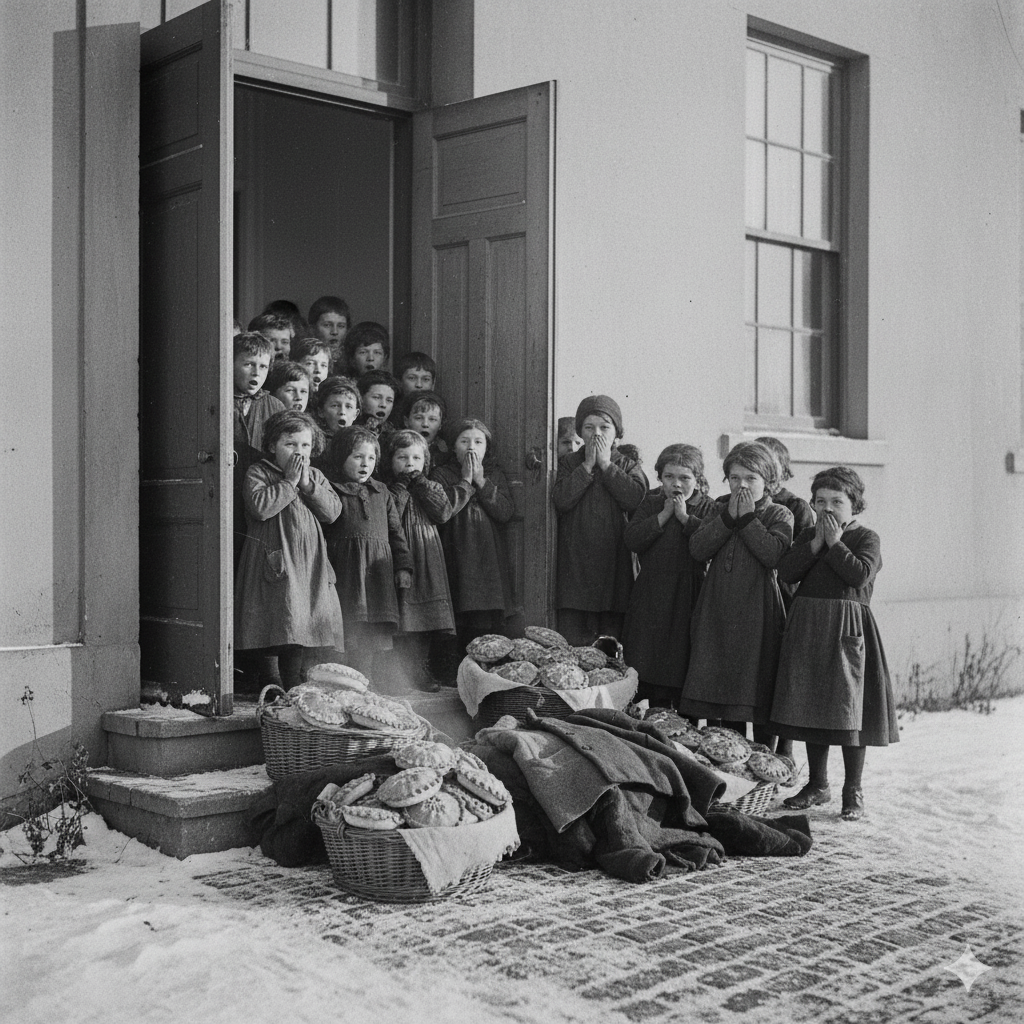
Orphans at the door, gasping at piles of pies and coats
Miss Jenkins pressed a trembling hand to her mouth. Tears spilled down her cheeks as she picked up the small card. She read it aloud, her voice breaking: "For the children. From a friend."
"Children," she said softly, kneeling down so she could look them in the eyes, "someone has given us Thanksgiving."
They carried the food to the dining room, where laughter replaced the hollow creaks of hunger. For the first time in months, the orphanage rang with joy. The littlest ones clapped their hands. The older children helped serve. And everyone — even the shyest boy who never spoke — smiled.
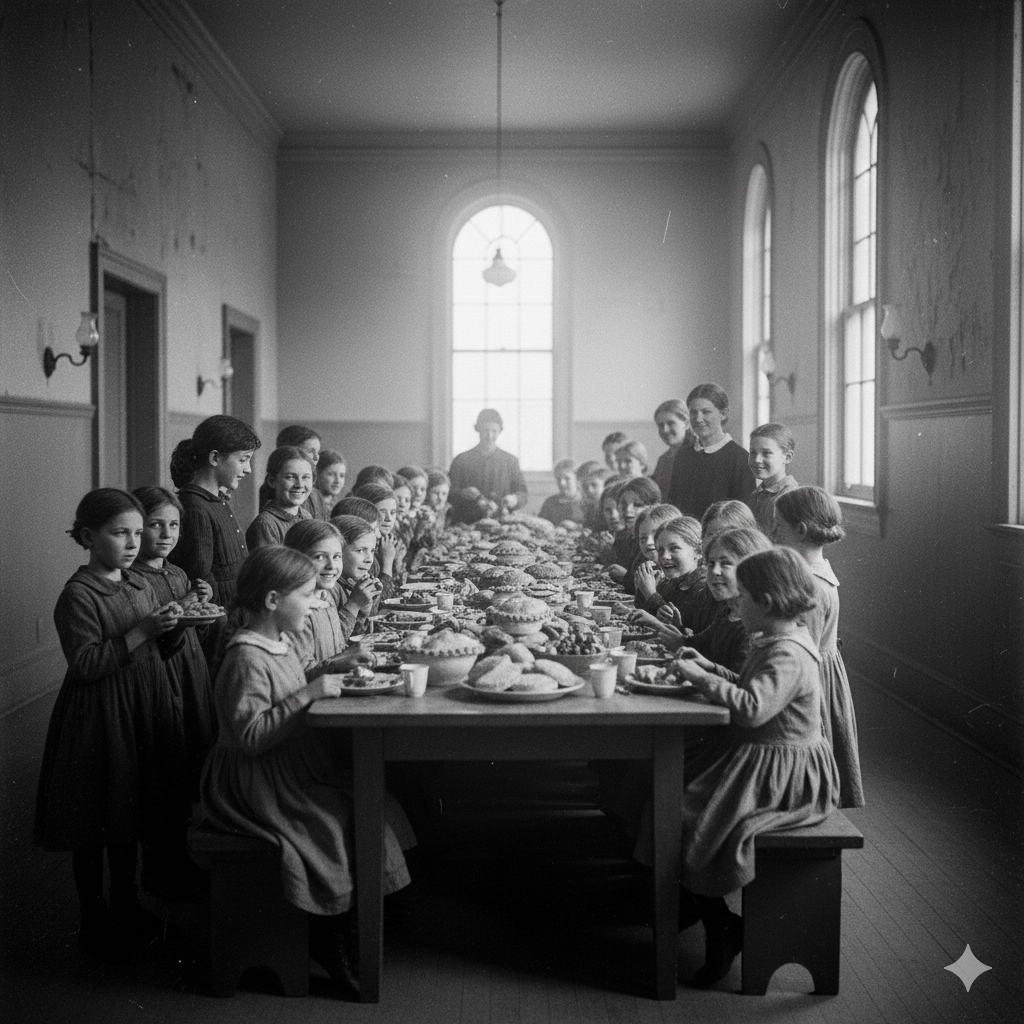
Children laughing and sharing food around a long table
That afternoon, they did something extraordinary. They took half of what they had been given and shared it with neighbors who had even less — families in cramped apartments, elderly widows, workers who'd lost their jobs. Miss Jenkins said, "When someone gives you a miracle, you pass it on."
And though no one knew the baker's name, they prayed for him that night — that his kindness would come back to him a hundredfold.
📖 The Secret Revealed
Years later, one of those orphans — a girl named Catherine who'd worn a patched coat that snowy morning — grew up to be a teacher in a small schoolhouse upstate. She had warm eyes like Miss Jenkins and a gentle way of speaking that made children feel safe.
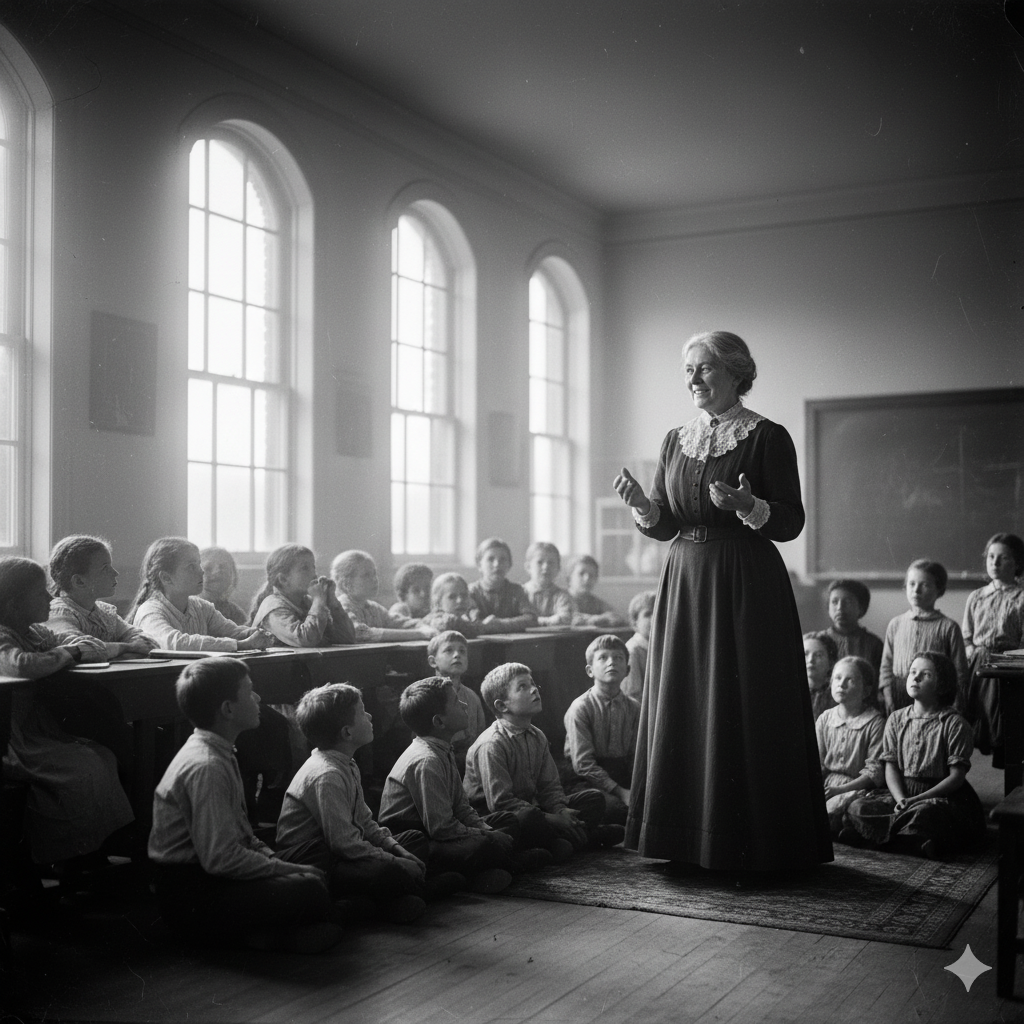
An older woman telling her class the story, sunlight streaming through classroom windows
Every Thanksgiving, she told her students about the night pies appeared like magic at the orphanage door. How a stranger's generosity taught her that even when you have nothing, you can still give. How gratitude isn't just about what you receive — it's about what you do with it.
Some said the baker had fallen on hard times and moved away, his shop sold to pay debts. Others whispered that he'd opened a bigger bakery years later, blessed by prosperity because of his kindness. No one knew for certain.
But Miss Jenkins, who lived to be very old, always believed something simpler. On her last Thanksgiving, surrounded by some of those same orphans — now grown, with families of their own — she said:
"When you give with a full heart, you never disappear. Your kindness becomes a legacy that lives on in others. That baker didn't just give us pies — he gave us hope. And hope is the greatest gift of all."
💬 Discussion Questions
1. Why do you think the baker chose to stay anonymous?
2. How did the orphans show gratitude beyond eating their meal?
3. What do you think Miss Jenkins meant when she said kindness never disappears?
4. How can small acts of giving make a big difference in a community?
5. What would you do to spread kindness during the holidays?
🔗 Mini Activity: Kindness Chain
Goal: Explore how generosity spreads from one person to another.
What You Need:
- Paper strips, markers, and tape
Steps:
- Write one kind act you can do for someone on each paper strip (for example: "Help my neighbor," "Share a snack," or "Say thank you").
- Link the strips together to make a paper chain.
- Each day, take off one strip and complete that act.
💡 Lesson:
Like the baker's pies, one kind act can warm many hearts — and gratitude grows stronger when it's shared.