A Village on Edge
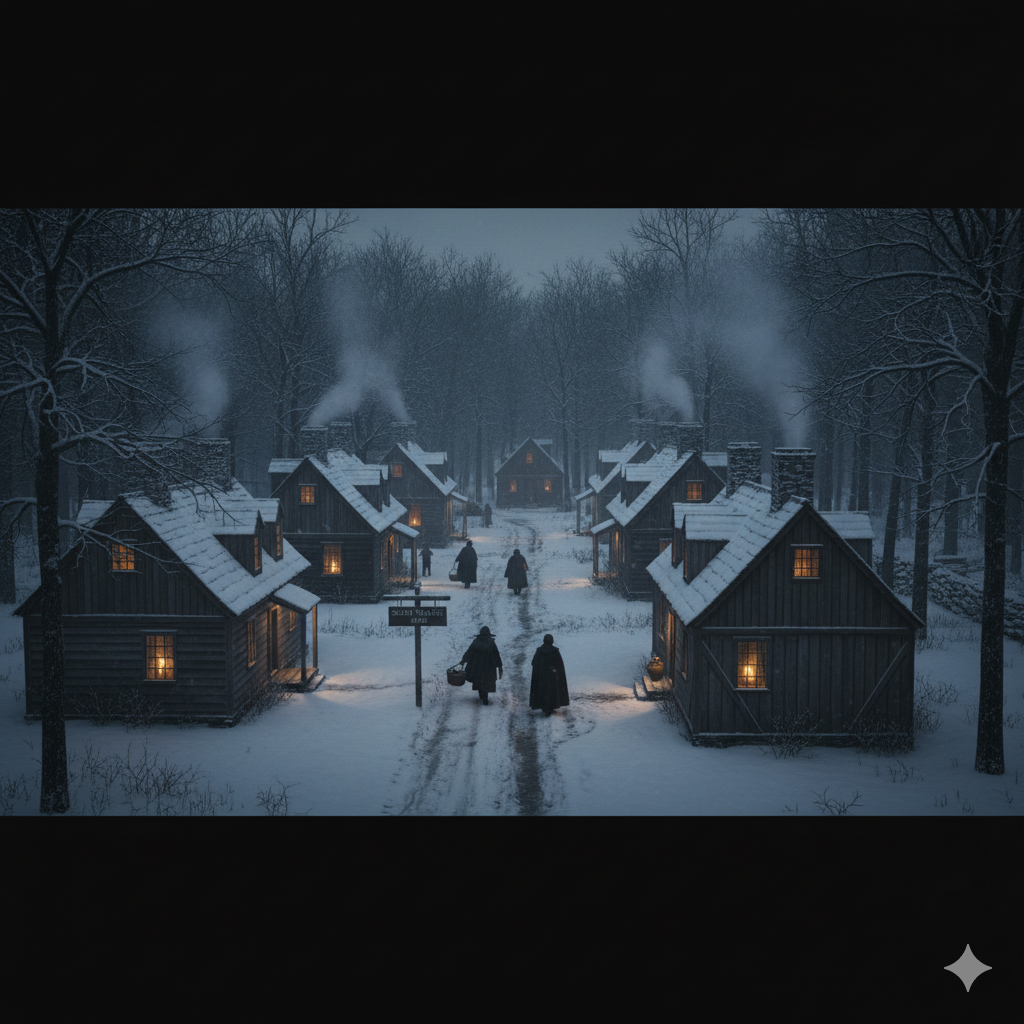
The Puritan village of Salem in 1692 — candlelight flickering in small wooden houses surrounded by snow
In 1692, the small PuritanA member of a strict religious group that settled in early America village of Salem, Massachusetts, was cold, quiet, and fearful. The settlers believed danger waited everywhere — in sickness, storms, and even in people's hearts.
When two young girls began to twitch, shout strange words, and claim that invisible spirits pinched them, the town panicked. Doctors couldn't explain it. Ministers called it witchcraftThe practice people once believed used magic to harm others.
The First Accusations
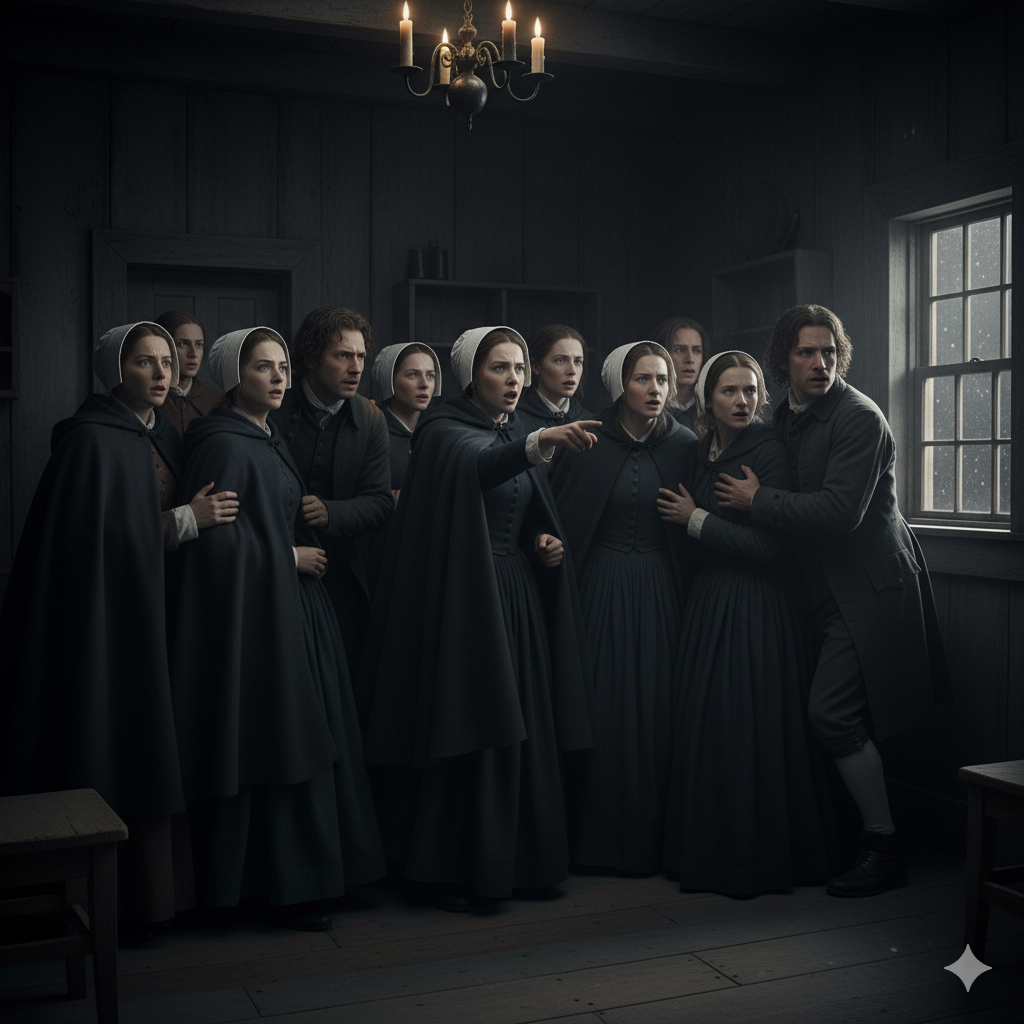
The girls of Salem clutching each other in fear, pointing toward invisible terrors
Soon, the girls accused three women — a slave named Tituba, a beggar named Sarah Good, and a poor widow named Sarah Osborne.
Tituba, frightened and desperate, confessed. She said she had seen the Devil himself walking in Salem's woods, carrying a book filled with names.
After that, anyone could be next. Friends accused friends. Neighbors pointed fingers. Even respected townsfolk whispered that witches hid among them.
"Once the accusations began, fear spread like wildfire through the village."
The Witch Trials Begin
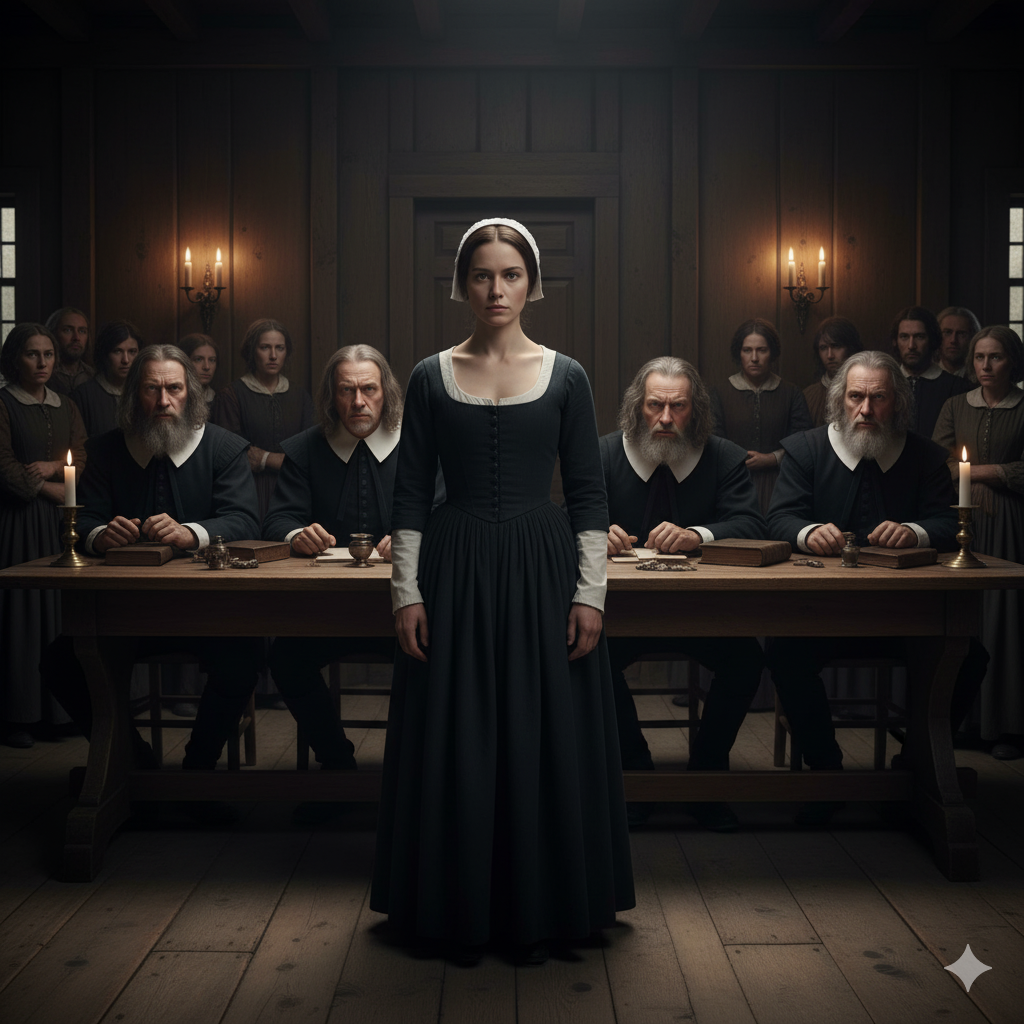
The accused standing before the court as judges lean forward, searching for signs of witchcraft
By summer, the town had built a special court to question the accused. Judges listened to cries, fainting fits, and ghostly "evidenceProof that something is true."
One girl claimed she could see spirits flying through the courtroom. Another said invisible hands choked her whenever a "witch" looked her way.
The judges believed them. The jails filled with frightened people — over a hundred men, women, and even children.
HysteriaExtreme, uncontrollable fear spreading through a group gripped Salem. Anyone who questioned the trials might be accused themselves. Fear silenced truth.
Gallows Hill
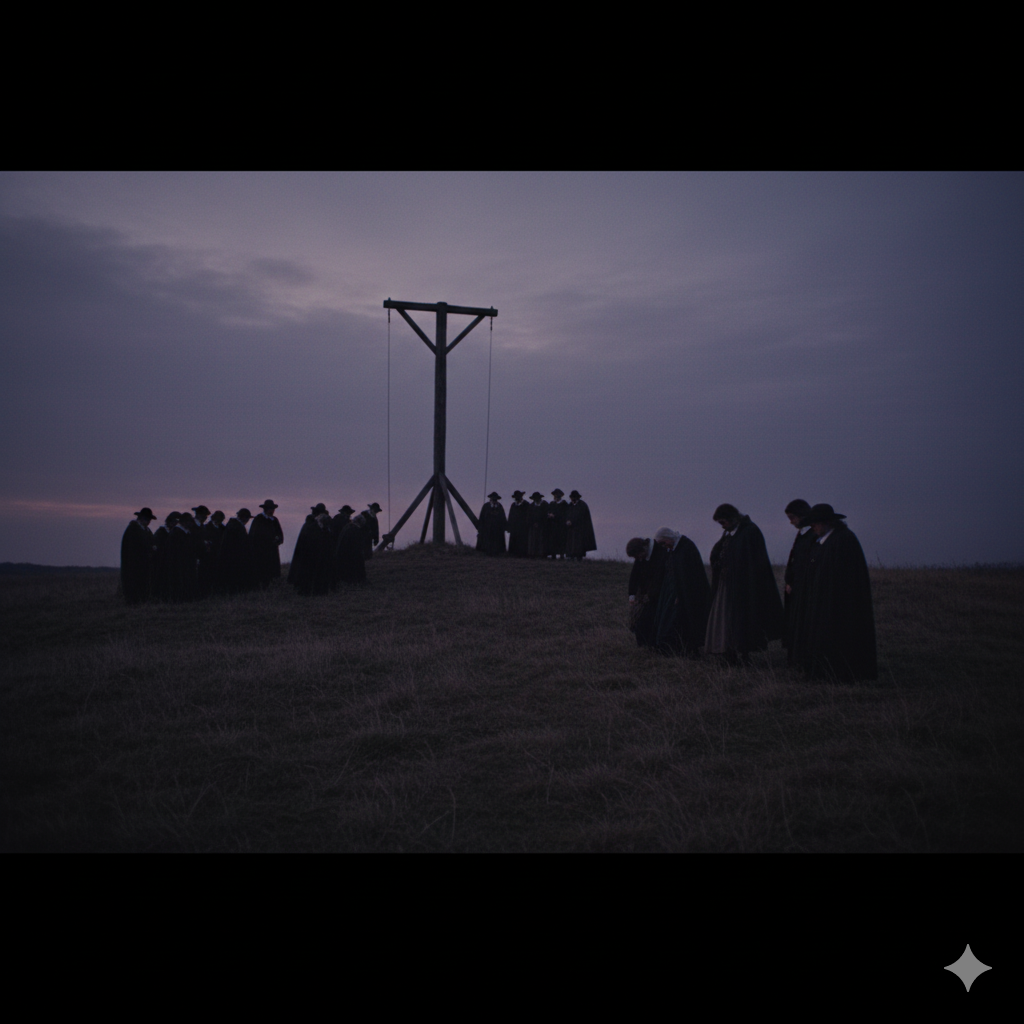
Gallows Hill at dusk — where nineteen innocent people lost their lives
This was one of America's darkest chapters.
On July 19, five women were hanged on a windy hill outside Salem. As the crowd watched, they prayed for forgiveness. Over the next months, nineteen people were executedA public killing as punishment for a crime, and one man was crushed under heavy stones for refusing to speak.
Later, when the hysteria finally faded, people realized terrible mistakes had been made. Many of the victims were innocentNot guilty of wrongdoing.
"The scariest thing wasn't magic — it was what happened when people stopped thinking clearly."
Lessons from Salem

The Salem Witch Trials Memorial — stone benches honor the innocent victims
Years later, the government apologized for the trials. Families of the accused were given new respect and remembrance.
Today, Salem is a peaceful town, but its story still warns us about the danger of fear, rumor, and injustice.
Sometimes, the scariest thing in history isn't magic — it's what happens when people stop thinking clearly and start believing their fears.
"Real justiceFair treatment under the law requires evidence, fairness, and the courage to question even when everyone else believes."
💬 Discussion Questions
Why did the people of Salem believe so strongly in witchcraft?
Think about: religion, fear, and lack of scientific understanding
What role did fear and imagination play in the trials?
Consider: How can fear make people see things that aren't real?
How could the town have handled the situation more fairly?
Think about: evidence, witnesses, and the right to defend yourself
What does this story teach us about judging others without proof?
Reflect: Why is "innocent until proven guilty" so important?
Why do you think the Salem Witch Trials are still remembered today?
Consider: What lessons does this history teach modern society?
🔬 Mini Experiment: The Power of Persuasion
Goal: Discover how easily opinions can spread — even without proof.
What You Need:
- 6–8 classmates or friends
- A small object (like a coin or eraser)
- A blindfold (optional)
Steps:
- Choose one person to leave the room.
- Pass the object secretly between a few people.
- When the person returns, everyone gives clues — some true, some false — about who has it.
- See how quickly confusion spreads! Does the person trust certain voices more? Do false clues seem convincing?
💡 The Lesson:
Just like in Salem, rumors and guesses can seem real if enough people believe them. Critical thinking and evidence protect us from unfair judgment. When we hear accusations, we must ask: "Where's the proof?"
🤔 Connection to History:
In Salem, the "evidence" was often just accusations and fear. No one demanded real proof. This experiment shows how easily we can be misled when we rely on emotion instead of facts. The Salem trials remind us why courts need evidence, why we must question claims, and why fairness matters more than fear.