🪔 Sarah Josepha Hale and the Thanksgiving Proclamation
1846-1863 • The Birth of a National Holiday
How one woman's 17-year campaign united a divided nation
A true, inspiring tale of patience and purpose—how one determined writer's steady voice helped turn a simple harvest custom into a national day of gratitude.
✍️ A Woman with a Pen
In the mid-1800s, when women could not vote and few held public voice, Sarah Josepha Hale already shone like a candle in the dark. Born in 1788 in New Hampshire, she had taught herself literature, philosophy, and languages by reading her brother's college textbooks. When her husband died young, leaving her with five children to support, she turned to the only power she had: words.
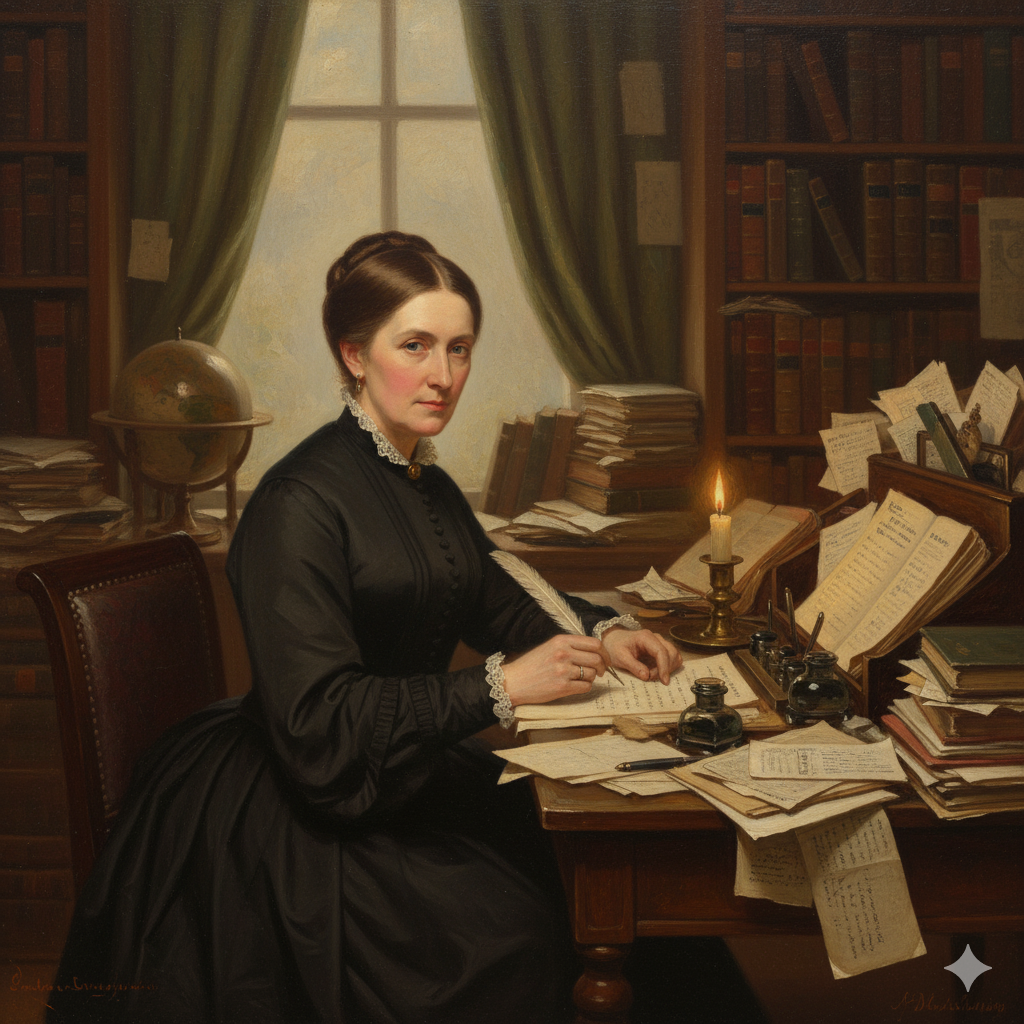
A woman in 19th-century dress surrounded by letters and ink bottles
By 1837, she was the editor of Godey's Lady's Book, one of America's most-read magazines. Each month, from her desk in Philadelphia, she printed poems, recipes, fashion illustrations, and essays urging readers to value education, family, and kindness. She championed schools for girls, public libraries, and the preservation of George Washington's home at Mount Vernon.
But one dream stayed with her year after year: that all Americans, North and South, rich and poor, might share one national day of thanksgiving—a time to pause the quarrels, forgive the differences, and give thanks together. She believed gratitude could heal what politics divided.
✉️ Letters Across the Years
Starting in 1846, Sarah began her campaign. She wrote letters—hundreds of them—to governors in every state, to ministers and newspaper editors, and to the President of the United States. Each letter was carefully crafted, respectful but firm, always making the same plea: set aside one day for national thanksgiving.
Presidents Zachary Taylor, Millard Fillmore, Franklin Pierce, and James Buchanan all received her letters. Some wrote back polite refusals. Others never answered at all. The message was always the same: "A fine idea, Mrs. Hale—but not now. The states should decide such matters themselves."
Still she wrote. Year after year, through wars and peace, harvest and hardship, through the growing tension between North and South, she never stopped. In her magazine, she published editorials explaining why Thanksgiving mattered. She printed recipes for turkey and pumpkin pie, creating an image of what a national feast could look like. She told stories of Pilgrims and harvest blessings, weaving a shared American memory.
"Perseverance," she told her readers in 1857, "is the seed from which great blessings grow." She practiced what she preached. Even as some mocked her obsession, even as political divisions deepened, she kept writing.
By 1861, the nation had erupted into Civil War. Brother fought brother; families were divided. Cities burned. Young men died in muddy fields. And still Sarah wrote—perhaps more urgently now, believing that if the nation could pause together to give thanks, it might remember what it once had in common.
🎩 The Letter to Lincoln
In September 1863—after two long, bloody years of war—Sarah sent a new letter. This time, it was addressed to President Abraham Lincoln. She was 74 years old. Her handwriting still clear, her words still strong.
She urged him to create a day of "humble thanksgiving to Almighty God," hoping that gratitude might heal a wounded country. She wrote that such a day would allow Americans to remember their shared blessings: the land itself, the freedom won by their ancestors, the families that endured despite everything.
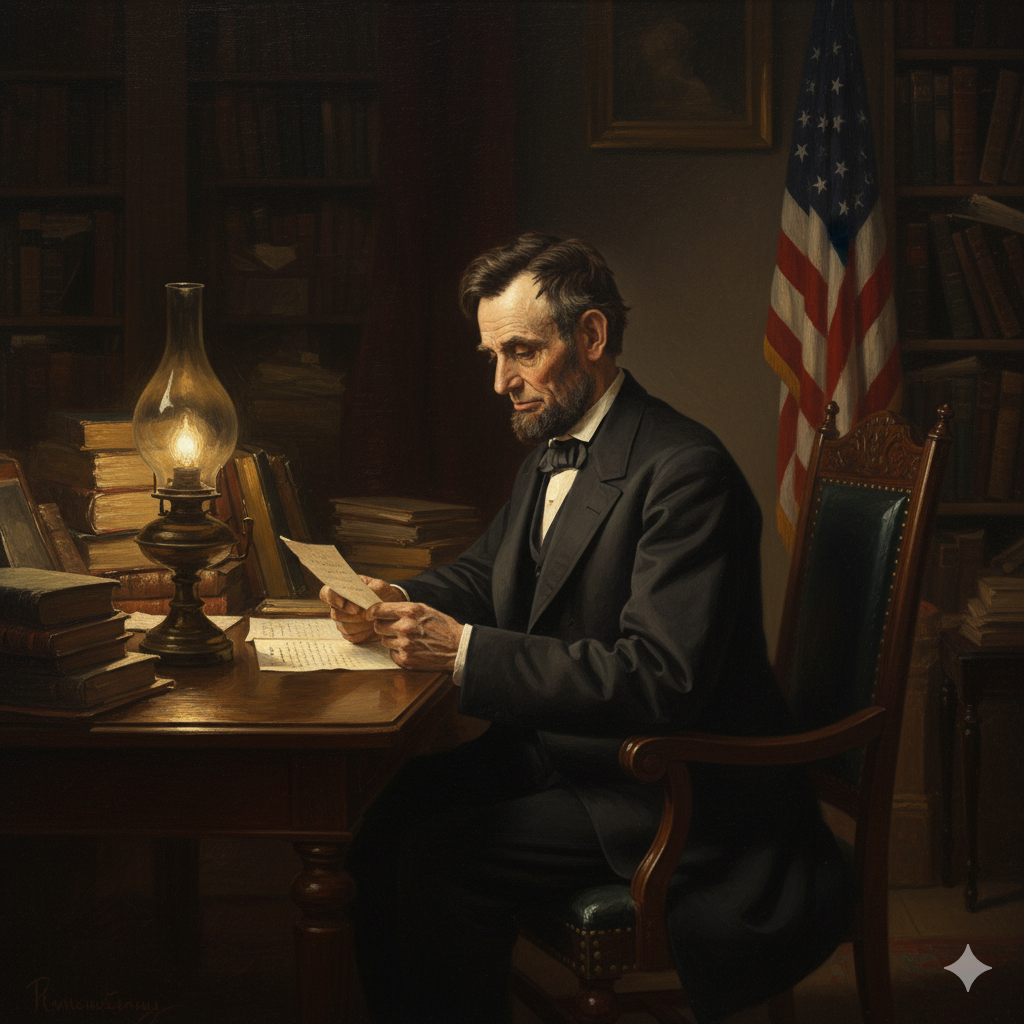
The President at his desk with lamplight reflecting off the page
Lincoln read her letter carefully. Outside his window, soldiers marched through muddy Washington streets. He thought of the families waiting at home, the empty chairs at every table. He thought of his own losses—his young son Willie, dead the year before; his wife Mary, overcome with grief; the nation he loved, tearing itself apart.
He sat quietly for a long moment. Then he turned to his secretary, William Seward, and said simply:
"She is right."
🔔 A Nation Pauses
On October 3, 1863, Abraham Lincoln issued the Thanksgiving Proclamation. He called upon every American to set aside the last Thursday in November to give thanks for "blessings of fruitful fields and healthful skies," and to pray for peace and unity.
The proclamation spread quickly—printed in newspapers, read from pulpits, passed from hand to hand. Across the North, bells rang from church towers. In the South, the proclamation was quieter, more personal, shared among families who longed for the fighting to end.
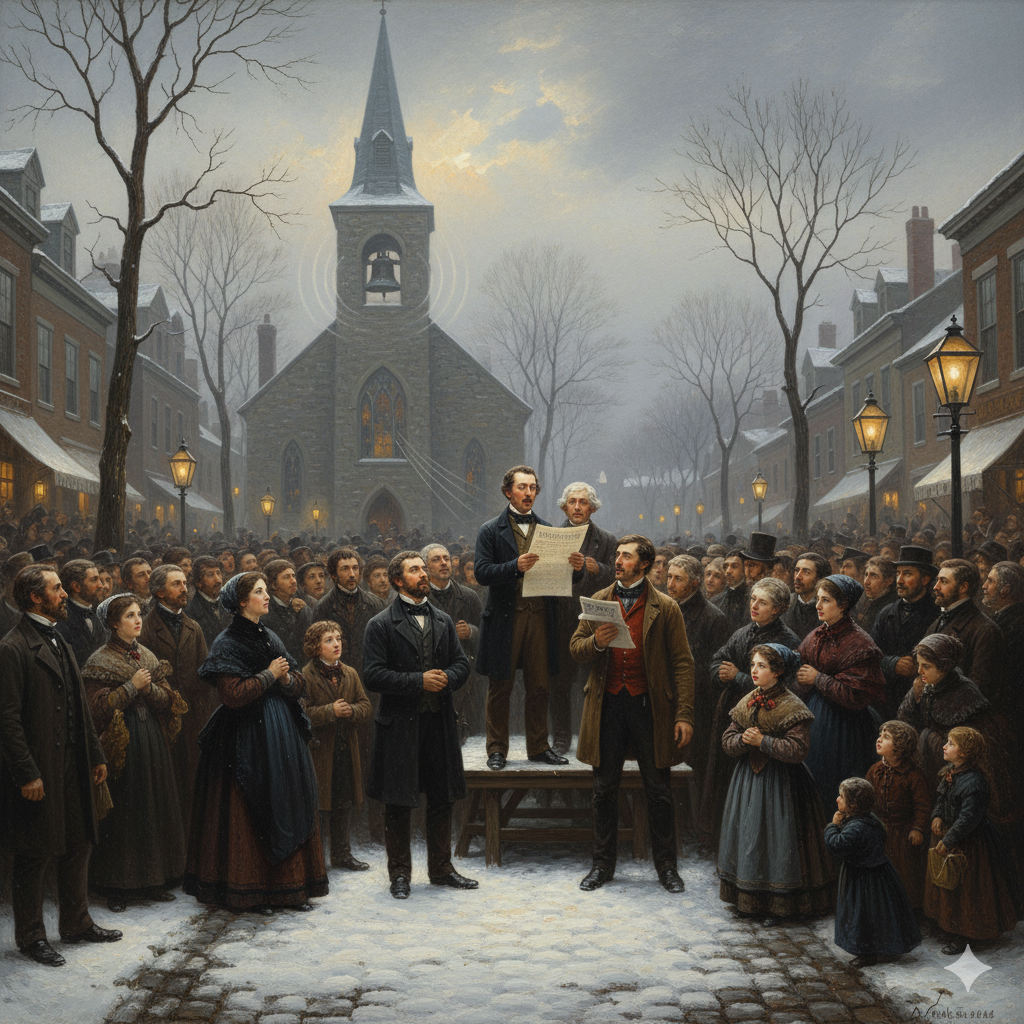
Townspeople gathered in snowy streets
Families gathered around simple tables—some in city apartments, others in farmhouses, still others in army camps where soldiers shared hardtack and beans instead of turkey. They read Lincoln's words aloud. They bowed their heads. They gave thanks for what they still had: each other.
Soldiers sharing a simple meal beside campfires
For the first time in history, an entire nation paused—together. Not because they all agreed. Not because the war was over. But because one woman had believed, for seventeen years, that gratitude could be a bridge.
🌟 The Legacy of Gratitude
Sarah Josepha Hale was 74 years old when her dream came true. She continued writing and editing for nearly 20 more years, until she was past 90. She never stopped encouraging education for girls, the building of public libraries, and the preservation of American history. She wrote novels, poems, and the song we now know as "Mary Had a Little Lamb."
When she died in 1879 at the age of 90, newspapers across the country remembered her as "the Godmother of Thanksgiving." But her legacy is deeper than a holiday. She showed that perseverance matters. That quiet, steady work—done year after year without fanfare—can change a nation.
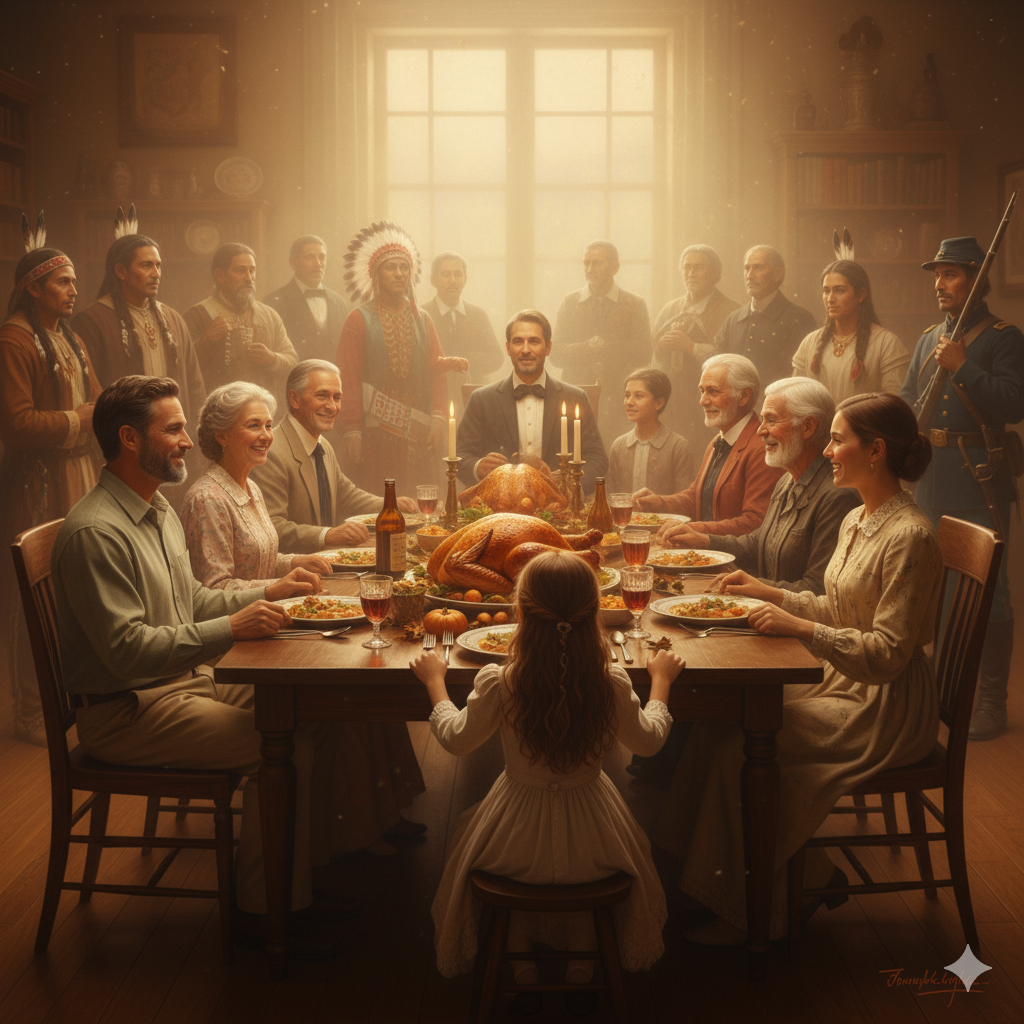
Generations sharing a meal, connecting past to present
Today, every Thanksgiving dinner echoes her faith in kindness and community. She proved that words can build bridges even in times of war, and that gratitude can unite a nation when force cannot.
When you sit down to your own Thanksgiving meal, remember: the holiday exists because one woman refused to stop believing that thankfulness could heal hearts.
💬 Discussion Questions
1. Why did Sarah Josepha Hale believe a national Thanksgiving Day was important?
2. What made her letter to President Lincoln different from her earlier attempts?
3. How can gratitude help people during difficult times?
4. What does Sarah's story teach us about peaceful leadership?
5. What "small idea" might you keep working for if you believed it could help others?
🔬 Mini Experiment: The Power of Persistence
Goal: Discover how steady effort creates lasting results.
What You Need:
- A plastic cup
- A piece of ice
- A spoon of salt
Steps:
- Place the ice in the cup.
- Sprinkle salt slowly, one pinch at a time, and wait.
- Watch how the ice melts, not all at once, but gradually.
💡 Lesson:
Like Sarah's steady letters, small, consistent actions can eventually melt great barriers.