The Man Who Dreamed in Sparks
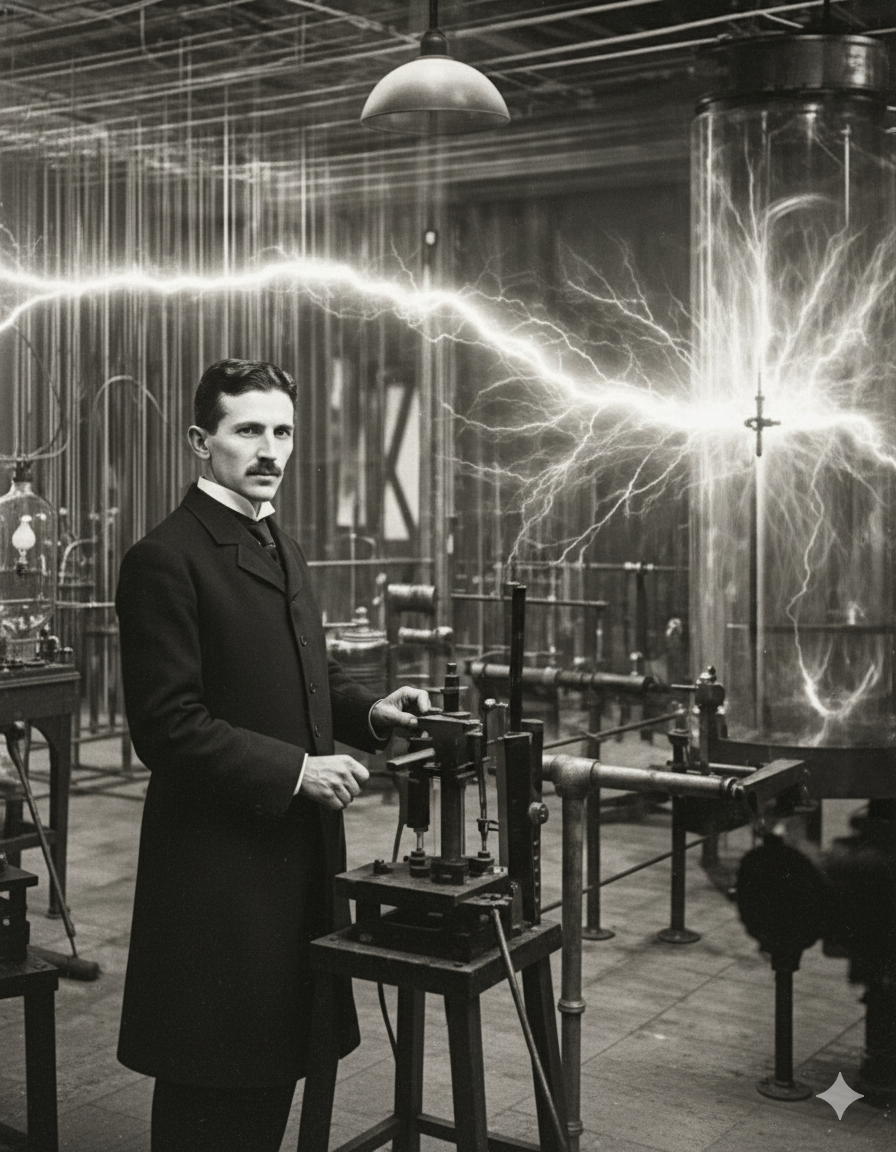
Nikola Tesla in his laboratory, surrounded by electrical equipment and lightning-like arcs of energy
In the late 1800s, when cities were just beginning to glow with electric lights, one man dreamed bigger than anyone else — Nikola TeslaA brilliant Serbian-American inventor who pioneered alternating current electricity.
He was tall, soft-spoken, and endlessly curious. While others saw wires and switches, Tesla saw lightning trapped in metal.
At night, he walked through New York City's streets, watching lamplighters ignite the gas lamps one by one. He whispered to himself:
"One day, they'll light themselves."
Tesla didn't just imagine the future — he invented it. But first, he would have to win a war.
The Battle of the Currents
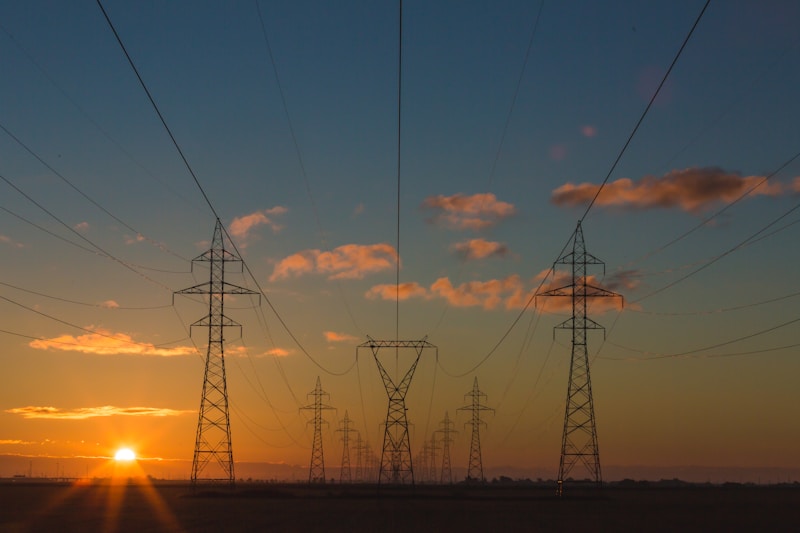
The rivalry between Edison's DC and Tesla's AC would determine how the world was powered
Tesla once worked for another famous inventorA person who creates new things through imagination and experimentation — Thomas Edison — but the two didn't agree.
Edison used direct currentElectricity that flows in one direction only (DC) (DC) power, which was strong but couldn't travel far. Every few blocks needed its own power station.
Tesla believed in alternating currentElectricity that changes direction, allowing it to travel long distances (AC) (AC), which could travel miles through wires and power entire cities.
Edison said it was dangerous. Tesla said it was the future.
Their rivalry became known as The Battle of the Currents — a scientific war fought not with weapons, but with ideas, demonstrations, and innovationA new idea or improvement that changes how people live.
In the end, Tesla's AC power lit up the 1893 Chicago World's Fair — the first great city of light. The crowd gasped as thousands of bulbs came alive at once, glowing like captured stars.
"Let there be light," Tesla said — and there was.
Tesla had won. His system would power the world.
The Tower That Touched the Sky
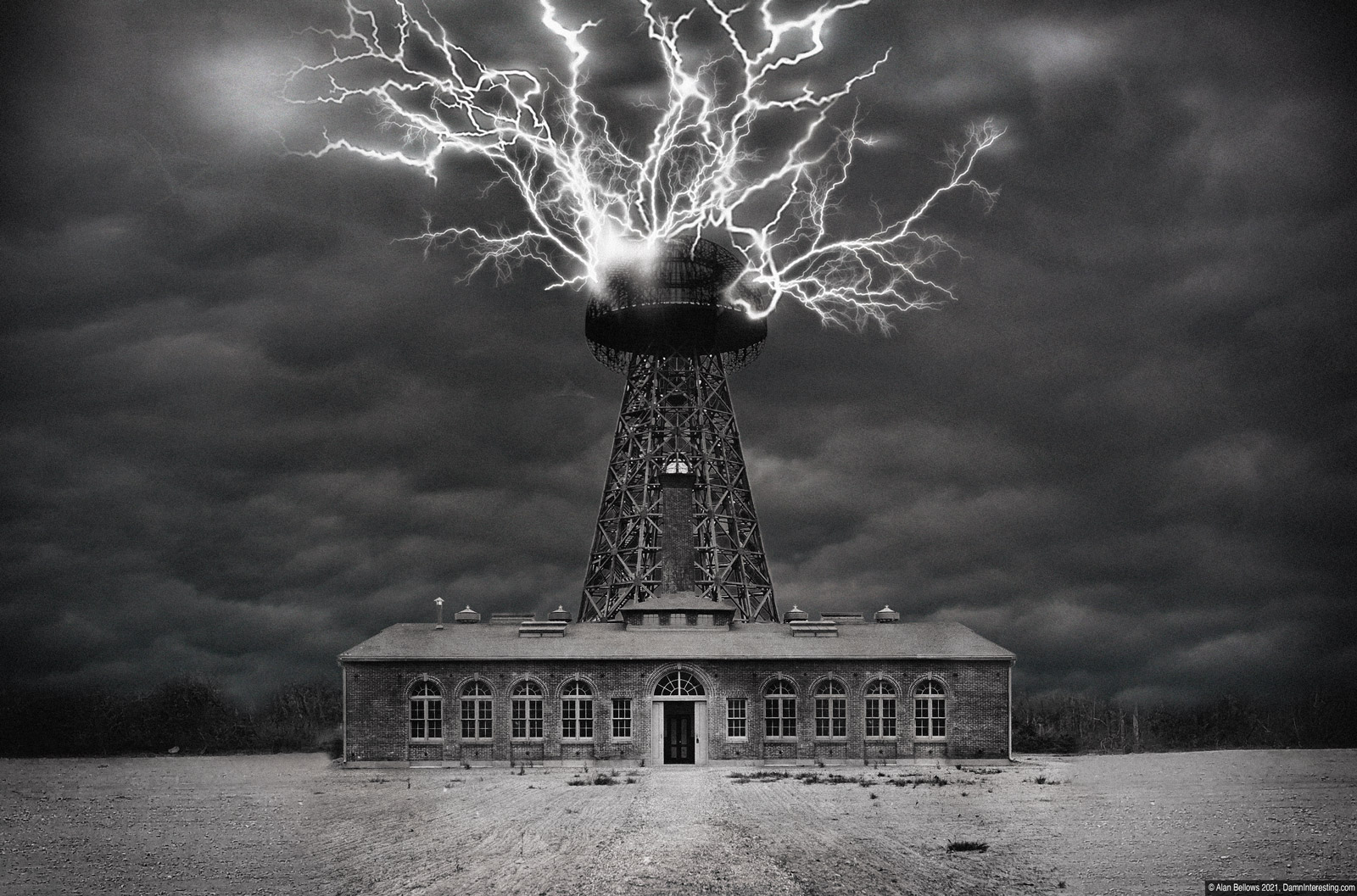
Wardenclyffe Tower on Long Island — Tesla's ambitious attempt to transmit electricity wirelessly across the globe
But Tesla's biggest dream was still ahead: free electricityThe flow of energy that powers lights, motors, and machines for everyone, everywhere.
In 1901, he began building a giant tower on Long Island called Wardenclyffe. It looked like a wooden rocket ship topped with a gleaming copper dome.
He said it would send electricity through the air — no wires at all — to light up every home and ship in the world. The earth itself would become one giant electrical conductorA material that allows electricity to flow through it easily.
People came from miles around to see the "Lightning Machine" that could make the ground hum beneath their feet.
At night, blue sparks leapt from the tower into the sky, crackling like thunderclouds. Some said they saw halos of light over the ocean. Others said it was impossible — that no man could tame lightning.
But Tesla believed he could.
"The day science begins to study non-physical phenomena, it will make more progress in one decade than in all the previous centuries."
The Dream That Faded
Tesla's sponsor, the wealthy banker J.P. Morgan, wanted to make money from the project. He grew concerned when he realized Tesla's plan.
"If everyone gets free power," Morgan asked, "where do the profits come from? How do we charge them?"
Tesla had no answer. He didn't care about money — he cared about the future.
When the money stopped, construction halted. The great tower stood silent, unfinished — Tesla's dream frozen in copper and wood.
He kept inventing — radio waves, turbines, wirelessSending power or information without wires lights, remote control boats, X-ray imaging — but the world wasn't ready for all his ideas.
Some called him a genius. Others called him a dreamer. A few called him mad.
Still, Tesla never gave up hope.
"The present belongs to them," he said softly. "But the future — the future is mine."
Sparks in the Sky
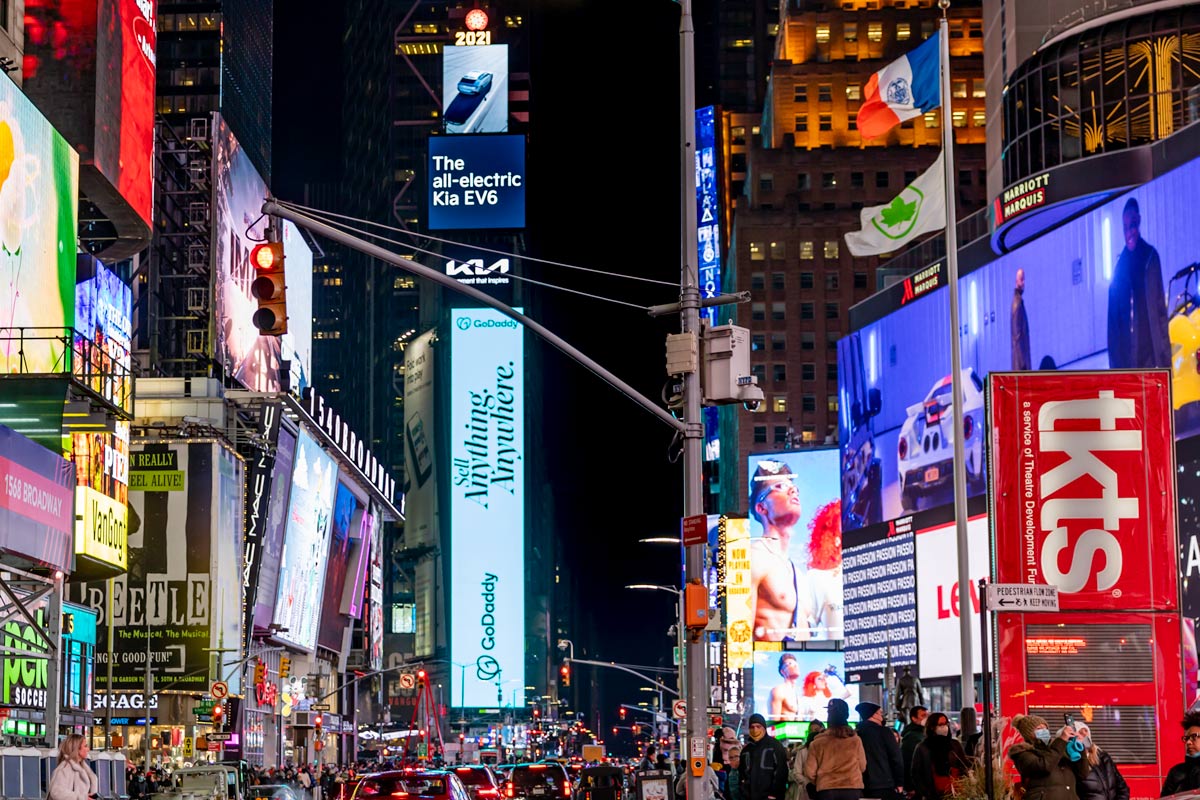
Today's cities glow with electric light — a testament to Tesla's vision of a world powered by AC electricity
Today, scientists use wirelessSending power or information without wires power, radio, and electric vehicles — all ideas Tesla imagined more than a century ago.
Every time you turn on a light, charge your phone wirelessly, or listen to the radio, you're using technology Tesla helped create.
The AC electricity flowing through your walls? That's Tesla's invention.
The WiFi signal connecting your devices? Based on Tesla's wireless transmission patents.
The electric cars driving silently down the street? Named after him.
Tesla died alone in a New York hotel room in 1943, feeding pigeons from his window. He had little money and few possessions. But his ideas had already changed the world.
And sometimes, during a thunderstorm, when lightning dances across the clouds, people still say:
"That's Tesla, sending his energy through the sky."
The man who dreamed in sparks became immortal — not through wealth or fame, but through the light that fills our world.
💬 Discussion Questions
Why did Tesla and Edison disagree about electricity?
Think about the differences between DC and AC power, and what each inventor valued.
What do you think made Tesla's ideas so far ahead of his time?
Consider how long it took for some of his inventions to be widely used.
Why do you think people were both amazed and afraid of the Lightning Machine?
What might have been scary about wireless electricity in the early 1900s?
How do we still use Tesla's inventions today?
Look around your classroom or home — what runs on AC electricity or wireless technology?
Do you think it's better to dream big or focus on smaller goals first — or both?
Tesla had grand visions but also worked on practical inventions. What's the right balance?
🔬 Mini Experiment: Make Static Lightning!
Goal: Understand how electricity moves through the air.
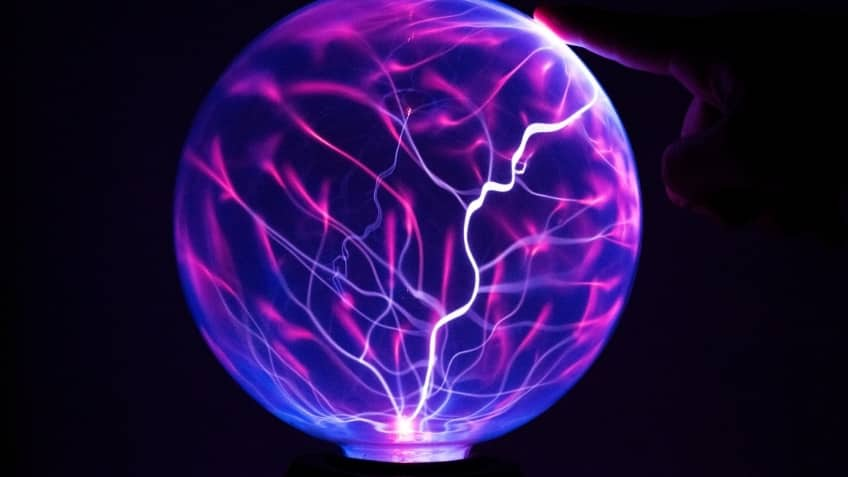
Simple static electricity experiments help us understand the same forces Tesla worked with
What You Need:
- A balloon
- A wool cloth or your hair
- A metal spoon or light switch
- A dark room (optional, to see the spark better)
Steps:
- Rub the balloon quickly on the cloth or your hair for 15–20 seconds
- Slowly move it near the spoon or a wall
- You'll hear a tiny pop! or see a spark — that's static electricity jumping through the air, just like Tesla's lightning!
- Try it in a dark room to see the spark more clearly
- Experiment with different materials — does plastic work? Metal? Your finger?
⚡ The Science:
Tesla's tower tried to move energy through air on a much bigger scale — he was experimenting with the same invisible forces we can feel in tiny sparks. When you rub the balloon, you're moving electrons (tiny particles of electricity) from one surface to another. When they jump back, they create a spark — miniature lightning!