Riding e-bikes and scooters can be fun — but only when you know how to stay safe
Why E-Bike and Scooter Safety Matters
Electric bikes and scooters have become more popular than ever. They're fast, fun, and a great way to get around your neighborhood. But here's the thing: they're also faster and heavier than regular bikes — which means you need to know the rules to stay safe.
An e-bikeAn electric bicycle with a motor that helps you pedal faster can reach speeds of 15-20 miles per hour without much effort. That's as fast as a car driving through a parking lot! An e-scooterAn electric scooter with a motor, operated by standing and using handlebars can go just as fast — and sometimes even faster.
Every year, thousands of kids are injured while riding bikes and scooters. But most of these accidents can be prevented if you follow the right safety rules.
If you wouldn't do it on a regular bike, don't do it on an e-bike or scooter. And if you're going faster, you need to be even MORE careful — not less.
In this guide, you'll learn everything you need to know to ride safely, confidently, and responsibly. Let's get started!
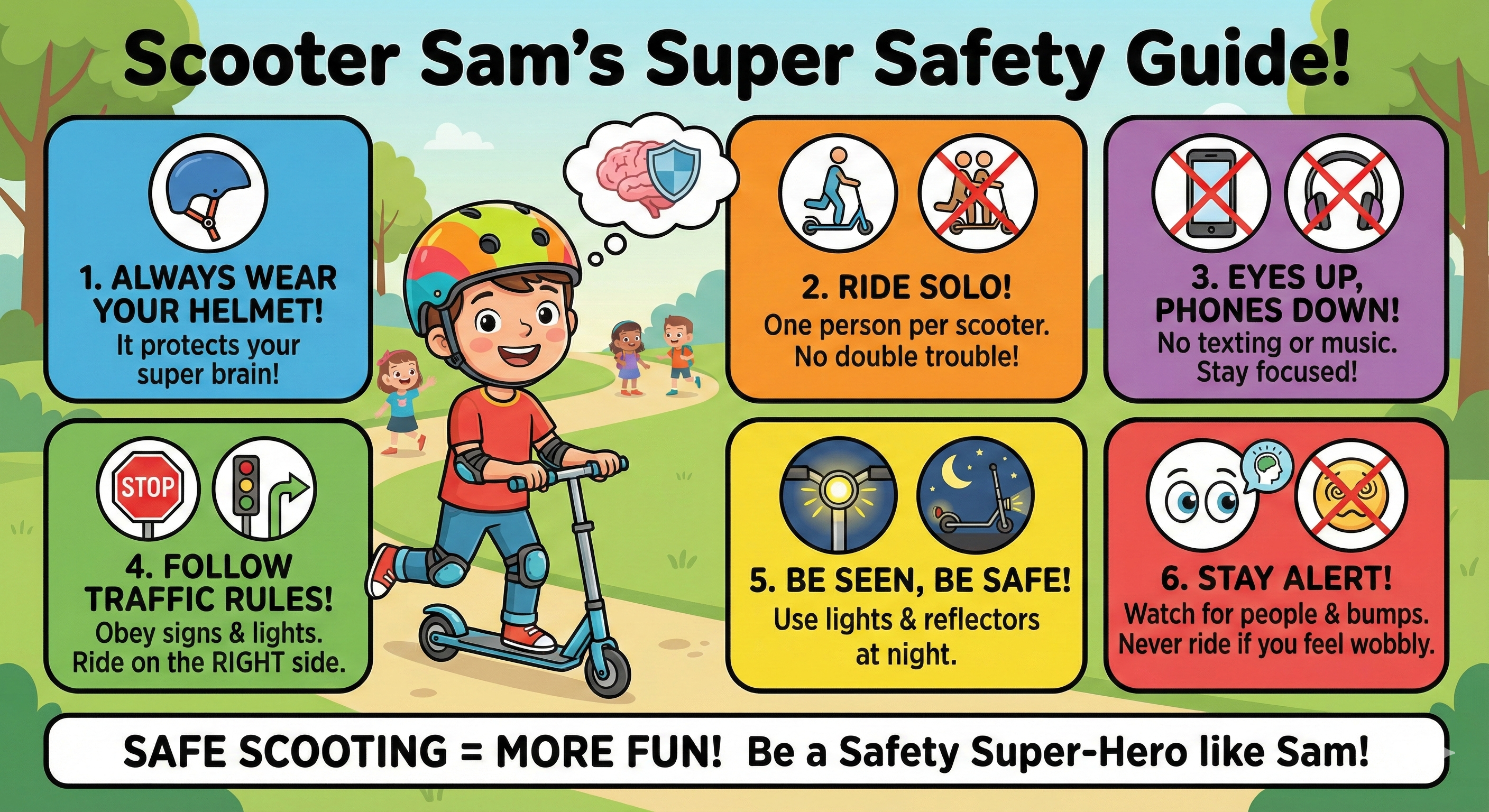
🛴 Scooter Sam's Super Safety Guide!
Follow these 6 essential rules and be a Safety Super-Hero like Sam! Each rule is explained in detail below.
Rule #1: Gear Up Every Time
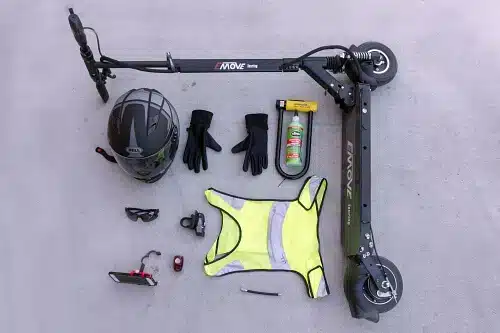
Always wear the right safety gear — it could save your life
Before you even touch the handlebars, you need to make sure you're wearing the right protective gearEquipment worn to protect your body from injury. Think of it like a superhero's armor — it's there to keep you safe if something goes wrong.
Must be properly fitted and fastened. The helmet should sit level on your head, not tilted back. You should only be able to fit two fingers between the chin strap and your chin.
Never ride in flip-flops, sandals, or barefoot. Sneakers or athletic shoes with good grip are best.
Wear colors that help drivers see you — bright yellow, orange, or white. Reflective strips are even better.
Especially important when you're first learning or riding at higher speeds.
Protect your hands if you fall and improve your grip on the handlebars.
Why helmets are non-negotiable: Your brain is the most important part of your body. A helmet can reduce the risk of serious head injury by up to 85%. That means if you fall and hit your head, wearing a helmet makes it much, much less likely that you'll be seriously hurt.
⚠️ Important: In many places, it's actually against the law to ride an e-bike or scooter without a helmet if you're under 18. But even if it's not required by law, it's required by common sense. Always wear your helmet — no exceptions.
Rule #2: Know the Rules of the Road
Understanding traffic rules keeps you and others safe
When you ride an e-bike or scooter, you're sharing space with cars, pedestrians, and other riders. That means you need to follow the same basic rules as everyone else.
1. Obey All Traffic Signals and Signs
Red light means STOP. Stop sign means STOP. Yield sign means slow down and give others the right of way. These rules apply to you just like they apply to cars.
2. Ride in the Same Direction as Traffic
Always ride on the right side of the road, going the same direction as cars. NEVER ride against traffic — drivers won't expect you coming from that direction.
3. Use Bike Lanes When Available
If there's a bike laneA designated part of the road marked specifically for bicycles, use it! That's your safe space. Stay inside the lines and watch for cars turning across your path.
4. Sidewalk Rules Vary
In some places, riding on the sidewalk is allowed. In others, it's not — especially for e-bikes. Check your local rules. If you DO ride on a sidewalk, go SLOWLY and always yield to pedestrians.
5. Use Hand Signals
Let drivers know what you're doing:
• Left turn: Extend your left arm straight out
• Right turn: Extend your right arm straight out (or left arm bent upward)
• Stopping: Extend your left arm downward, bent at elbow
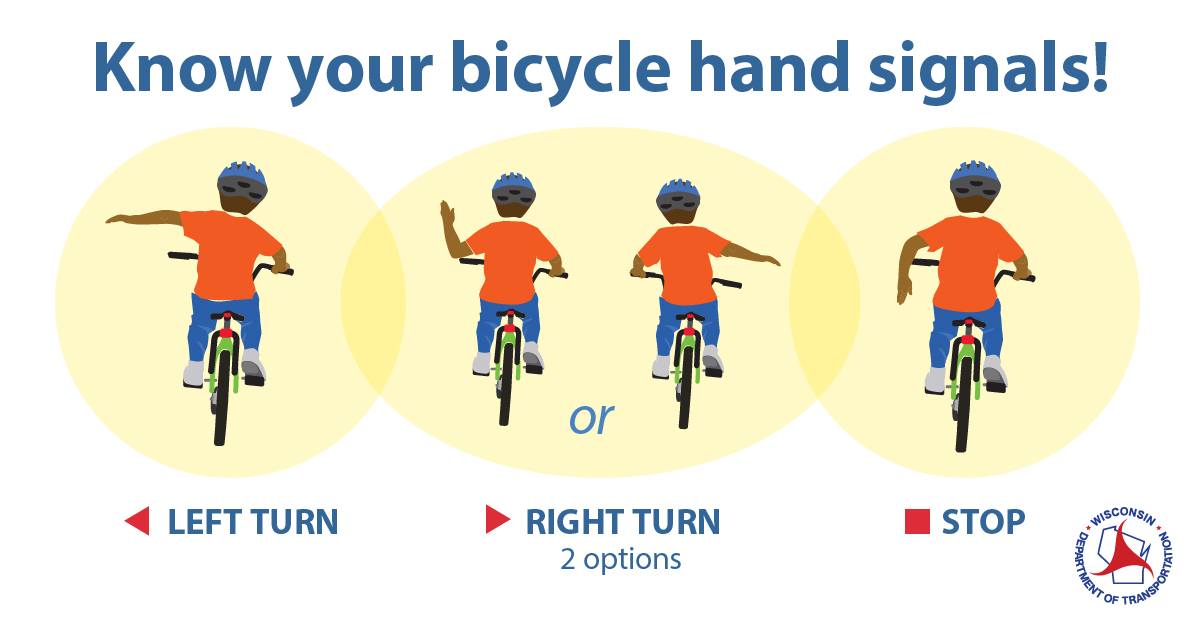
Learn these hand signals and use them every time you turn or stop
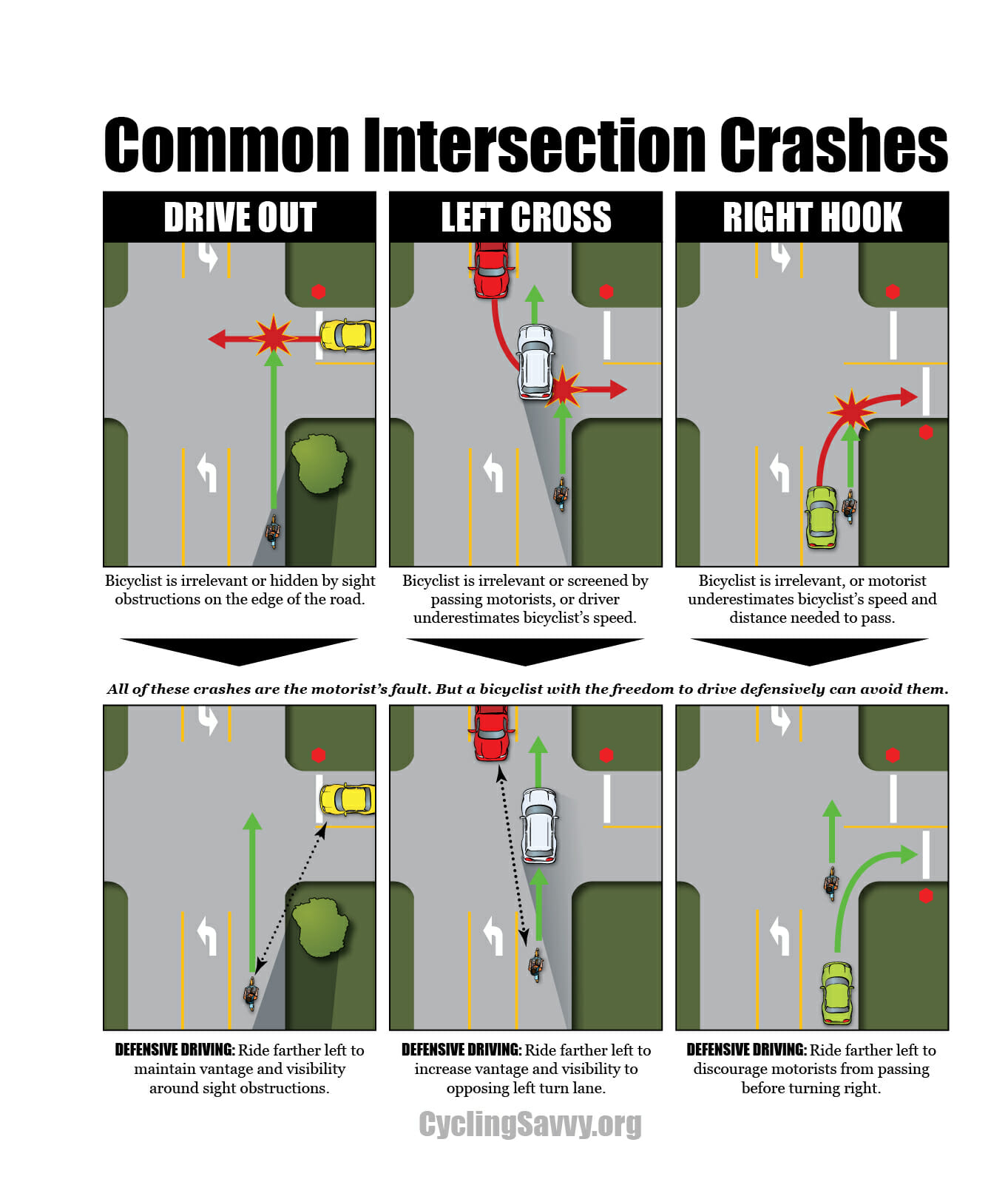
At intersections: This is where most accidents happen. Always slow down at intersections, even if you have the right-of-wayThe legal right to go first in traffic situations. Look left, right, then left again before crossing. Make eye contact with drivers if possible — make sure they see you before you go.
Cars turning right while you're going straight. The driver might not see you in their blind spot. Always assume drivers DON'T see you, and be ready to stop.
Rule #3: Control Your Speed
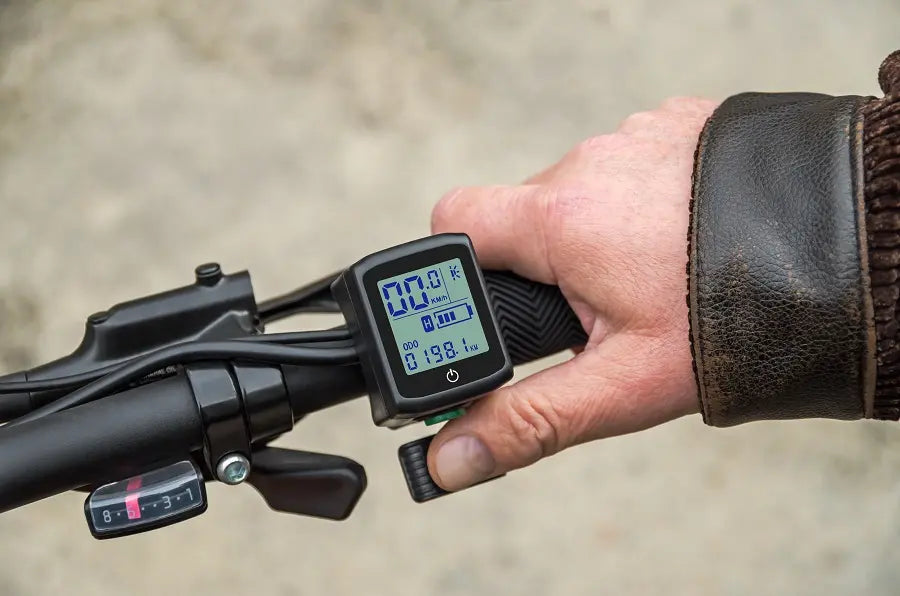
Going too fast is one of the main causes of e-bike accidents
One of the biggest differences between a regular bike and an e-bike is how fast you can go. With barely any effort, an e-bike can get you going 15-20 mph. That might not sound like much, but it's fast enough to cause serious injuries if you crash.
The faster you go, the longer it takes to stop. At 15 mph, it can take you 15-20 feet to come to a complete stop after you hit the brakes — that's about the length of a small car!
Always reduce your speed in these situations:
- When approaching any intersection or crosswalk
- When riding near parked cars (watch for doors opening!)
- On crowded sidewalks or paths with pedestrians
- When going downhill (gravity makes you go even faster)
- In wet or rainy conditions (slippery surfaces)
- At night or in low visibility
- In areas with lots of driveways
- Around curves or corners where you can't see ahead
Know your brakes: E-bikes and scooters usually have two brakes — one for the front wheel and one for the back. The front brakeThe brake that stops the front wheel, usually controlled by your right hand is more powerful but can cause you to flip over the handlebars if you use it too hard. Practice using both brakes together gently and evenly.
🛑 Emergency Stop Practice: Find a safe, empty area (like a parking lot) and practice stopping quickly. Get a feel for how long it takes to stop at different speeds. This could save your life someday.
Rule #4: Stay Visible and Alert
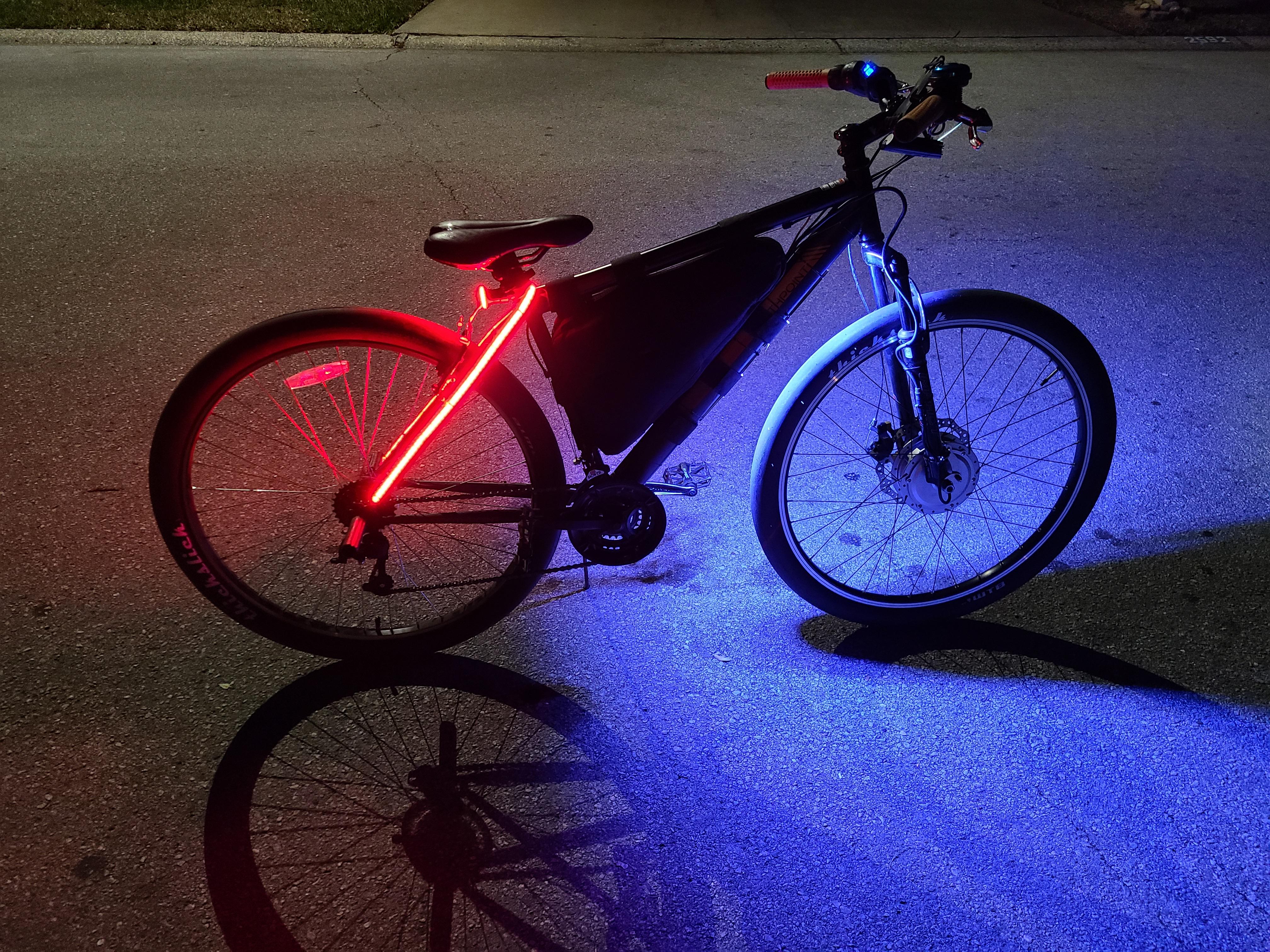
Being seen is just as important as seeing — especially at night
One of the most common reasons for bike accidents is simple: drivers didn't see the rider. You might be following all the rules perfectly, but if a driver doesn't notice you, you're still in danger.
Wear Bright Colors
Yellow, orange, white, and neon colors are easiest for drivers to spot. Avoid wearing all black or dark colors, especially at dusk or dawn.
Use Lights
If you ride at night or in low light, you MUST have lights:
• White front light (so you can see ahead)
• Red rear light (so cars behind you can see you)
Many e-bikes and scooters have built-in lights — make sure they're turned on!
Add Reflectors
Reflective tape, stickers, or vests help you be seen from all angles. The more reflective material you have, the better.
Make Eye Contact
Whenever possible, try to make eye contact with drivers at intersections. If they're looking at their phone or not looking your direction, assume they don't see you.
Avoid distractions: Never ride with headphones or earbuds in both ears. You need to hear cars, sirens, horns, and other warning sounds. And absolutely NO texting or looking at your phone while riding — not even at stop lights!
Riding at night is much more dangerous. If you must ride after dark:
• Go slower than normal
• Use front and rear lights (not optional!)
• Wear reflective gear
• Avoid busy streets when possible
• Tell your parents where you're going and when you'll be back
Best advice? Avoid riding at night unless absolutely necessary.
Rule #5: Watch Out for Hazards
Even if you're following all the rules, there are hazards on the road that can cause you to crash. Being aware of these dangers and knowing how to handle them is a key part of staying safe.
1. Car Doors Opening ("Getting Doored")
When riding past parked cars, someone might open their door right in front of you. Always leave at least 3 feet of space between you and parked cars. Look for people sitting in cars or brake lights that just turned on.
2. Potholes and Cracks
Your wheels are small, and even a small pothole can cause a crash. Scan the road ahead and steer around holes, cracks, and uneven pavement when it's safe.
3. Wet or Slippery Surfaces
Rain, wet leaves, gravel, sand, and ice all make it harder to stop and turn. Go slower and brake earlier when conditions are wet.
4. Railroad Tracks and Grates
If you have to cross railroad tracks or metal grates, cross them at a right angle (straight on), not at a slant. Your wheel can get caught and cause a crash.
5. Dogs and Animals
Dogs sometimes chase bikes and scooters. If a dog runs toward you, stop and get off. Put your bike between you and the dog. Don't try to outrun it — that just makes them chase harder.
6. Distracted Pedestrians
People looking at their phones might walk right in front of you. Always be ready to stop, and use your bell or voice to warn them: "On your left!" or "Coming through!"
Learn to spot these hazards before they become dangerous
Rule #6: Ride Responsibly
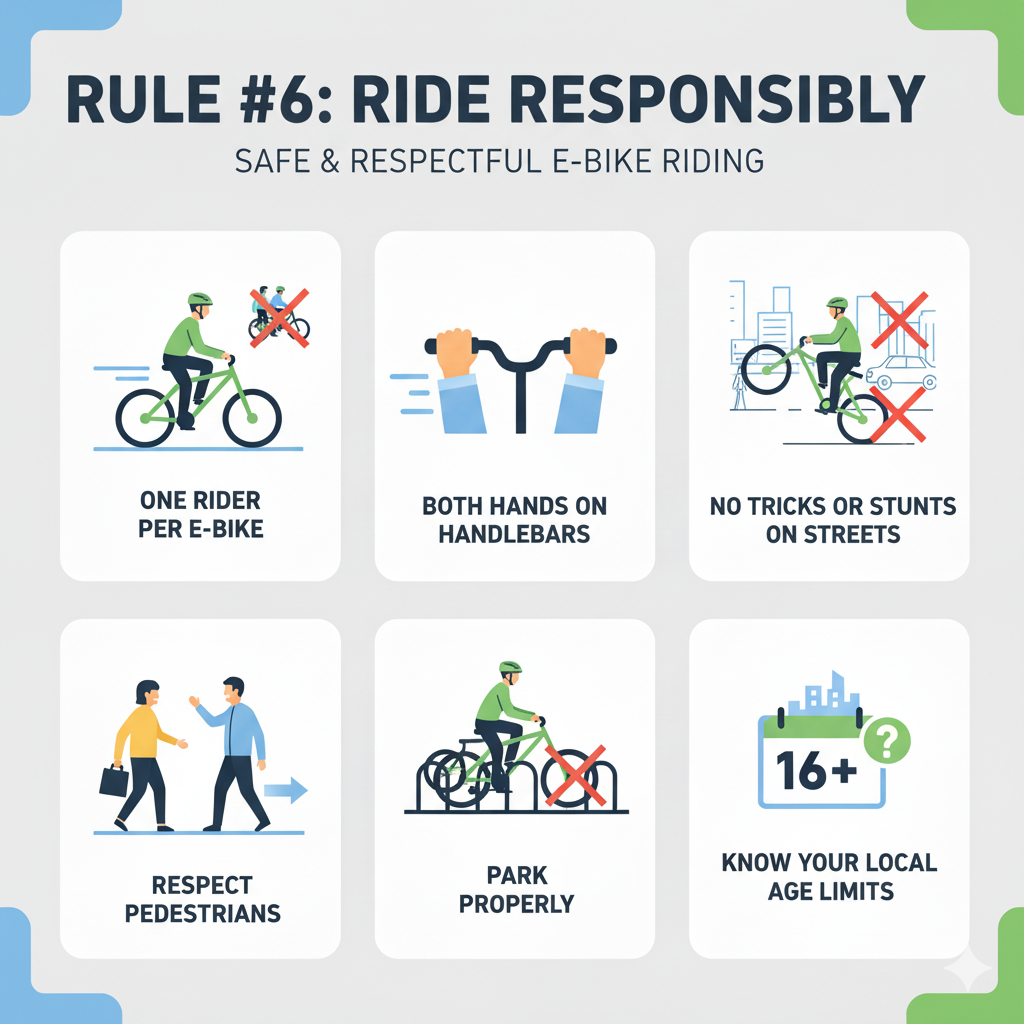
Six essential rules for responsible e-bike riding
Being safe isn't just about protecting yourself — it's also about being respectful and responsible toward others.
E-bikes and scooters are designed for one person. Carrying a passenger makes it harder to balance and control.
No texting, eating, or carrying things while riding. If you need to use your phone or carry something, stop first.
Never do wheelies, jumps, or other tricks on streets, sidewalks, or bike paths. Save tricks for safe, empty areas like skate parks — not where cars or people are around.
Pedestrians always have the right of way on sidewalks and crosswalks. Slow down and give them space.
Don't leave your e-bike or scooter blocking sidewalks, ramps, or doorways. Park in designated areas when available.
Some cities require you to be a certain age to ride e-bikes or scooters on streets. Check your local laws.
Be a good ambassador for e-bikes and scooters. When you ride responsibly, people see that young riders can be safe and respectful. When you ride recklessly, it makes everyone look bad — and cities might create stricter rules or bans.
What to Do If Something Goes Wrong
Even if you do everything right, accidents can still happen. Here's what to do if you get in a crash or have a close call:
1. Stop and Assess
Move yourself and your bike out of traffic if possible. Check yourself for injuries. Are you bleeding? Does anything hurt badly? Can you move everything?
2. Get Help
If you're hurt, don't try to tough it out. Call a parent, guardian, or 911 if it's serious. Even minor injuries should be checked by an adult.
3. Exchange Information
If a car was involved, get the driver's name, phone number, and insurance information. Take photos of any damage. Get contact info from any witnesses.
4. Report It
Tell your parents or guardian what happened, even if you feel fine. Some injuries don't show up right away. If it involved a car, file a police report.
5. Replace Your Helmet
If your helmet hit the ground during a crash, it needs to be replaced — even if it looks fine. Helmets are designed to absorb one impact, and they can't protect you as well after that.
💡 Close Calls Are Learning Opportunities: If you almost got hit or had a scary moment, think about what happened and what you could do differently next time. Did you check both ways? Were you going too fast? Was your helmet on properly? Learn from it so it doesn't happen again.
✅ Pre-Ride Safety Checklist
Before every ride, take 2 minutes to check these things:
Your Gear:
Your Bike/Scooter:
Final Question:
"Am I alert, focused, and ready to ride safely?"
If you're tired, distracted, or upset, it might be better to wait. Safe riding requires your full attention.
💬 Discussion Questions
Why is wearing a helmet more important on an e-bike than a regular bike?
Think about speed and impact force.
What would you do if a friend wanted to ride with you on your e-scooter?
How would you explain why it's not safe?
Why do you think most e-bike accidents happen at intersections?
Consider visibility and what drivers are paying attention to.
If you saw someone riding recklessly on an e-scooter, what would you do?
When is it important to speak up about safety?
What's the difference between being careful and being scared?
Can you enjoy riding and still be safe?
🤔 Safety Scenarios: What Would You Do?
Test your safety knowledge with these real-life situations:
Scenario 1: The Shortcut
You're running late to meet your friends. You could take the bike path (which is longer) or cut through a busy parking lot. What do you do?
Show Answer
Take the bike path! Parking lots are full of cars backing up, people not looking, and unexpected obstacles. The extra 2-3 minutes is worth being safe. You can text your friends that you'll be a bit late.
Scenario 2: The Forgotten Helmet
You're at your friend's house and about to ride home. You realize you forgot your helmet. Your friend says "It's only a few blocks, you'll be fine." What do you do?
Show Answer
Don't ride without a helmet — period. Ask your friend's parents for a ride, call your parents to pick you up, or walk your bike home. Most accidents happen close to home on short trips, not long rides. Never compromise on helmet safety.
Scenario 3: The Green Light
You're at an intersection and the light turns green. A car on your right is also waiting to turn right (across your path). What should you do?
Show Answer
Even though you have a green light, wait and make sure the car sees you before you go. Try to make eye contact with the driver. If they're looking the other way or at their phone, they might turn right in front of you. It's better to wait 3 seconds than to be right but get hit.
Scenario 4: The Phone Call
Your parent calls while you're riding. What do you do?
Show Answer
Don't answer! Pull over to a safe spot (like a sidewalk or parking area), stop completely, and then call them back. Riding while on the phone is extremely dangerous — you can't keep both hands on the handlebars, and you're not paying full attention to traffic.
👨👩👧👦 For Parents: Additional Resources
Parents and guardians: We encourage you to watch this comprehensive safety video with your child. It covers important safety rules and demonstrates proper riding techniques.
E-Bike and Scooter Safety Video
Watch this video together to reinforce safe riding practices
Important Reminders for Parents:
- Check that your child's helmet fits properly before every ride
- Review local laws regarding age requirements and where e-bikes/scooters can be ridden
📋 Clark County E-Bike Regulations
For Las Vegas area residents: Review the official Clark County e-bike regulations and frequently asked questions.
⚠️ Important: Local laws vary by city and county. These regulations apply to Clark County, Nevada (Las Vegas area). Please check your local government website for regulations in your area.
💰 Violation Fines (Clark County):
- 1st violation: $150
- 2nd violation: $300
- Subsequent violations: $600
⚠️ Parents/guardians are financially responsible for minors' violations.
- Practice riding together in a safe area before allowing street riding
- Establish clear rules about where and when they can ride
- Regularly inspect the e-bike or scooter for proper function (brakes, tires, lights)
- Talk about real scenarios and what to do in dangerous situations
- Lead by example - always follow traffic rules yourself
Remember: Safety First, Fun Always
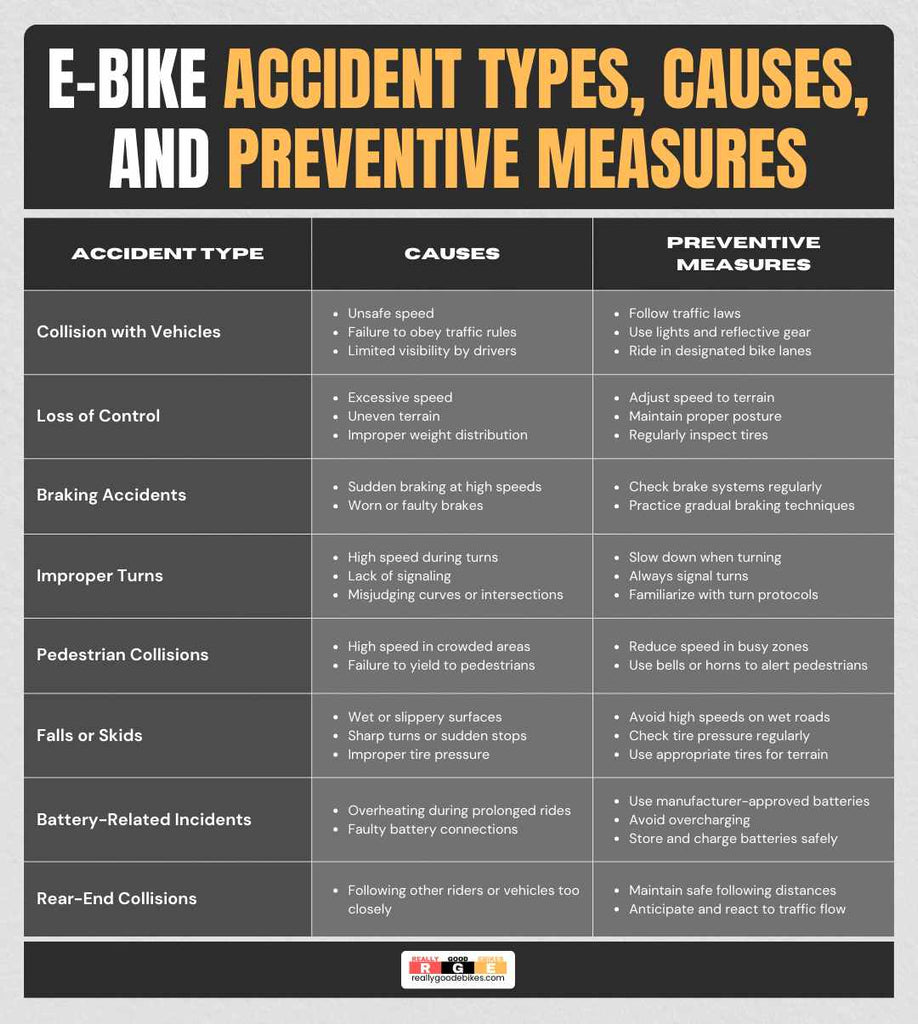
Common e-bike accident types and how to prevent them
E-bikes and scooters are amazing. They're fun, they're fast, and they give you freedom to explore your neighborhood in a whole new way.
But with that freedom comes responsibility. Every time you ride, you're making choices that affect your safety and the safety of everyone around you.
The Three Questions Every Rider Should Ask:
1. Am I wearing all the right safety gear?
2. Am I following the rules and being respectful?
3. Am I being alert and watching for hazards?
If you can answer "yes" to all three questions, you're ready to ride.
Be smart. Be safe. Be respectful. And have fun out there!
🛴 Ride Safe! 🛴