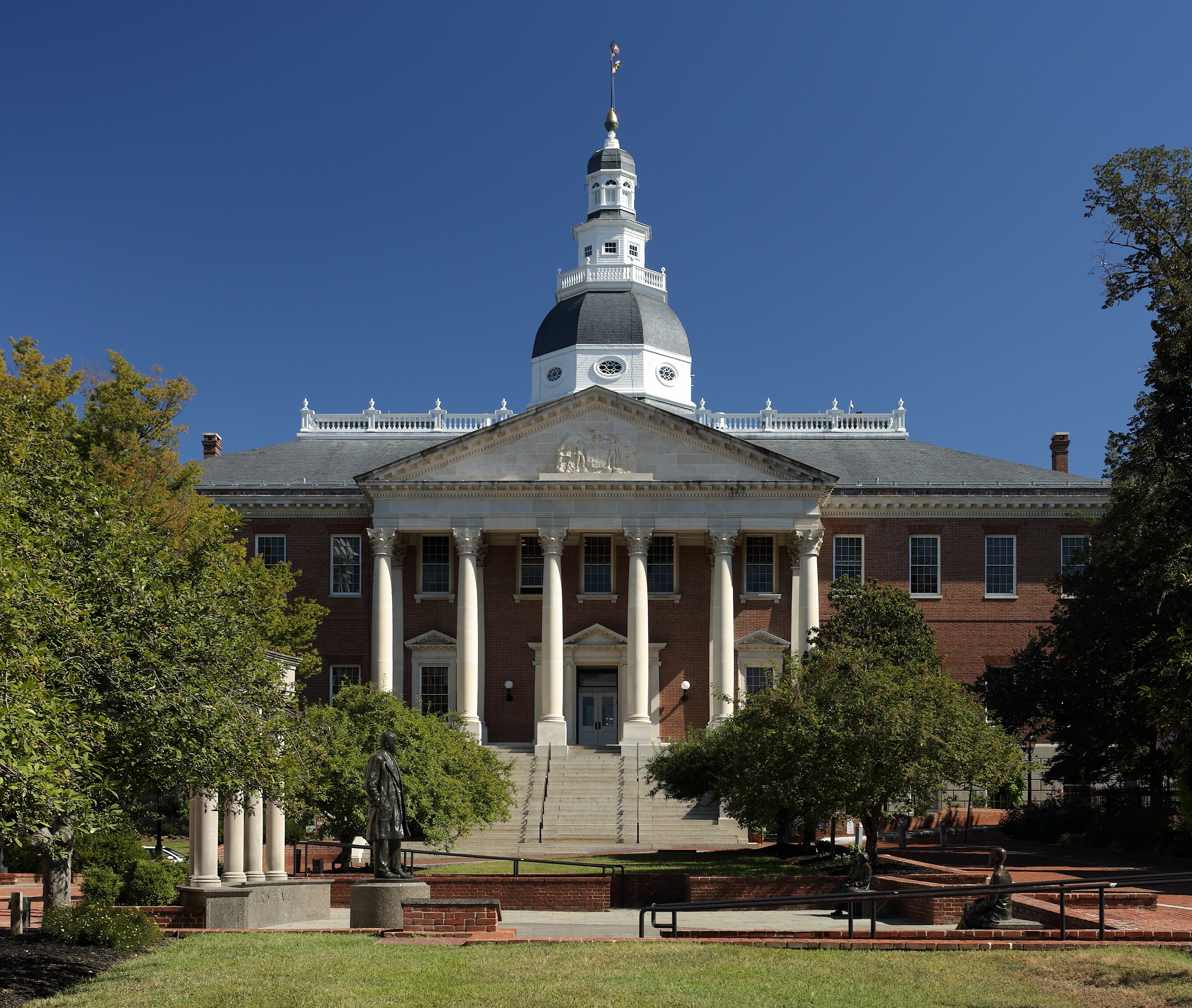
Rising above the cobblestone streets of Annapolis, the Maryland State House stands as America's oldest state capitol building still in continuous legislative use. Its distinctive wooden dome, topped by a lightning rod installed by Benjamin Franklin himself, has watched over the Chesapeake Bay for nearly 250 years. This is where George Washington resigned his commission as Commander-in-Chief, formally ending the Revolutionary War and establishing America's tradition of civilian leadership.
Annapolis was born from the waters of the Chesapeake Bay. Founded in 1649 as "Providence" by Puritan exiles from Virginia, the city was renamed "Anne Arundel Town" and later "Annapolis" in honor of Princess (later Queen) Anne. Its deep harbor made it a natural port, while its location equidistant from the Potomac and Patapsco rivers positioned it perfectly to become Maryland's political center.
Birthplace of American Democracy
From 1783 to 1784, Annapolis served as the temporary capital of the United States, making the State House the nation's first peacetime capitol. It was here that the Continental Congress ratified the Treaty of Paris, officially ending the Revolutionary War. When Washington dramatically resigned his military commission in the Old Senate Chamber, he set a precedent that would distinguish American democracy from European monarchy forever.
The State House itself tells this story in its very architecture. Built between 1772 and 1779, its design reflects colonial America's growing confidence and independence. The magnificent dome, the largest wooden dome in America, symbolized the new nation's aspirations. Inside, the Old Senate Chamber remains exactly as it was when the Founding Fathers debated the future of the republic.
The Naval Academy Years
In 1845, Annapolis gained its most famous institution when the U.S. Naval Academy was established on the site of old Fort Severn. The Academy transformed the sleepy colonial capital into a center of naval education and maritime excellence. Generations of midshipmen have marched through Annapolis streets, creating a unique blend of historic charm and military tradition that defines the city today.
The Academy brought prestige and prosperity to Annapolis, but also preserved its character. Strict building codes maintained the colonial atmosphere, while the influx of naval families created a cosmopolitan community within the historic setting. The Academy's chapel dome now rivals the State House dome in defining Annapolis's skyline, a symbol of how military and civilian institutions coexist in American democracy.
Sailing City
Modern Annapolis is synonymous with sailing. The Chesapeake Bay's protected waters and steady breezes make it one of America's premier sailing destinations. Every October, the Annapolis Boat Shows transform the city into a maritime mecca, while summer brings regattas that fill the harbor with white sails. The city's maritime heritage, from colonial shipbuilding to modern yacht racing, flows like tide through its daily life.
Walking the narrow streets of the historic district today, past 18th-century mansions and taverns where the Founding Fathers once gathered, visitors experience living American history. The State House dome still dominates the cityscape, while the Naval Academy's yard maintains its traditions of honor and service. Annapolis remains what it has always been: a place where water meets land, where history lives in the present, and where the democratic ideals born in a colonial capitol continue to shape America's future.
From State Circle to the waterfront, Annapolis embodies the best of American heritage - a city where George Washington walked the same streets that today's midshipmen call home, where colonial architecture houses modern government, and where the Chesapeake Bay continues to shape the character of Maryland's timeless capital.