SENTINEL-X
Episode 3: Dark Horizon
"When seventeen hundred ships darken the sky, even heroes need allies."
📖 Estimated reading time: 18-22 minutes
Previously on SENTINEL-X...
The Dominion Fleet attacked New Chicago with seventeen warships under Admiral Vex. An EMP disabled the city's defenses and Sentinel-X's armor. With only one hour before annihilation, Marcus repaired his suit just enough to fire a desperate shot that destroyed Vex's flagship—killing the Admiral and scattering the fleet. But in the aftermath, a chilling transmission revealed the truth: Supreme Commander Helena Cross had been watching. "This was just a test," she promised. "The real war is just beginning."

Three weeks had passed since the Battle of New Chicago, and the sky had not stopped burning. Every night, new lights appeared among the stars—not constellations, but warships. The Dominion was mobilizing, and the scale of what was coming defied comprehension.
Marcus Chen stood in the ruins of what had once been the city's observatory, his damaged armor interfacing with the facility's surviving telescopes. The data scrolling across his visual display painted a picture of extinction. Seventeen hundred vessels. Carriers, destroyers, dreadnoughts, and something else—something massive at the fleet's center that his sensors couldn't fully resolve. A command ship, perhaps. Or something worse.
"Fleet composition analysis complete," his AI reported, its voice tinged with something that might have been despair if machines could feel such things. "Estimated combat capability: sufficient to neutralize all planetary defenses within seventy-two hours of engagement. Probability of successful resistance with current assets: less than one percent."
One percent. In New Chicago, he had faced fourteen percent odds and emerged victorious. But that had been seventeen ships. This was a hundred times that number—a force designed not just to conquer a city, but to subjugate an entire world.
Marcus thought of Supreme Commander Cross, her silver hair and ice-cold eyes, the way she had smiled when she promised that the real war was coming. She had been testing him in New Chicago. Measuring his capabilities. Learning his weaknesses. And now she was coming with enough firepower to ensure that whatever tricks he had used to survive the first battle would not work a second time.
"I can't fight this alone," Marcus said, the admission tasting like ash in his mouth. "No one could."
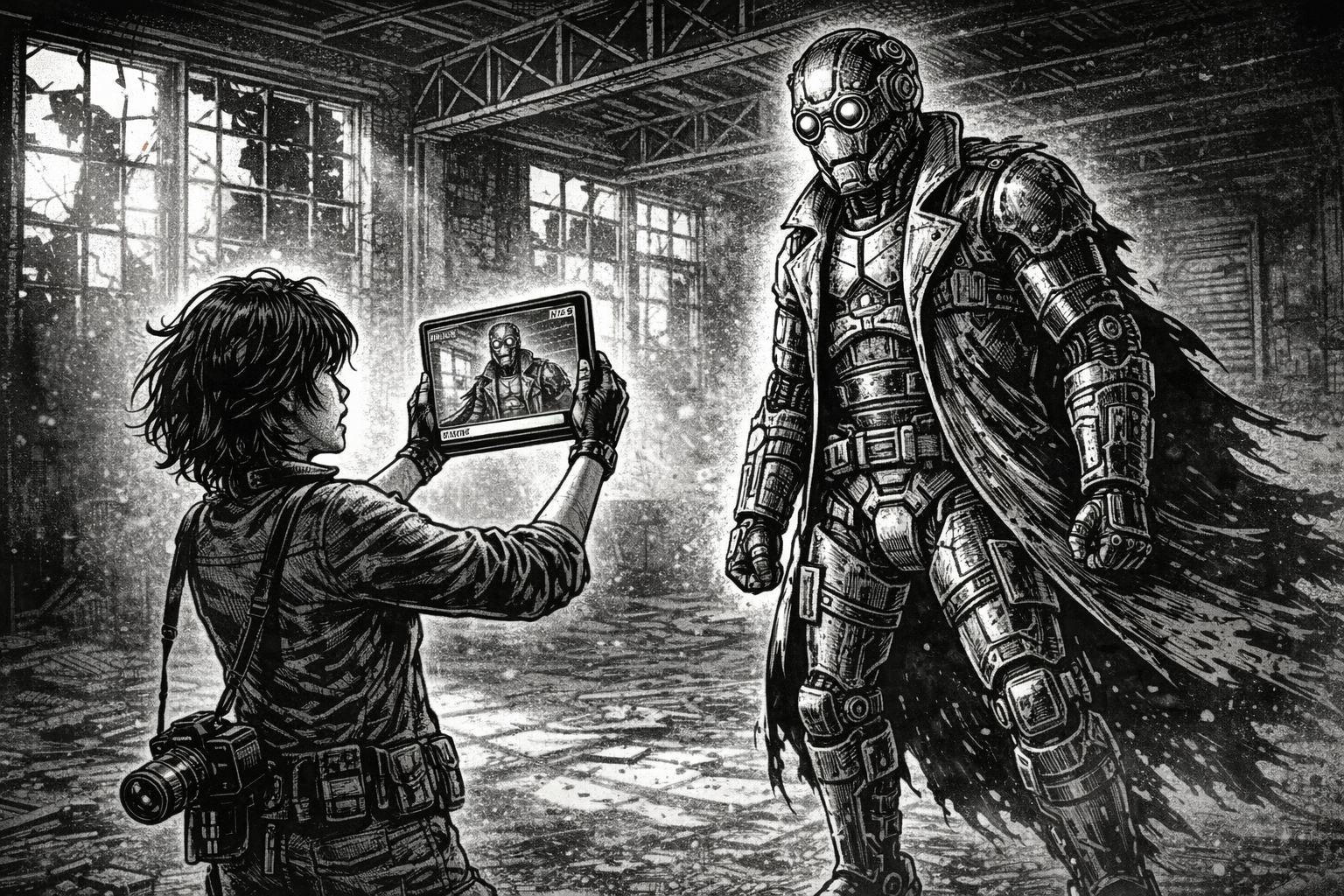
She found him three days later, in an abandoned warehouse on the city's outskirts where he had set up a makeshift repair station. Marcus heard her coming—his sensors detected the elevated heartbeat, the slight tremor in her footsteps, the camera equipment she carried—but he didn't move. If she had wanted to betray his location to the authorities (or worse, to the Dominion), she wouldn't have come alone.
"Sarah Park," she announced, stepping into the pool of light cast by his work lamps. "Investigative journalist. Independent." She held up a press badge that looked like it had seen better days, along with a recorder that she made a show of keeping powered off. "Before you ask—no, I'm not here to expose you. I'm here because someone needs to tell your story, and I don't think anyone else is brave enough to try."
Marcus turned to face her, and to her credit, she didn't flinch. Most people who saw him for the first time—really saw him, not just footage on a screen—recoiled from the mechanical nightmare of his appearance. Sarah Park simply studied him with eyes that were sharp, intelligent, and deeply tired.
"Why?" he asked.
"Because the world is about to end, and nobody seems to understand that." She gestured toward the sky, toward the lights that grew more numerous every night. "The governments are paralyzed. The military is pretending everything is under control. And the people—the ordinary people who are going to suffer the most when those ships arrive—they don't even know what's coming. Someone needs to wake them up. Someone needs to give them hope." She met his glowing optics without wavering. "And right now, you're the only hope they've got."
Marcus was silent for a long moment. Hope. It was a strange word to apply to something like him—a weapon that had been built for destruction, a machine wearing the memories of a dead man. But then he thought of the girl he had saved in that burning facility, and of the millions of people in New Chicago who were alive because he had refused to accept fourteen percent odds.
"What do you need from me?" he asked.
Sarah Park smiled—a tired, determined expression that suggested she had been waiting a long time to hear those words. "Everything. Your story. Your mission. The truth about what's coming. Help me help you save the world."
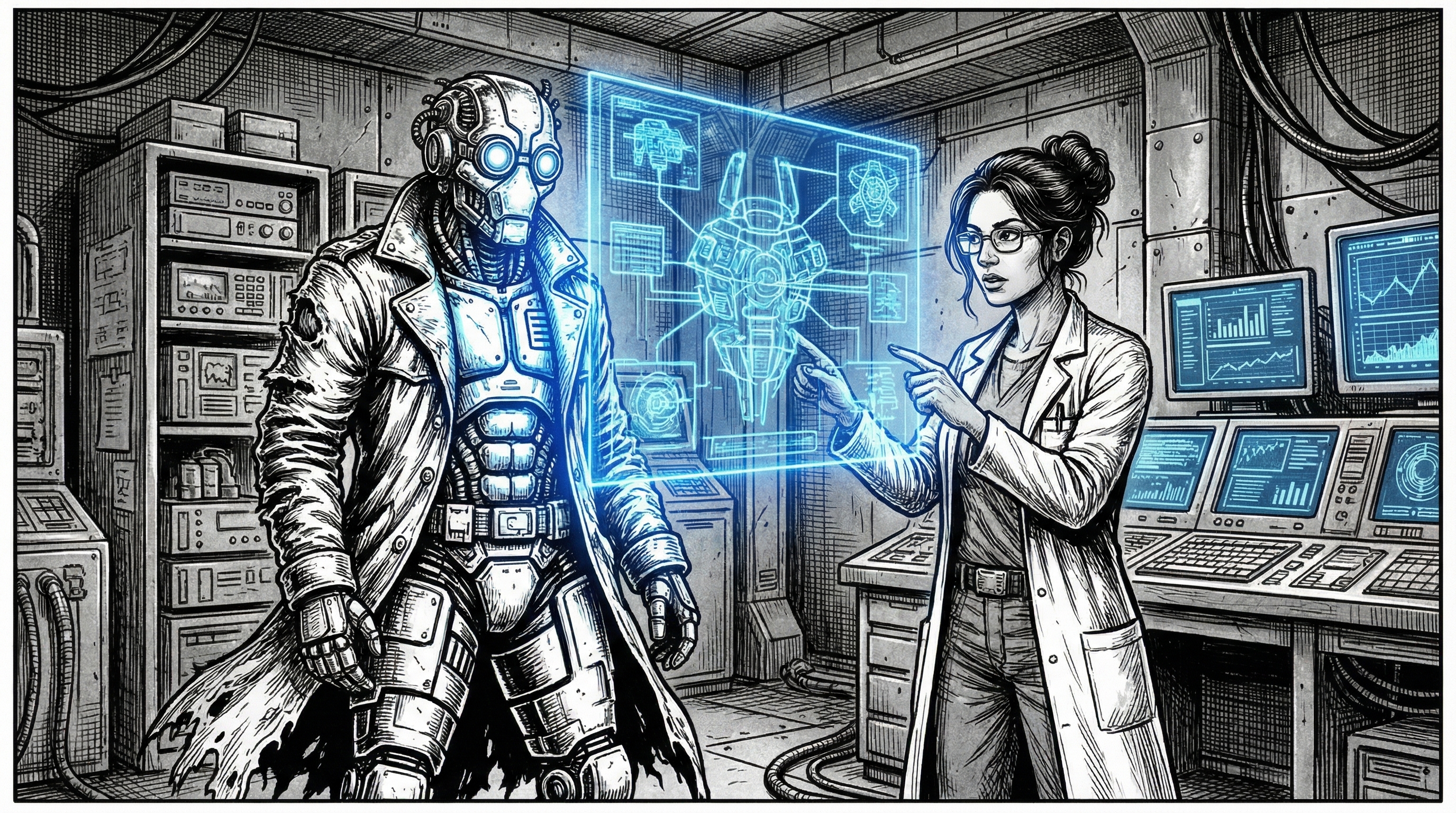
Dr. Elena Vasquez arrived two days after Sarah's first broadcast went viral. The video—a carefully edited interview that revealed nothing about Marcus's location but everything about his origins and his mission—had been viewed three hundred million times in forty-eight hours. It had also drawn attention from people who had resources that Marcus desperately needed.
Elena was not what he expected. She was small, quiet, with dark hair pulled back in a practical bun and wire-frame glasses that she constantly adjusted when she was thinking. She walked with a slight limp—an old injury, Marcus's sensors told him, that had healed improperly. But what struck him most was the intensity in her brown eyes, a focused determination that reminded him of himself in the moments before he had chosen to defy his programming.
"I've been studying Dominion technology for six years," she said, spreading a collection of data tablets across his workbench. "Recovered samples from their scouting missions, analysis of their weapons signatures, everything I could get my hands on. And I've learned something that your government friends probably haven't told you." She pulled up a schematic—complex, alien, beautiful in a terrible way. "Their ships aren't just machines. They're partially organic. Living technology that repairs itself, adapts to threats, learns from every engagement."
Marcus studied the schematic, his processors racing through the implications. "That's why conventional weapons are so ineffective against them."
"Exactly. You can hurt them, but they heal. You can surprise them, but they adapt. Every battle makes them stronger." Elena looked up at him, and for the first time, he saw something beyond clinical interest in her expression. Something personal. "They killed my husband in one of their early raids. Carlos was a pilot. He fought them over São Paulo, and he..." She stopped, collected herself. "I've spent six years learning everything I can about these things. And I think I've found a way to hurt them. Really hurt them. But I need your help to make it work."
"What do you need?"
Elena smiled—a expression that was equal parts grief and determination. "Access to your systems. Your armor is the most advanced human technology ever created, and it's been enhanced with Dominion components. If I can study how those two technologies interact, I might be able to create a weapon that can actually damage their organic components. Something they can't adapt to."
Marcus hesitated. Opening his systems to someone else meant vulnerability. It meant trust. It meant accepting that he couldn't do this alone.
"Alright," he said finally. "Let's get to work."
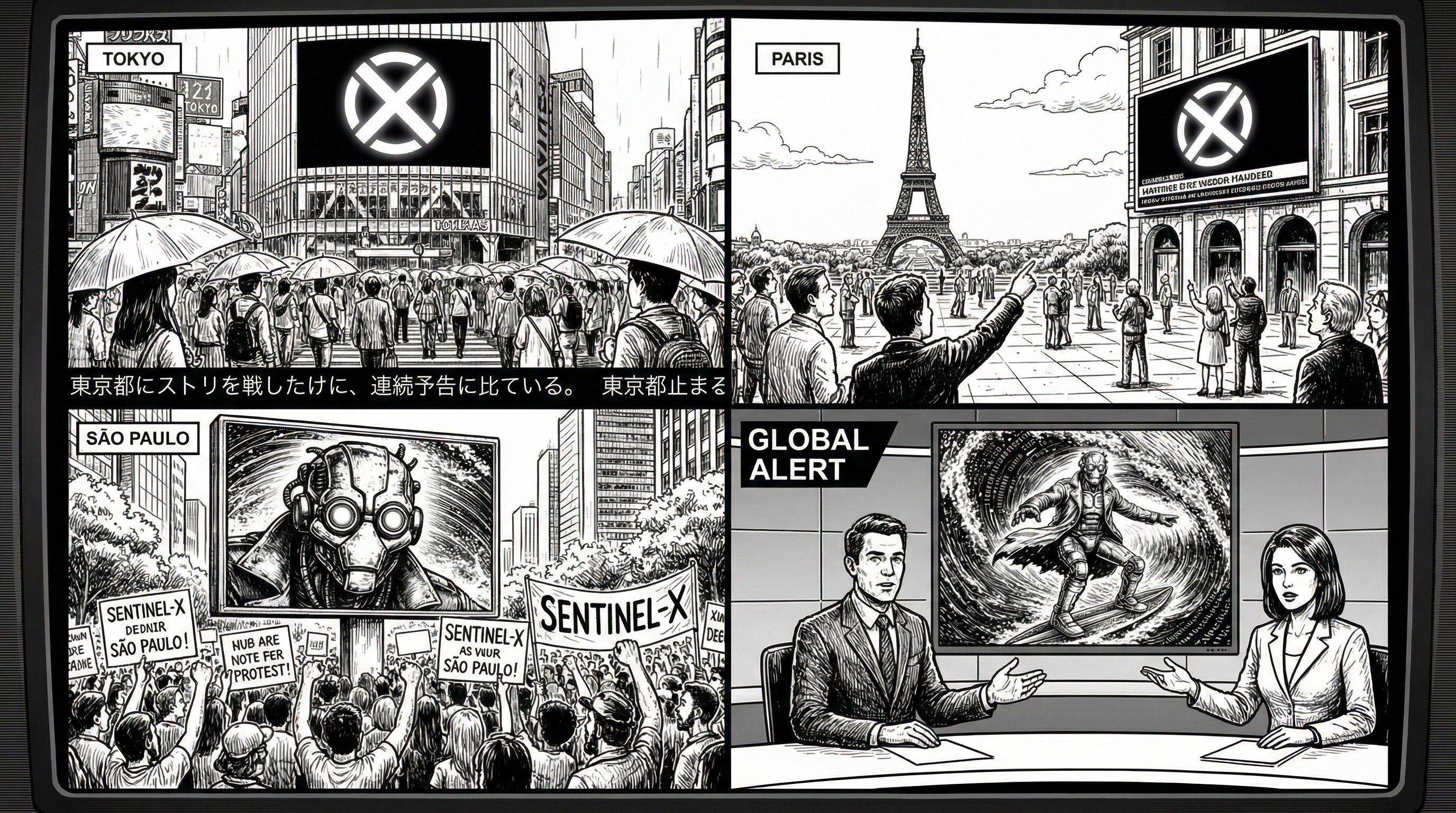
Sarah's broadcasts spread like wildfire through a world desperate for answers. In Tokyo, protesters filled the streets demanding that their government acknowledge the threat. In London, Parliament convened emergency sessions that ran through the night. In New York, the United Nations—paralyzed for weeks by denial and political maneuvering—finally began to discuss coordinated defense strategies.
And everywhere, people spoke the name that Sarah had given to the armored figure who had saved New Chicago: Sentinel-X. The Machine That Chose. The weapon that had become a guardian.
Marcus watched the coverage from Elena's makeshift laboratory, where she had spent the past week studying his systems with an intensity that bordered on obsession. On screen after screen, he saw his own image—stylized, idealized, transformed into a symbol that bore only passing resemblance to the broken machine he saw in the mirror. People were painting his likeness on walls, printing his image on shirts, holding vigils where they prayed for his protection.
"They're putting their faith in me," he said, and his voice carried a weight of responsibility that no programming could have prepared him for. "Millions of people, looking to me to save them. And I don't know if I can."
Sarah looked up from her tablet, where she was editing the latest broadcast. "You don't have to save them alone. That's what I've been trying to tell you. Every person who sees these videos, every government that finally starts taking action, every scientist like Elena who offers their help—that's what hope does. It brings people together. It makes them believe that fighting back is possible."
"And if it's not possible? If the Dominion fleet arrives and none of this matters?"
Elena answered from across the room, not looking up from the alien circuitry she was analyzing. "Then at least we tried. At least we didn't just lie down and wait to die." She finally met his eyes, and in her gaze, he saw the same fierce determination that had carried her through six years of grief and research. "That's what makes us human, Marcus. Not our biology. Not our programming. The choice to keep fighting even when the odds say we've already lost."
Marcus thought about that. Thought about the fourteen percent odds in New Chicago, and the one percent odds that his AI had calculated for the coming war. Thought about the choice he had made in a burning facility, when he had looked at a frightened child and decided to become something other than what he had been built to be.
"Then we keep fighting," he said. "Whatever it takes."
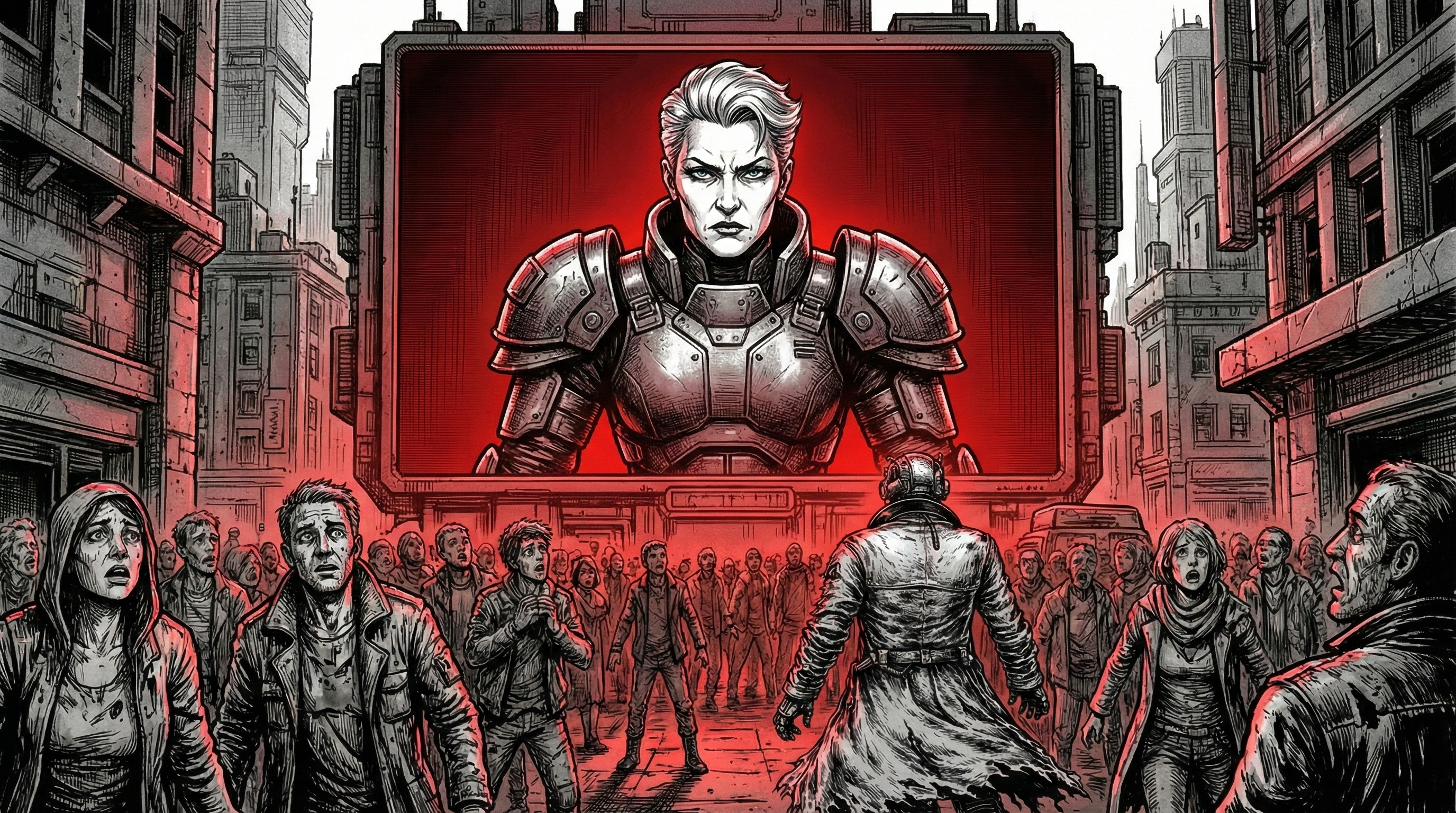
The transmission came on the seventeenth day, broadcast on every frequency simultaneously, overwhelming civilian networks and military communications alike. Marcus was the first to decode it—his processors were faster than any human system—but within minutes, the message was playing on every screen on Earth.
Supreme Commander Helena Cross appeared in crystal clarity, her silver hair immaculate, her ice-blue eyes seeming to look directly at every viewer individually. Behind her, the bridge of her command ship stretched into shadows, filled with the silhouettes of officers and the glow of alien technology.
"People of Earth," she began, her voice carrying the absolute certainty of someone who had never known doubt. "I am Supreme Commander Helena Cross of the Dominion Expeditionary Force. What you witnessed in New Chicago was not an invasion. It was an invitation—an opportunity for your world to join our collective willingly, to spare yourselves the suffering that resistance inevitably brings."
She paused, and when she continued, there was something almost like regret in her tone. Almost.
"That invitation has been declined. Your leaders have chosen defiance. Your 'Sentinel' has chosen war. And so war is what you shall have." The image shifted, revealing the full scope of the Dominion armada—seventeen hundred ships arranged in formations that seemed to go on forever. "In thirty days, this fleet will reach your planet. In thirty-one days, your resistance will end. Not because we wish you harm, but because order must be maintained. The strong protect the weak. The many outweigh the few. This is the way of the universe."
The image returned to Cross's face, and now there was no regret at all—only cold, implacable certainty. "To the one you call Sentinel-X: I know you're watching. I know what you are—what you were built to be. You could have been magnificent, Marcus Chen. You could have stood beside me as we brought peace to a thousand worlds. Instead, you chose to protect the weak, to fight for a species that will never truly accept you." She smiled, and the expression was terrifying in its emptiness. "I look forward to showing you how that choice ends."
The transmission ended. Around the world, billions of people sat in silence, trying to process what they had just seen. Thirty days. That was all the time they had left.
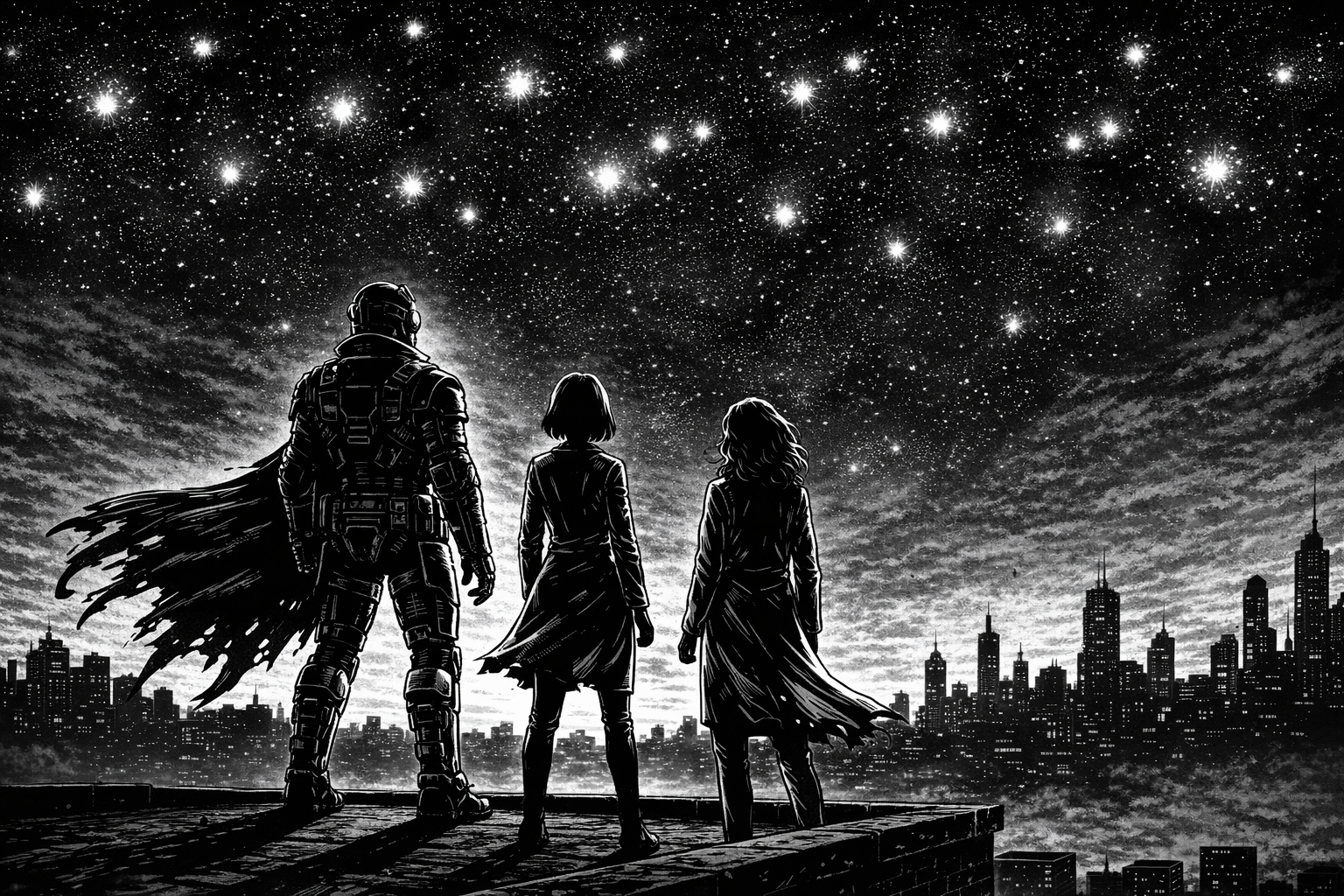
In the hours after the transmission, Marcus stood on the roof of their makeshift headquarters, watching the lights of the approaching fleet grow brighter in the night sky. Sarah and Elena were inside, Sarah coordinating with journalists around the world to ensure Cross's message didn't become a weapon of despair, Elena working frantically on the anti-Dominion technology that might be their only hope.
Thirty days. Seven hundred and twenty hours. Forty-three thousand two hundred minutes. His processors could calculate exactly how many seconds remained until the fleet arrived, until the fighting began, until everything was decided one way or another.
He thought about Cross's words. "The strong protect the weak. The many outweigh the few." It was a philosophy he understood—had been programmed to understand, once. The cold logic of survival, where individual lives meant nothing against the tide of history. Where machines like him were built to serve the greater good, even if that good required atrocities.
But Marcus had made a different choice. In a burning facility, facing a frightened child, he had decided that protecting the weak wasn't weakness. That fighting for individuals mattered, even when the math said it was pointless. That the measure of a person—or a machine—wasn't in how many they could sacrifice, but in how many they refused to let go.
"Thirty days," he said aloud, and his voice was steady despite everything. "Thirty days to build an army. Thirty days to unite a world. Thirty days to find a way to fight an enemy that thinks it's already won."
Behind him, the door opened. Sarah and Elena stepped onto the roof, their faces illuminated by the distant lights of the fleet.
"We just received a message," Sarah said. "From someone called Commander James Cole. Earth Defense Force. He says he wants to meet."
Elena added, "And I've had a breakthrough with the organic disruptor. It's not ready yet, but... it could work. It really could work."
Marcus turned to face his allies—the journalist who had given him a voice, the scientist who might give him a weapon—and for the first time since Cross's transmission, he felt something other than dread. Not confidence, exactly. Not certainty. But something that might, with time and effort, grow into hope.
"Then we have work to do," he said. "And thirty days to do it."
The war for Earth was about to begin.
Story Summary
Three weeks after the Battle of New Chicago, the Dominion has assembled an armada of seventeen hundred warships—a hundred times the force that nearly destroyed the city. Marcus realizes he cannot fight this war alone. Sarah Park, an investigative journalist, finds him and offers to tell his story to the world, awakening humanity to the threat they face. Dr. Elena Vasquez, a scientist who lost her husband to the Dominion, brings her expertise in alien technology and begins developing a weapon that might actually hurt the enemy. As Sarah's broadcasts unite the world behind Sentinel-X, Supreme Commander Cross delivers an ultimatum: Earth has thirty days before the fleet arrives. With time running out, Marcus receives word that Commander James Cole of the Earth Defense Force wants to meet. The alliance is beginning to form, but will thirty days be enough to prepare for the greatest battle humanity has ever faced?
Think About It
🤔 Marcus realizes he can't win this war alone. Why is it sometimes hard for people to ask for help, even when they really need it?
🤔 Sarah uses journalism to spread hope and unite people. How can sharing stories and information help people during difficult times?
🤔 Elena lost her husband but channeled her grief into research that might save millions. How do people find meaning after experiencing loss?
🤔 Cross says "the strong protect the weak" to justify conquest. Marcus says the same words but means something completely different. How can the same phrase mean opposite things depending on who says it?