Baton Rouge sits on the east bank of the Mississippi River in southern Louisiana, about 80 miles upriver from New Orleans. The city's name, French for "red stick," comes from a cypress pole marked with bloody fish and animal heads that Native Americans used to mark the boundary between tribal hunting grounds.
French explorer Pierre Le Moyne d'Iberville noted this "baton rouge" in his journal in 1699, giving Louisiana's capital its distinctive name.
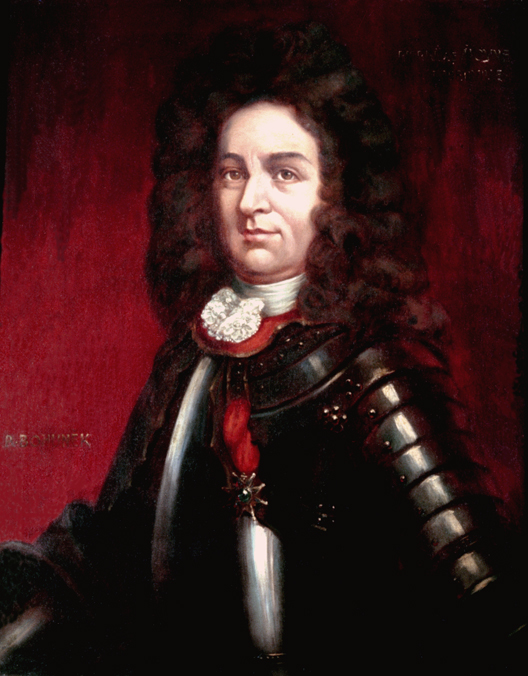
French and Spanish Louisiana
Baton Rouge's early history followed Louisiana's colonial transfers. France claimed Louisiana in 1699. Baton Rouge developed as a small settlement and river port. France ceded Louisiana to Spain in 1762, and Baton Rouge became a Spanish outpost.
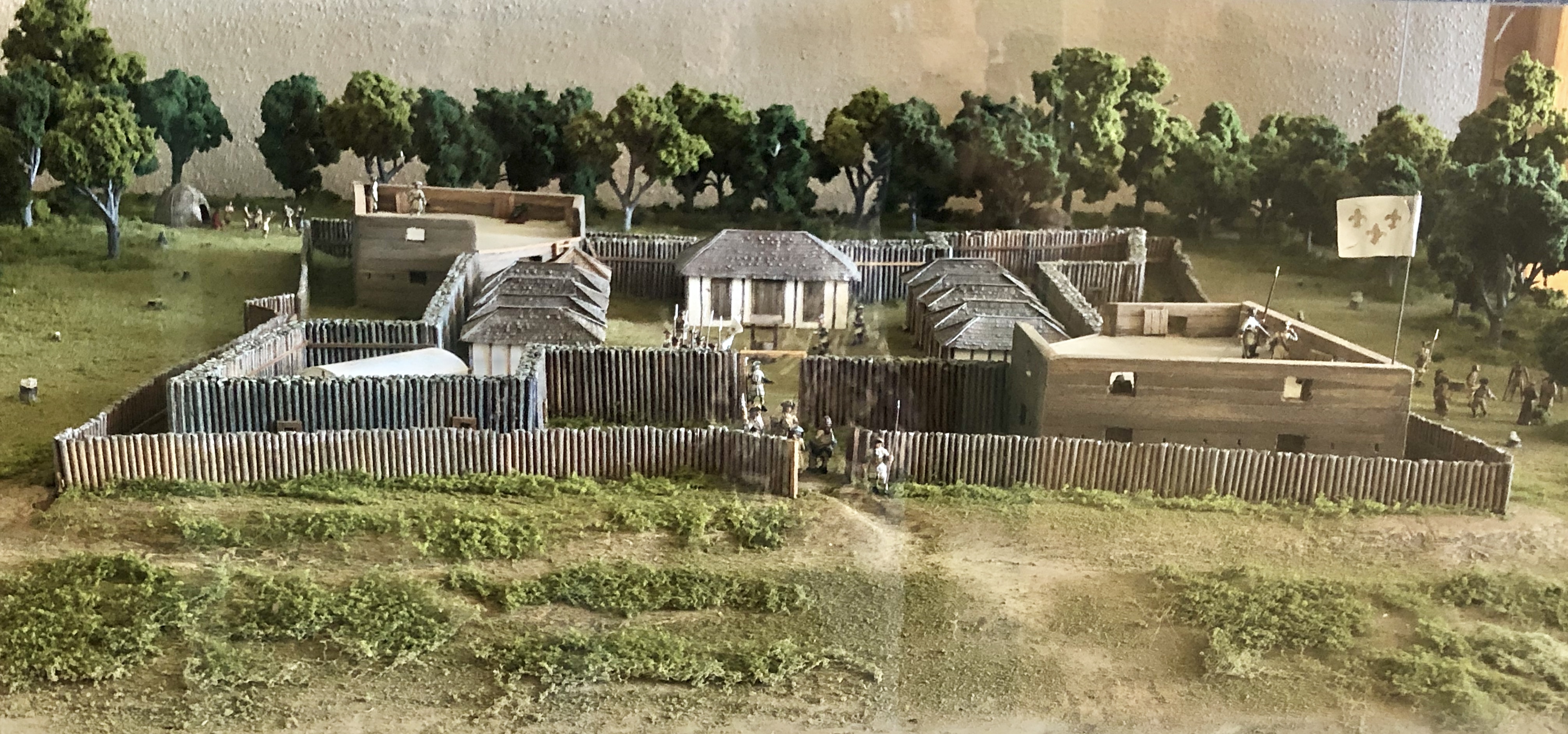
The British captured Baton Rouge in 1779 during the American Revolution (Britain and Spain were on opposite sides). Spain recaptured it a few months later and held it until 1810.
In 1810, American settlers in Spanish West Florida revolted, captured Baton Rouge, and briefly created the Republic of West Florida—an independent nation lasting exactly 74 days before the United States annexed the region. Baton Rouge became part of Louisiana, which had achieved statehood in 1812.
This complex colonial history—French, Spanish, British, independent, then American—gave Baton Rouge and Louisiana their unique cultural heritage, different from other states.
Becoming Louisiana's Capital
Baton Rouge became Louisiana's capital in 1849. The legislature had met in New Orleans since statehood, but concerns about yellow fever epidemics and the rowdy port city led to calls for relocating the capital upriver.
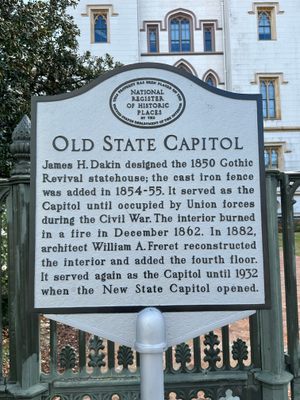
Baton Rouge, far enough from New Orleans to avoid its problems but close enough to remain connected, won the designation. The city built a Gothic Revival State Capitol, designed to look like a medieval castle.
During the Civil War, Union forces captured Baton Rouge in 1862. The Gothic Capitol building burned during the war. For years afterward, the capital moved between Baton Rouge, New Orleans, and Shreveport, finally settling permanently in Baton Rouge in 1882.
Huey Long and the Modern Capitol
Louisiana's most colorful politician, Huey P. Long, transformed Baton Rouge. Long, governor from 1928 to 1932 and then U.S. Senator, wielded near-dictatorial power over Louisiana. He built roads, bridges, schools, and hospitals, taxing oil companies to pay for programs helping poor Louisianans.
Long's most visible project was a new State Capitol. The old Gothic building was inadequate and damaged. Long wanted something grand to symbolize Louisiana's progress.
The Louisiana State Capitol, completed in 1932, is America's tallest state capitol building at 34 stories (450 feet). The Art Deco skyscraper, faced with Alabama limestone, dominates Baton Rouge's skyline. The building cost $5 million—an enormous sum during the Great Depression.
Inside, marble corridors, brass elevators, and grand chambers showcase 1930s craftsmanship. Observation decks on the 27th floor offer views of the Mississippi River and surrounding parish.
Tragically, Huey Long was assassinated in the Capitol in September 1935. He was shot in a corridor and died two days later at age 42. Long is buried on the Capitol grounds, with his statue facing the building he built. Whether hero or demagogue, Long profoundly shaped Louisiana and Baton Rouge.
LSU—Louisiana's Flagship University
Louisiana State University (LSU) defines modern Baton Rouge as much as government. Founded in 1860 and moved to Baton Rouge in 1869, LSU grew into Louisiana's flagship university with over 30,000 students.

LSU's campus, along the Mississippi River, features beautiful live oaks draped with Spanish moss. The campus is one of the prettiest in America, especially in spring when azaleas bloom.
LSU football dominates Baton Rouge life. Tiger Stadium, nicknamed "Death Valley," seats over 102,000 fans—one of the largest stadiums in America. Saturday nights in Death Valley are legendary. Fans pack the stadium, screaming so loudly that opponents struggle to communicate. LSU's mascot, Mike the Tiger, lives in a habitat on campus.
The university brings economic activity, cultural events, and youthful energy. LSU graduates fill Louisiana's professions—lawyers, doctors, engineers, teachers.
River City and Petrochemical Corridor
Baton Rouge's location on the Mississippi River—the last point upstream where ocean-going ships can reach—made it a major port. The Port of Baton Rouge is one of America's largest ports by tonnage.
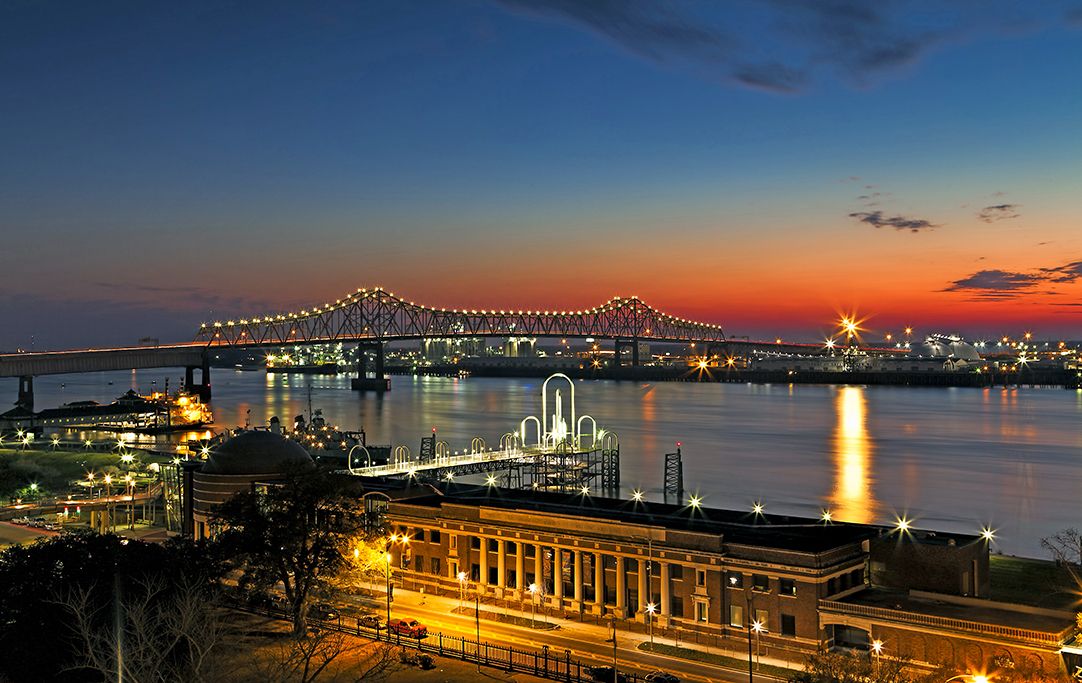
The river also attracted petrochemical industry. The stretch of Mississippi River between Baton Rouge and New Orleans, called the "Petrochemical Corridor" or "Cancer Alley," hosts dozens of oil refineries, chemical plants, and industrial facilities. These provide jobs but also pollution concerns.
ExxonMobil's Baton Rouge refinery is one of the largest in the United States. The petrochemical industry makes Baton Rouge Louisiana's second-largest economy after New Orleans, though it creates environmental justice concerns for communities living near plants.
Hurricanes and Resilience
Baton Rouge, located inland, usually avoids the worst hurricane damage. But in 2005, Hurricane Katrina devastated New Orleans, and thousands of refugees fled to Baton Rouge. The city's population jumped temporarily as people sought shelter.
Baton Rouge opened schools, churches, and convention centers to evacuees. Some stayed permanently, increasing Baton Rouge's population. The city showed Louisiana's resilience and community spirit.
In 2016, severe flooding hit Baton Rouge, with over 20 inches of rain in 48 hours. Thousands of homes flooded. The disaster reminded Louisianans that natural hazards—hurricanes, floods, subsidence—are constant challenges.
Louisiana Culture in Baton Rouge
Baton Rouge shares Louisiana's unique culture—Cajun and Creole cuisine, jazz music, festivals. The city celebrates Mardi Gras (though more modestly than New Orleans), hosts festivals, and offers boudin, crawfish étouffée, gumbo, and beignets.

The Old State Capitol, restored after the Civil War fire and used until 1932, is now a museum with beautiful stained glass windows and cast-iron details. The building, nicknamed the "Castle on the River," tells Louisiana's complex history.
Modern Baton Rouge
Today's Baton Rouge is Louisiana's second-largest city and state capital. The economy balances government, LSU, healthcare, and petrochemicals. The city has grown northward, with suburbs spreading across East Baton Rouge Parish.
Downtown Baton Rouge has been revitalized with riverfront development, restaurants, and entertainment. The Mississippi River remains central to the city's identity—levees protect the city, but the river shapes everything.
From Native American red stick to French outpost to Spanish fort to Huey Long's capital to LSU's home, Baton Rouge embodies Louisiana's layered history and complex character. It's a place where politics, college football, petrochemicals, and Mississippi River culture blend into something uniquely Louisiana—a red stick marking the boundary between past and future.