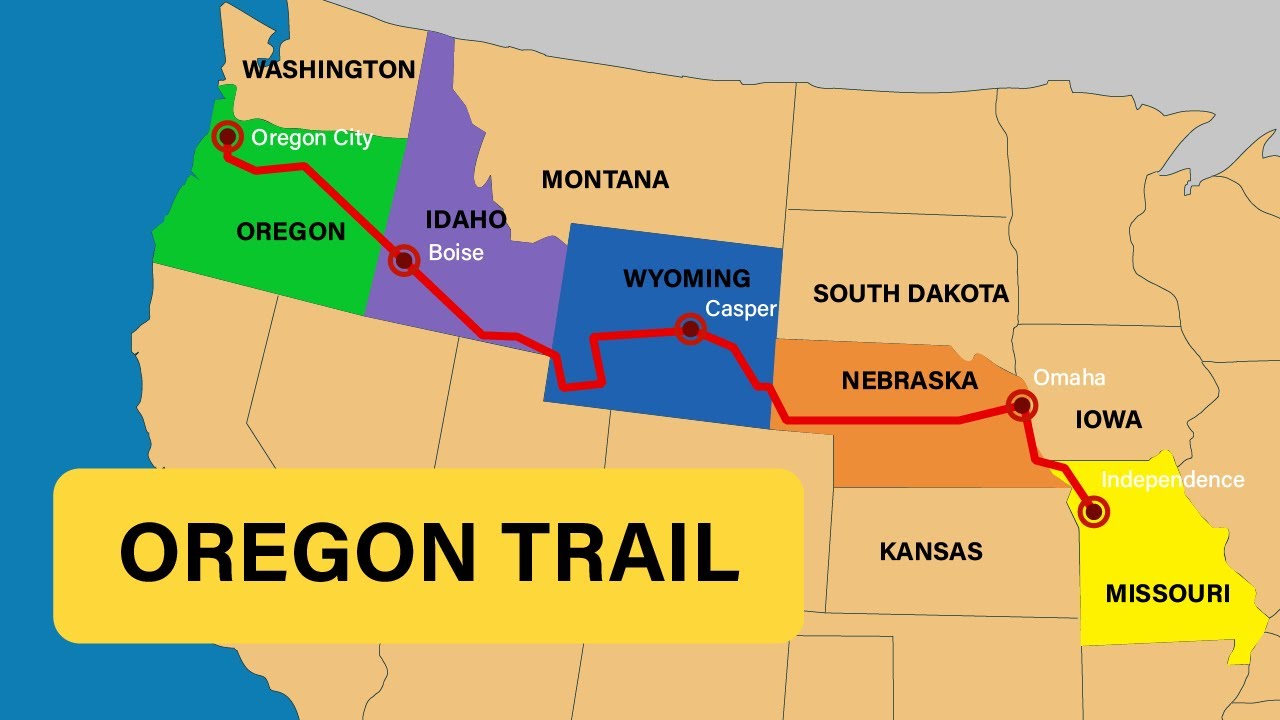
Boise sits in a high desert valley surrounded by mountains, its name coming from French trappers who called the tree-lined Boise River "La rivière boisée"—the wooded river. Those trees, rare in the sagebrush desert, gave weary Oregon Trail travelers a welcome sight and gave Idaho's capital its nickname: The City of Trees.
The Oregon Trail
Boise's location made it an important stop on the Oregon Trail. Hundreds of thousands of emigrants traveled west in the 1840s and 1850s, their covered wagons following the Snake River across southern Idaho. The journey was harsh—hot, dusty, and treeless.
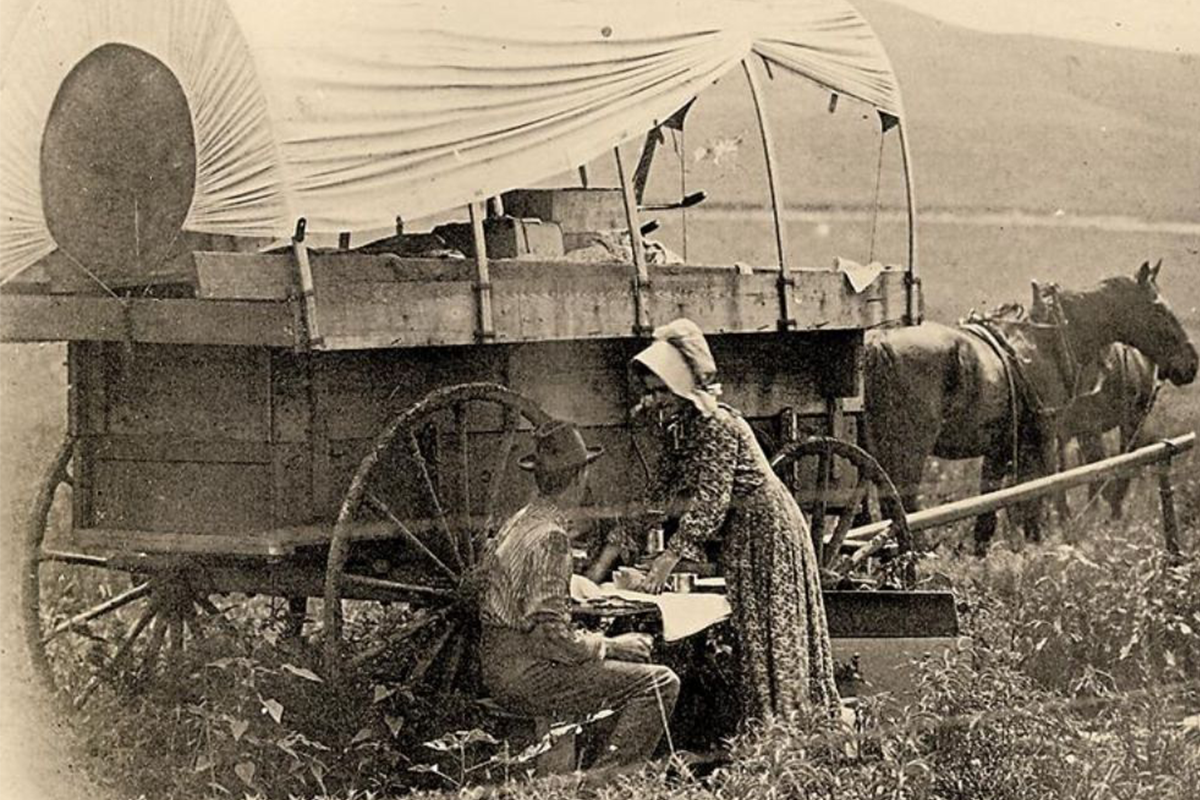
Covered wagons on the Oregon Trail found relief at Boise
The Boise River valley offered relief. Trees! Grass! Fresh water! Emigrants rested here before tackling the difficult Blue Mountains ahead. Some chose to stay rather than continue to Oregon.
Fort Boise, established in 1834 by the Hudson's Bay Company as a fur trading post, provided supplies. A second Fort Boise, built by the U.S. Army in 1863, protected the Oregon Trail and nearby gold camps.
Gold Brings Boom
Gold discovered in the Boise Basin in 1862 changed everything. Thousands rushed to Idaho City, Placerville, and other mining camps in the mountains northeast of present-day Boise. These strikes rivaled California's Gold Rush in richness.
Boise itself began in 1863 as a civilian settlement near Fort Boise, serving the mining camps. The town became a supply center for miners and a stopping point for freight wagons carrying goods from Umatilla, Oregon.
Idaho became a territory in 1863, and Boise won the territorial capital designation in 1865. The capital had briefly been in Lewiston, but Boise's central location and growing importance as a commercial center made it the better choice.
Building the Capital
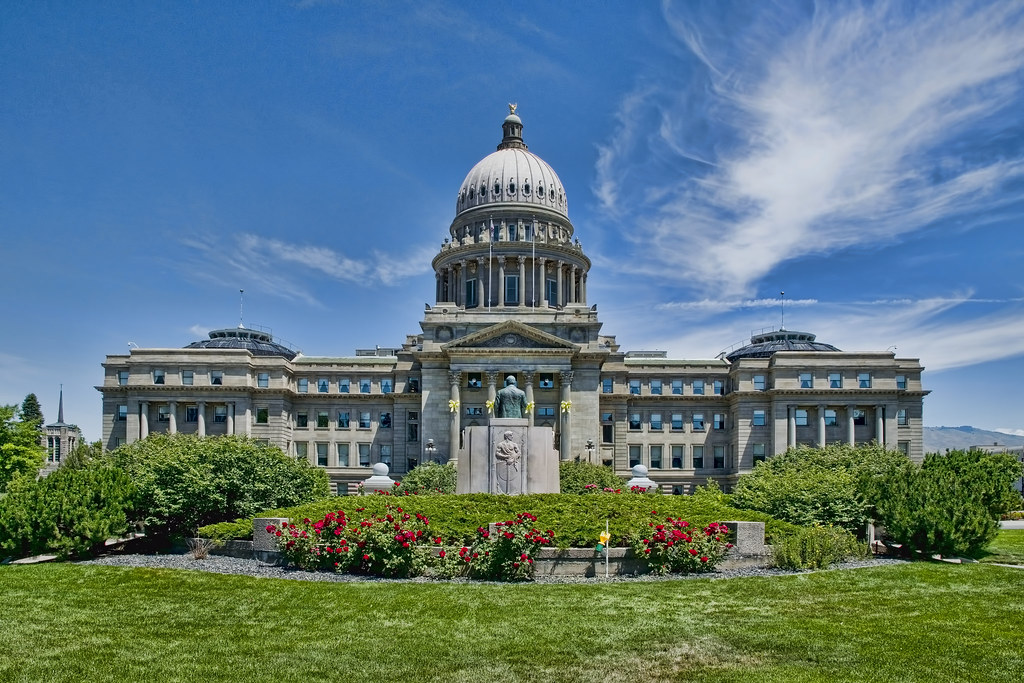
The Idaho Territorial Capitol, started in 1886, took 34 years to complete (finished in 1920). Built from local sandstone, it features a distinctive dome covered with copper and topped with a bronze eagle. The building was heated by a geothermal well—one of the first uses of geothermal energy in the United States.
Idaho achieved statehood on July 3, 1890, becoming the 43rd state. Boise automatically became the state capital.
The Basque Connection
Boise has an unusual cultural heritage—it's home to the largest Basque community in the United States. Basques from the Pyrenees Mountains between France and Spain came to Idaho in the late 1800s and early 1900s, many working as sheepherders.
Idaho's high desert and mountains resembled their homeland. Basque immigrants settled in Boise, establishing hotels, restaurants, and clubs. Today, Boise's Basque Block downtown features the Basque Museum and Cultural Center, Basque restaurants serving traditional cuisine, and the annual Jaialdi festival celebrating Basque culture.
The Basques made Idaho the leading sheep-producing state in America in the early 1900s. Their influence remains visible throughout Boise.
Boise's Basque Block celebrates the largest Basque community in the U.S.
Water in the Desert
Like many Western cities, Boise needed water engineering to grow. The Boise River, fed by mountain snowmelt, provided water, but delivery required infrastructure. The Arrowrock Dam, completed in 1915, was the world's tallest dam at the time. It created a reservoir storing water for irrigation and flood control.
Irrigation transformed the Boise valley into farmland. Orchards, particularly apples and cherries, thrived. The combination of mountain water and valley sunshine created ideal growing conditions.
Military and Technology Hub
World War II brought Gowen Field (now Boise Airport) and training bases. After the war, technology companies discovered Boise. Hewlett-Packard opened a facility in 1973. Micron Technology, founded in Boise in 1978, became one of the world's largest semiconductor makers.
The technology boom brought educated workers and growth. Boise transformed from a quiet agricultural and government town into a growing tech hub.
Modern City of Trees
Today's Boise balances rapid growth with quality of life. The Boise River Greenbelt, a 25-mile pathway through the city, preserves those trees that gave Boise its name. The foothills north of town offer hiking and mountain biking minutes from downtown.
Boise State University's blue football field—the famous "Smurf Turf"—became a symbol of the city's independent spirit. The Idaho Capitol has been beautifully restored, its geothermal heating still functioning after more than 100 years.
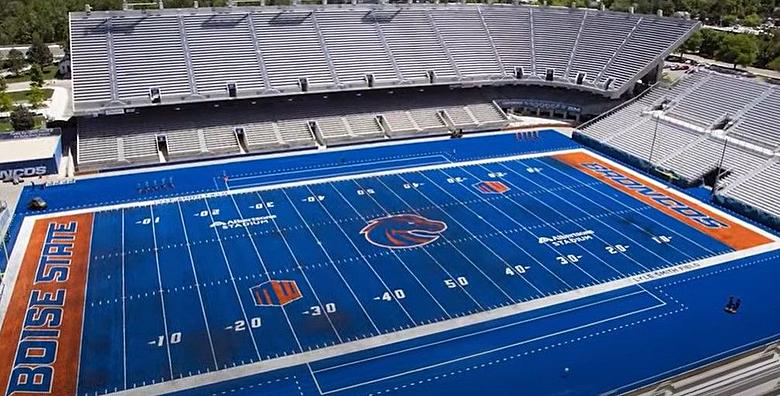
Boise State's iconic blue "Smurf Turf" - a symbol of the city's independent spirit
Boise attracts newcomers seeking outdoor recreation, four distinct seasons, and a Western lifestyle with urban amenities. The city has grown rapidly, challenging infrastructure and raising housing costs, but maintaining its identity as the City of Trees.
From Oregon Trail rest stop to gold rush supply center to tech-savvy capital, Boise proves that even in the high desert, with water, trees, and determination, cities can flourish.