
Montgomery, Alabama sits along the winding Alabama River, a city where American history took dramatic turns not once, but twice. This capital city witnessed both the beginning of the Civil War and pivotal moments of the Civil Rights Movement, making it one of the most historically significant cities in the United States.
The City Takes Shape
Montgomery was born in 1819 when two small river towns—Alabama Town and New Philadelphia—joined together. Named after Revolutionary War General Richard Montgomery, the new city quickly grew as a center for cotton trading. Steamboats carried cotton down the Alabama River to Mobile, making Montgomery wealthy and important.
In 1846, Montgomery became Alabama's capital, beating out the former capital of Tuscaloosa. The city's central location and river access made it the perfect choice. By the 1850s, Montgomery was one of the wealthiest cities in America, with grand mansions lining its streets and cotton bringing enormous prosperity.
The Confederacy's First Capital
In February 1861, representatives from seven Southern states gathered in Montgomery to form the Confederate States of America. Jefferson Davis took his oath as Confederate President on the steps of the Alabama State Capitol. For four months, Montgomery served as the Confederate capital before it moved to Richmond, Virginia. This brief but crucial period earned Montgomery the nickname "Cradle of the Confederacy."
The Civil War devastated the South, and Montgomery struggled for decades after. But the city would play another historic role nearly a century later.
Rosa Parks and the Bus Boycott

On December 1, 1955, Rosa Parks boarded a Montgomery city bus after a long day of work. When the driver ordered her to give up her seat to a white passenger, she refused. Her arrest sparked the Montgomery Bus Boycott—381 days when Black citizens refused to ride city buses.
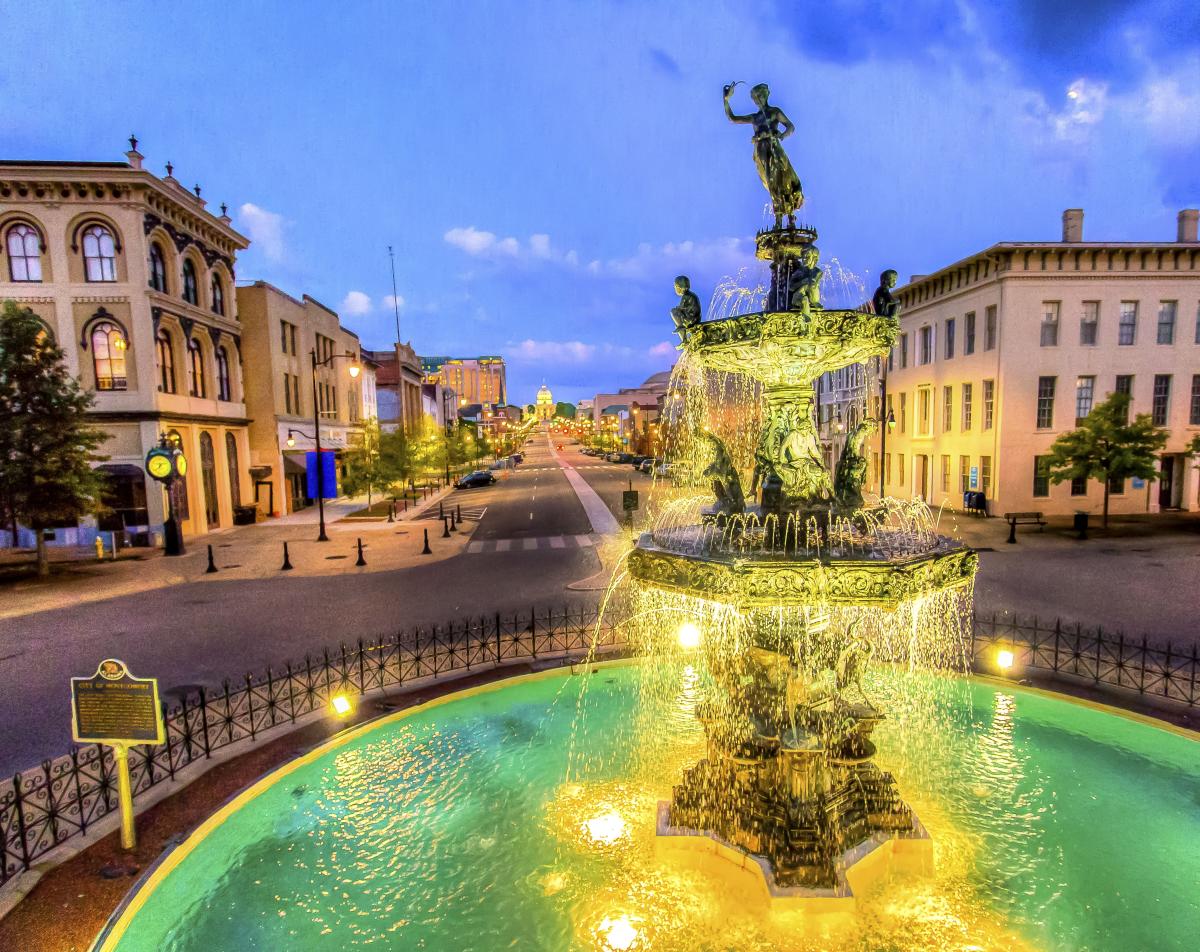
A young pastor named Dr. Martin Luther King Jr., newly arrived at Dexter Avenue Baptist Church, helped lead the boycott. The church, just steps from the State Capitol where the Confederacy began, became headquarters for a movement that would change America. In 1956, the Supreme Court ruled that bus segregation was unconstitutional. The Civil Rights Movement had won its first major victory.
Selma to Montgomery Marches

In 1965, voting rights activists marched from Selma to Montgomery to demand equal voting rights. The first march, on "Bloody Sunday," ended in violence when state troopers attacked peaceful marchers. Two weeks later, protected by federal troops, thousands completed the 54-mile march to the State Capitol steps. The Voting Rights Act of 1965 followed, finally ensuring Black Americans could vote without discrimination.
Montgomery Today
Today's Montgomery honors both its complicated past and its role in the Civil Rights Movement. The Dexter Avenue King Memorial Baptist Church is a National Historic Landmark. The Rosa Parks Museum tells her story and the boycott's impact. The National Memorial for Peace and Justice remembers victims of racial violence.
The Alabama State Capitol still stands proud, its white columns and copper dome visible for miles. Inside, visitors can see where Confederate leaders met and where civil rights heroes spoke truth to power.
From cotton kingdom to Confederate capital to Civil Rights battleground, Montgomery's story is America's story—of conflict, courage, and the long struggle for justice and equality.