Topeka, Kansas sits on the Kansas River in the center of Kansas, a city whose name comes from a Native American word meaning "a good place to dig potatoes." But Topeka became famous not for potatoes but for a Supreme Court case that changed American education and civil rights forever: Brown v. Board of Education.
Bleeding Kansas and Free State Capital
Topeka was founded in 1854, the same year Congress passed the Kansas-Nebraska Act allowing settlers to decide whether Kansas would be a free or slave state. This sparked violent conflict known as "Bleeding Kansas" between pro-slavery and anti-slavery settlers.
Free-State supporters founded Topeka as an anti-slavery stronghold. They drafted the Topeka Constitution in 1855, which would have prohibited slavery in Kansas. Though the federal government initially rejected it, the Free-State movement ultimately prevailed.
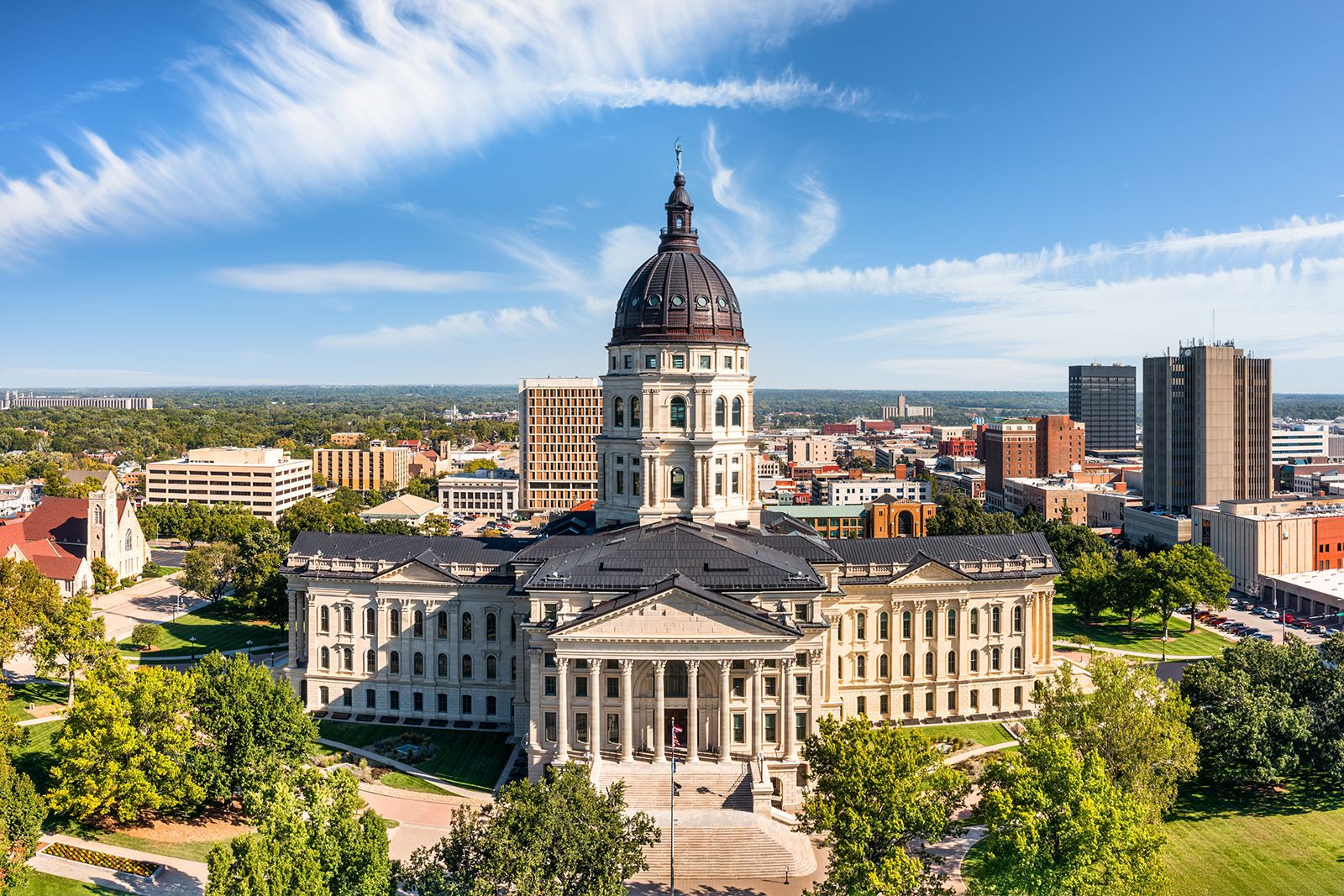
When Kansas achieved statehood in 1861—just as the Civil War began—it entered as a free state. Topeka became the state capital, chosen for its central location and Free-State heritage.
The Kansas State Capitol
The Kansas State Capitol took 37 years to build (1866-1903), with construction interrupted by funding shortages. The beautiful French Renaissance building features a copper-covered dome rising 304 feet high, topped with a bronze statue called "Ad Astra" (To the Stars)—representing Kansas's state motto: "Ad astra per aspera" (To the stars through difficulties).
Inside, stunning murals by John Steuart Curry depict Kansas history, including controversial abolitionist John Brown. Curry's murals sparked debate—some saw Brown as a hero, others as a violent fanatic—but they remain, reminding visitors that Kansas was forged in conflict over fundamental questions of freedom and justice.
The Capitol is one of few in the United States offering dome tours. Visitors can climb 296 steps to the observation deck for panoramic views of Topeka and the Kansas prairie.
Linda Brown and Monroe Elementary
Topeka's most important contribution to American history came in the 1950s. Kansas law allowed cities to maintain segregated elementary schools. Topeka operated four all-white elementary schools and four all-Black elementary schools.
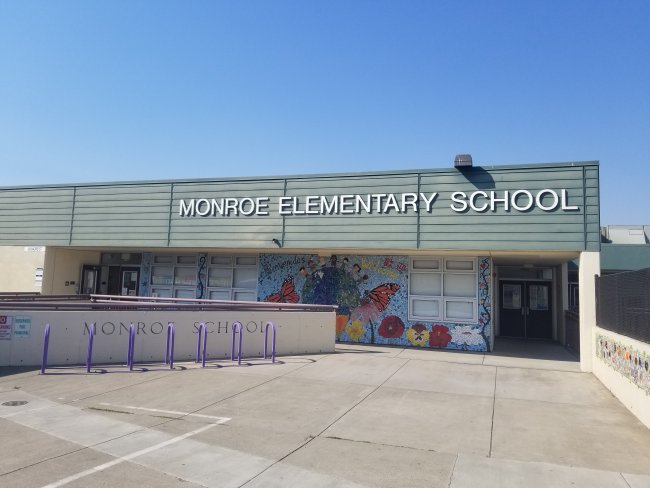
Linda Brown, a Black third-grader, lived just seven blocks from Sumner Elementary, a white school. But school policy required her to walk past Sumner and take a bus to Monroe Elementary, an all-Black school over a mile away.
In 1951, Linda's father, Oliver Brown, tried to enroll her at Sumner. He was refused. Oliver Brown and twelve other Topeka parents filed a lawsuit against the Topeka Board of Education, challenging school segregation.
The case made its way to the U.S. Supreme Court, where it was combined with similar cases from South Carolina, Virginia, Delaware, and Washington, D.C. All were grouped under the name Brown v. Board of Education of Topeka.
The Supreme Court Decision
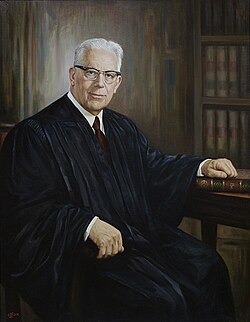
On May 17, 1954, the Supreme Court announced its decision. Chief Justice Earl Warren read the unanimous opinion: "We conclude that in the field of public education, the doctrine of 'separate but equal' has no place. Separate educational facilities are inherently unequal."
The ruling overturned Plessy v. Ferguson (1896), which had established the "separate but equal" doctrine justifying segregation. Brown v. Board declared segregation unconstitutional, not just in schools but implying it was unconstitutional everywhere.
The decision didn't immediately end segregation—many Southern states resisted for years—but it provided the legal foundation for the Civil Rights Movement. It declared that America's promise of equal protection under law meant something.
Linda Brown and her classmates showed that children could be at the center of social change. Their parents' bravery in challenging an unjust system, and the Supreme Court's willingness to overturn precedent, transformed America.
Brown v. Board of Education National Historic Site
Today, Monroe Elementary School, where Linda Brown attended, is preserved as the Brown v. Board of Education National Historic Site. The school closed in 1975, but the National Park Service restored it in 2004.
Visitors can walk the same halls Linda Brown walked, see classrooms as they appeared in the 1950s, and learn about the case's impact. The site tells not just Linda Brown's story but the broader story of school segregation, the legal fight against it, and continuing efforts toward educational equality.
Menninger Clinic and Mental Health
Topeka also played a pioneering role in mental health treatment. Dr. Karl Menninger and his family founded the Menninger Clinic in Topeka in 1925. The clinic revolutionized mental health care, treating patients with dignity and emphasizing psychological therapy rather than confinement.
The Menninger Clinic became world-renowned, training generations of psychiatrists and psychologists. Though the clinic relocated to Houston in 2003, its legacy remains—Topeka helped change how America treats mental illness.
Atchison, Topeka and Santa Fe Railway
Topeka was a major railroad hub. The Atchison, Topeka and Santa Fe Railway, one of America's largest railroads, connected the Great Plains to California. Though headquartered in Chicago, the railroad built massive shops in Topeka employing thousands of workers.

The railroad brought prosperity and diversity to Topeka. Workers from Mexico came to work on the railroad, establishing Topeka's Hispanic community. The railroad era defined Topeka's economy for decades.
Modern Topeka
Today's Topeka is a government and education center. State government employs thousands. Washburn University provides higher education. Healthcare and insurance also support the economy.
The city has faced typical challenges—population decline, aging infrastructure, tornadoes (a 1966 tornado killed 17 and destroyed much of the city). But Topeka maintains civic pride and connection to its history.
Topekans are proud that their city gave its name to the case that ended legal segregation. The Brown v. Board site draws visitors from around the world who want to stand where history changed.
From Free-State settlement to railroad hub to site of the Supreme Court's most important civil rights decision, Topeka proves that ordinary people in ordinary places can change the world. Linda Brown just wanted to go to the school near her house. Her father's lawsuit helped ensure that all children, regardless of race, could attend school together. That's a legacy worth more than all the potatoes in Kansas.