II · THE DISCOVERY · HISTORY OF SCIENCE
Mobile phone
The telephone had been tethered to a wall or a desk for nearly a century. What changed in 1973 was a radio link that followed you as you walked.
At a glance
- Demonstrated
- 1973, by Martin Cooper of Motorola in New York City
- What it is
- A portable telephone using radio frequency to connect calls while the user moves
- Weight of prototype
- Around 2 kilograms
- Commercial sale
- 1983, the DynaTAC 8000x
Look closer
The radio link replaced the wire
A landline telephone — a fixed-location phone — connects to the network through a physical wire running from the handset to a socket in the wall. A mobile phone replaces that wire with a radio frequency link: the handset transmits and receives radio signals that connect to a base station, which in turn connects to the telephone network. That radio link is what allows the user to move within a designated service area while staying connected.
The cellular network is why Americans say 'cell phone'
Modern mobile telephony relies on a cellular network architecture: the service area is divided into smaller zones called cells, each served by its own base station. As you move from one cell to another, the network hands your call from one base station to the next without dropping it. In North America, this architecture is why mobile phones are often called cell phones — the name describes the network structure, not just the device.
The prototype weighed about two kilograms
The handset Martin Cooper demonstrated in 1973 weighed around 2 kilograms, or 4.4 pounds. That is roughly the weight of a bag of flour. The device was portable in the sense that you could carry it and walk with it, but it was not light by the standard of what came later.
The story
The telephone had been a fixed-location device since its invention. You stood at a desk or sat in a hallway and spoke into a handset connected by wire to a socket in the wall. That wire carried your voice as an electrical signal to a local exchange, which routed it through a network of switches to the person you were calling. The system worked, but it worked only where the wire reached.
Martin Cooper of Motorola demonstrated a different arrangement on 3 April 1973, in New York City. The handset he carried had no wire. Instead, it transmitted and received radio signals that connected to a base station, which in turn connected to the telephone network. The radio link meant the user could move within the area the base station served and the call would hold. The device weighed around 2 kilograms, which is heavy by later standards but light enough to carry in one hand while walking.
The demonstration was not the same as a product. Motorola sold a mobile phone commercially in 1983. The DynaTAC 8000x was a handheld mobile phone available for purchase. By that time, a cellular network had been operating in Japan since 1979, launched by Nippon Telegraph and Telephone. A cellular network divides the service area into smaller zones called cells, each with its own base station. As you move from one cell to another, the network hands your call from one station to the next without dropping it. This architecture is why mobile phones are often called cell phones in North America — the name describes the network structure.
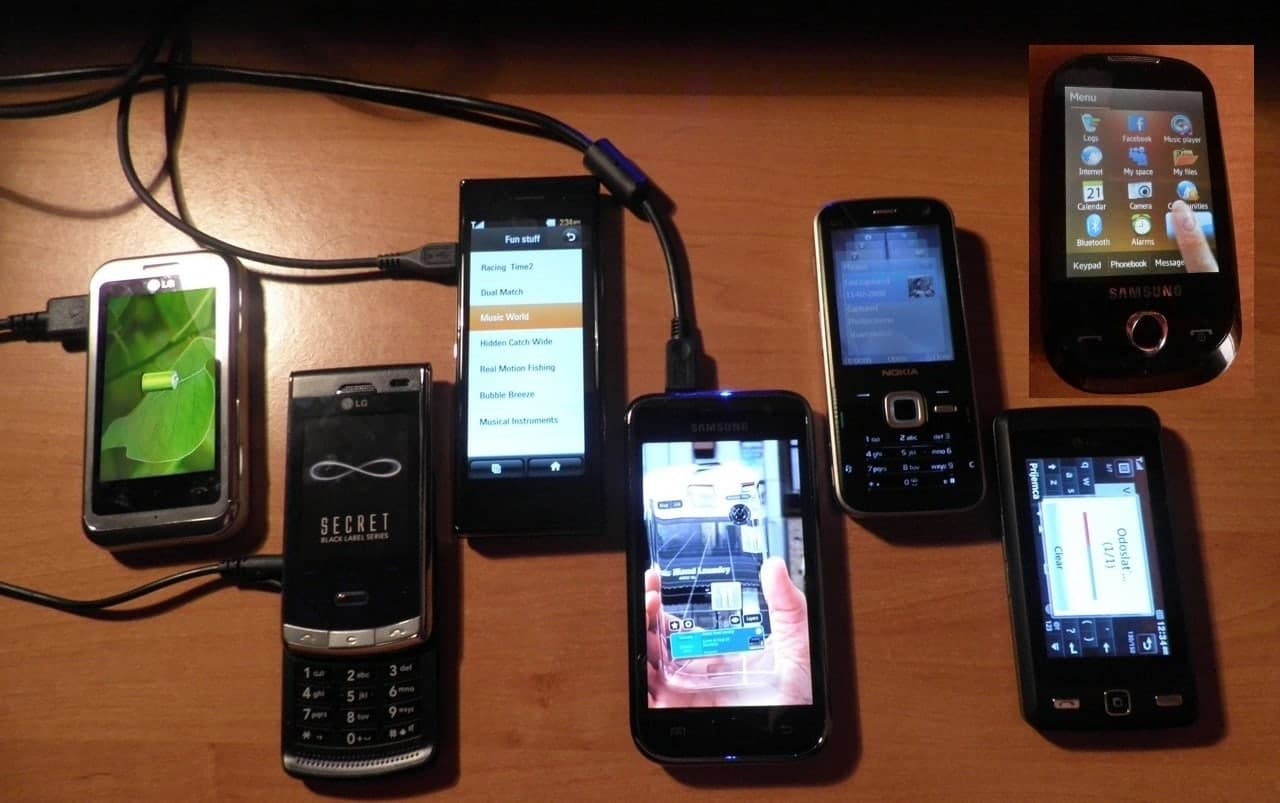
The device evolved quickly beyond voice calls. Digital mobile phones added text messaging, then multimedia messaging, email, and internet access. They added cameras, video recording, and games. They added navigation through satellite signals and payment systems through scanning codes or near-field communication. The basic feature phones — sometimes called dumbphones — offered only voice and text. The smartphones that followed were small computers that happened to make calls.
Why it mattered then
Before 1973, a telephone call required you to be near a telephone socket. You could not call someone while walking down a street, or receive a call while away from a building with a phone line. The demonstration Martin Cooper gave that year showed that a radio link could replace the wire, which meant the telephone could follow the person rather than the person having to find the telephone. The commercial sale of the DynaTAC in 1983 and the launch of cellular networks in Japan in 1979 and elsewhere shortly after meant that by the mid-1980s, a small number of people — those who could afford the devices and the service — could make and receive calls while moving through a city. The constraint was no longer location; it was cost and coverage.
Why it matters now
By 2024, worldwide mobile phone subscriptions had grown to over 9.1 billion, which is more than one for every person alive. In almost half the world's countries, over 90 percent of the population owns at least one. The device is no longer rare or expensive; it is globally ubiquitous. The smartphone manufacturers with large sales in 2024 are Samsung, Apple, and Xiaomi, and smartphones represent about half of all mobile phone sales. Feature phones account for the other half, with Samsung, Nokia, and Alcatel among the brands with significant sales as of 2016. The device Cooper demonstrated has become one of the most widely used pieces of consumer technology, which means that for a large portion of the world's population, the ability to communicate while moving is no longer a novelty but an ordinary condition of daily life.
The surprising detail
In one country, the total number of mobile phones overtook the number of houses in 1999. That is a measure of how quickly the technology spread once the networks were in place and the devices became affordable. The growth was not gradual; it was rapid enough that within a generation, the mobile phone went from a rare and expensive tool to something more common than a fixed dwelling.
What is disputed
Wikidata records the discovery date as 1973, which matches the date of Martin Cooper's demonstration in New York City on 3 April 1973. The reference material describes this as a demonstration rather than a discovery in the scientific sense, and the commercial sale did not happen until 1983, but the 1973 date appears to refer to the public showing of the working prototype.
Remember this
The mobile phone replaced the wire with a radio link, which meant the telephone could follow the person.
Test yourself
Martin Cooper demonstrated the handheld mobile phone in 1973, but it was not sold commercially until 1983. What was the gap between demonstration and sale?
The demonstration showed that the technology worked — that a handheld device could connect a call over a radio link while the user moved. But turning that into a product meant building a device that could be manufactured reliably, sold at a price people would pay, and used on a network that covered enough area to be useful. The cellular networks that made mobile phones practical were not launched until 1979 in Japan and the early 1980s elsewhere. The gap between 1973 and 1983 was the time it took to build the infrastructure and refine the device from a prototype into something the public could buy and use.
Go deeper
Image: Linbush, CC BY-SA 3.0. Licence: CC BY-SA 3.0. Source.