IV · THE GAME · MAJOR LEAGUE BASEBALL
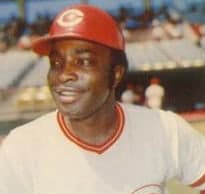
Joe Morgan
A player who walked more than he struck out, stole six hundred and eighty-nine bases, and played second base for twenty-two years across five clubs. The numbers say patience, not power.
At a glance
- Career
- 2,649 games · 2,517 hits · 268 home runs · 689 stolen bases · .271 average
- Debut
- 21 September 1963, aged 20, at Colt Stadium, Houston
- Last game
- 30 September 1984, for the Oakland Athletics
- On-base percentage
- .392 across 22 seasons
Look closer
The debut was a one-run loss in front of two thousand people
On 21 September 1963 the Houston Colt 45's and the Philadelphia Phillies played a day game at Colt Stadium. Philadelphia made ten hits and one error, Houston made seven hits and none, and the visitors won 4–3. Philadelphia scored in four separate innings — one run in each of the first three, then one more in the eighth. Houston answered with two in the fourth and one in the seventh, but never drew level. The whole thing took two hours in front of 2,231 people.
The first full season was also the best batting average
Morgan played eight games in 1963 and ten in 1964, then one hundred and fifty-seven in 1965 — his first full season. That year he hit .271, made one hundred runs, stole twenty bases, and walked ninety-seven times. The batting average of .271 matched his career figure exactly, which means the seasons that followed pulled the total neither up nor down. His highest average came a decade later: .327 in 1975, when he also walked one hundred and thirty-two times and stole sixty-seven bases.
Walks outnumbered strikeouts in eighteen of twenty-two seasons
Across the career Morgan walked 1,865 times and struck out 1,015 times — a gap of 850. That gap was not the result of a few enormous seasons: in eighteen of the twenty-two seasons the walks column is larger than the strikeouts column, sometimes by a wide margin. In 1975 he walked 132 times and struck out 52. In 1976 he walked 114 and struck out 41. The pattern held even in the late seasons: in 1983, aged 39, he walked 89 times and struck out 54.
The story
On 21 September 1963 the Houston Colt 45's lost to the Philadelphia Phillies by a single run in front of 2,231 people at Colt Stadium. Philadelphia scored in the first, second and third innings, one run at a time, then added one more in the eighth. Houston put two on the board in the fourth and one in the seventh, but the margin held. The game took two hours. Morgan played in that game, aged twenty, in his first week in the major leagues.
The season table shows eight games that year, then ten the following year, then a sharp jump: one hundred and fifty-seven games in 1965, his first full season. That year he hit .271, made one hundred runs, stole twenty bases, and walked ninety-seven times. The batting average of .271 is the same figure that appears at the end of the career line, which means the seasons that followed pulled the total neither up nor down.
The career lasted twenty-two seasons across five clubs. Morgan played for Houston twice — the Colt 45's became the Astros in 1965 — with a long stretch at Cincinnati in between, then shorter spells at San Francisco, Philadelphia and Oakland. The Cincinnati years, 1972 to 1979, contain the highest totals: in 1976 he hit .320, made twenty-seven home runs, drove in one hundred and eleven runs, stole sixty bases, and walked one hundred and fourteen times. That on-base percentage of .444 and slugging percentage of .576 combine to give an OPS — on-base plus slugging — of 1.020, the only season above 1.000 in the table.
The stolen-base totals are high throughout. In 1973 he stole sixty-seven, in 1975 sixty-seven again, in 1976 sixty. The totals fall in the later years but remain present: twenty-four in 1980, eighteen in 1983, eight in 1984. The career total is 689.
The walk totals are higher still. Morgan walked one hundred or more times in multiple seasons between 1969 and 1977. The career total is 1,865 walks against 1,015 strikeouts — a gap of 850. That gap was not the result of a few outlier seasons: in eighteen of the twenty-two seasons the walks column is larger than the strikeouts column, often by a wide margin. In 1975 he walked 132 times and struck out 52. In 1976 he walked 114 and struck out 41. The pattern held even late: in 1983, aged 39, he walked 89 times and struck out 54.
The on-base percentage — the proportion of plate appearances that result in reaching base — sits at .392 for the career, more than a hundred points above the batting average of .271. That gap is what the walk totals produce: a player on base two out of every five times, built not on hits alone but on patience.
Why it mattered then
A second baseman who walked more than he struck out and stole bases in large numbers was a specific kind of threat in the 1970s, when the game was lower-scoring than the decades either side of it. The stolen base was a way to manufacture runs without waiting for extra-base hits, and the walk was a way to extend innings without putting the ball in play. Morgan's on-base percentage of .392 means he reached base in two of every five plate appearances across twenty-two seasons, which is a high rate of opportunity for the batters behind him. The Cincinnati years, 1972 to 1979, show Morgan's highest totals: stolen bases in the fifties and sixties, walks over one hundred, on-base percentages above .400. The 1976 line — .320 batting average, twenty-seven home runs, sixty stolen bases, 114 walks — describes a player contributing in multiple categories at once, which is harder to defend against than a single skill in isolation.
Why it matters now
The career is a long demonstration of a principle that remains central: getting on base matters more than how you get there. Morgan's batting average of .271 is unremarkable, but his on-base percentage of .392 is high, and the difference between them is the result of 1,865 walks. A walk counts the same as a single in the on-base calculation, and Morgan reached base by walk in nearly as many plate appearances as he reached base by hit. The stolen-base totals — 689 across the career, with multiple seasons above fifty — represent a kind of offence that comes and goes in fashion. Stolen bases were more common in the 1970s and 1980s than they are now, but the principle underneath them has not changed: a runner on second scores on most singles, a runner on first does not. Moving up ninety feet without using an out is valuable whenever it works, and costly whenever it fails. The season table does not record how often Morgan was caught stealing, so the net value of those 689 steals cannot be calculated from this data alone. The walk-to-strikeout ratio — 1,865 to 1,015 — is a measure of plate discipline, and plate discipline is a skill that does not degrade with age as quickly as bat speed or foot speed. The fact that Morgan walked 89 times and struck out 54 in 1983, aged 39, suggests the skill was still present near the end.
The surprising detail
Morgan stood five feet seven inches and weighed one hundred and sixty pounds, which is small for a major-league player in any era. The career total of 268 home runs is not small, and the fact that he hit twenty-seven of them in 1976 and twenty-two in 1974 means the power was not incidental. The combination — a player that size, hitting that many home runs, walking that often, stealing that many bases — is unusual. The height and weight are listed in every published record of the career, which suggests they were remarked upon at the time.
What is disputed
Every figure here comes from the MLB Stats API. Statistical categories were not all recorded consistently across the twenty-two seasons covered, and records for the 1960s were compiled retrospectively from contemporary scoring; the totals are the ones the league publishes today rather than anything independently recomputed here. The season table does not include caught-stealing totals, so the net value of the 689 stolen bases cannot be calculated from this data.
Remember this
1,865 walks, 1,015 strikeouts: the gap of 850 is what made the on-base percentage of .392, and the on-base percentage is what made the career.
Test yourself
Morgan's career batting average is .271, but his on-base percentage is .392 — a gap of 121 points. Using the career totals, what explains that gap?
Walks. Morgan walked 1,865 times and struck out 1,015 times across the career, which means he walked 850 more times than he struck out. A walk counts as reaching base but does not count as a hit, so it raises the on-base percentage without raising the batting average. The batting average is hits divided by at-bats; the on-base percentage is times reached base divided by plate appearances, and plate appearances include walks. The gap of 121 points between .271 and .392 is the direct result of those 1,865 walks. Note too that the gap was consistent across the career: in eighteen of the twenty-two seasons, Morgan walked more often than he struck out, which means the pattern was not the product of a few outlier years but a sustained approach.
Go deeper
- Joe Morgan — MLB Stats API player record · MLB Advanced Media
- Joe Morgan — career hitting totals (MLB Stats API) · MLB Advanced Media
- Debut game linescore — MLB Stats API game 148465 · MLB Advanced Media
- Joe Morgan — Wikidata · Wikidata
Image: Unknown author, Public domain. Licence: Public domain. Source.