II · THE DISCOVERY · HISTORY OF SCIENCE
Internal combustion engine
Most engines you encounter daily burn their fuel internally. That design choice — combustion inside the working chamber — made them compact enough to move.
At a glance
- What it is
- An engine class in which fuel burns inside the working chamber
- Discovery date
- 1924 (Wikidata P575)
- Credited to
- Rudolf Diesel and Nicolaus Otto (contested)
- Contrast
- External combustion engines burn fuel in a separate furnace
Look closer
Internal versus external combustion
The name describes where the fuel burns relative to the working fluid — the substance that moves the engine's parts. In an internal combustion engine, fuel burns with an oxidiser (usually air) directly inside the chamber where the resulting hot, high-pressure gases push against pistons, turbine blades, or other moving parts. In an external combustion engine like a steam engine, fuel burns in a separate furnace and heats a working fluid — water, air, or something else — that then moves through the engine. The combustion products never touch the moving parts.
The discovery date is surprisingly late
Wikidata records the discovery as 1924, which is decades after the engines themselves were built and running. This suggests the date marks something other than a prototype or a patent — possibly the recognition of internal combustion as a distinct engine class, or a standardised definition, rather than the moment someone built the thing. The record does not say what happened in 1924, only that the discovery is dated to that year.
The credit is contested
The discovery is credited to both Rudolf Diesel and Nicolaus Otto, and the record marks this as contested. That means the two men are associated with the development of internal combustion engines, but the facts do not say which aspects each contributed, whether they worked together, or how the credit should be divided. The lesson cannot choose between them.
The story
An internal combustion engine is a heat engine — a device that converts thermal energy into mechanical work — in which the combustion of a fuel occurs with an oxidiser in a combustion chamber that is an integral part of the working fluid flow circuit. That definition is dense, but the core idea is spatial: the fuel burns inside the chamber where the gases do their work, not in a separate furnace.
When fuel combusts with an oxidiser (usually air), it produces hot, high-pressure gases. In an internal combustion engine, those gases expand directly against components of the engine — pistons in a piston engine, turbine blades in a gas turbine, a rotor in a Wankel engine, or a nozzle in a jet engine. The expanding gases push the component over a distance, and that motion transforms chemical energy into kinetic energy — energy of movement — which can propel, move, or power whatever the engine is attached to.
The term internal combustion engine usually refers to engines in which combustion is intermittent — it happens in bursts rather than continuously. The more familiar two-stroke and four-stroke piston engines work this way, as do variants like the six-stroke piston engine and the Wankel rotary engine. A second class of internal combustion engines use continuous combustion: gas turbines, jet engines, and most rocket engines. All of these are internal combustion engines on the same principle, despite their different forms.
The contrast is with external combustion engines, such as steam engines or Stirling engines. In those, energy is delivered to a working fluid that is not mixed with or contaminated by combustion products. The working fluid might be air, hot water, pressurised water, or even liquid sodium heated in a boiler. The combustion happens in a separate furnace, and the heat is transferred to the working fluid, which then moves through the engine.
The discovery is credited to Rudolf Diesel and Nicolaus Otto, and that credit is contested. The date given is 1924. What that date marks is not stated in the record — it is late enough that it cannot refer to the earliest prototypes, which were built in the mid-19th century, or to Otto's engine design, or to Diesel's work with peanut oil as a fuel. It may mark a formal definition, a patent, or a moment of recognition, but the facts do not say.
Internal combustion engines are typically powered by hydrocarbon-based fuels: natural gas, petrol, diesel fuel, or ethanol. Renewable fuels like biodiesel are used in compression ignition engines (the kind Diesel developed), and bioethanol or ETBE — ethyl tert-butyl ether, produced from bioethanol — are used in spark ignition engines. Renewable fuels are commonly blended with fossil fuels. Hydrogen, which is rarely used, can be obtained from either fossil fuels or renewable energy.
While there are many stationary applications, most internal combustion engines are used in mobile applications and are the primary power supply for vehicles such as cars, aircraft, and boats. The design made engines compact enough to move with the thing they powered, rather than staying fixed in one place.
Why it mattered then
The shift to internal combustion changed what an engine could do and where it could go. Before internal combustion engines, most engines were external combustion — steam engines that required a separate furnace, a boiler, and a supply of water. Those engines were large, heavy, and slow to start. They worked well in factories and on railways, where size and weight were manageable, but they were impractical for smaller vehicles or applications where the engine needed to move with the load. Internal combustion engines burned fuel directly inside the working chamber, which made them smaller and lighter for the same power output. They did not need a boiler or a separate furnace, and they could start quickly. That compactness made them suitable for mobile applications: cars, aircraft, boats, and later motorcycles and lorries. The world could build machines that moved under their own power and carried their fuel with them, rather than relying on external infrastructure like coal depots or water supplies. The engines also ran on liquid fuels — petrol and diesel — which were easier to store and transport than coal or wood. That made refuelling faster and extended the range of vehicles. The combination of compactness, quick starting, and liquid fuel storage made internal combustion engines the practical choice for transport, and that is why they became the primary power supply for vehicles in the decades after their development.
Why it matters now
Internal combustion engines remain the primary power supply for most cars, lorries, aircraft, and boats. They are also used in portable generators, lawnmowers, chainsaws, and other tools where the engine needs to be compact and mobile. The design's compactness and reliance on liquid fuels have made it the standard for transport and portable power for more than a century. That dominance is now contested. Internal combustion engines burn hydrocarbon fuels, and the combustion produces carbon dioxide, which contributes to climate change. They also produce nitrogen oxides, particulates, and other pollutants that affect air quality. Electric motors, which do not burn fuel and produce no exhaust, are increasingly used in vehicles, especially cars. Whether electric motors will replace internal combustion engines entirely, or whether the two will coexist, is not yet settled. The transition depends on battery technology, charging infrastructure, and the availability of renewable electricity. Internal combustion engines are also being adapted to run on renewable fuels. Biodiesel, bioethanol, and hydrogen can all be used in internal combustion engines with varying degrees of modification. That means the engine design itself may persist even as the fuels change, though the emissions and sustainability of those fuels depend on how they are produced.
The surprising detail
The discovery date of 1924 is puzzling. Internal combustion engines were already in widespread use by then — cars, aeroplanes, and motorcycles had been running on them for decades. Otto's engine was designed in 1876, and Diesel was using peanut oil to run his engines in 1900. So what happened in 1924? The record does not say. It may mark a formal definition, a patent that covered the class as a whole, or a moment when the term internal combustion engine was standardised to distinguish these engines from external combustion types. The date is precise — 1924, not a range or a century — but the event it marks is not recorded.
What is disputed
The discovery date of 1924 is late enough that it cannot refer to the earliest prototypes or to the engines designed by Otto or Diesel, which were built decades earlier. The record does not say what event in 1924 the date marks — it may be a formal definition, a patent, or a moment of recognition, but that is not stated. The credit is contested between Rudolf Diesel and Nicolaus Otto, and the facts do not describe how the credit should be divided or what each contributed.
Remember this
Internal combustion engines burn fuel inside the working chamber, not in a separate furnace. That made them compact enough to move.
Test yourself
Why did the shift from external to internal combustion make engines more suitable for vehicles?
External combustion engines — like steam engines — required a separate furnace, a boiler, and a supply of water, which made them large, heavy, and slow to start. Internal combustion engines burned fuel directly inside the working chamber, which eliminated the need for a boiler and made the engine smaller and lighter for the same power output. They also ran on liquid fuels like petrol and diesel, which were easier to store and transport than coal. That compactness and quick starting made them practical for cars, aircraft, and boats, where the engine had to move with the vehicle.
Go deeper
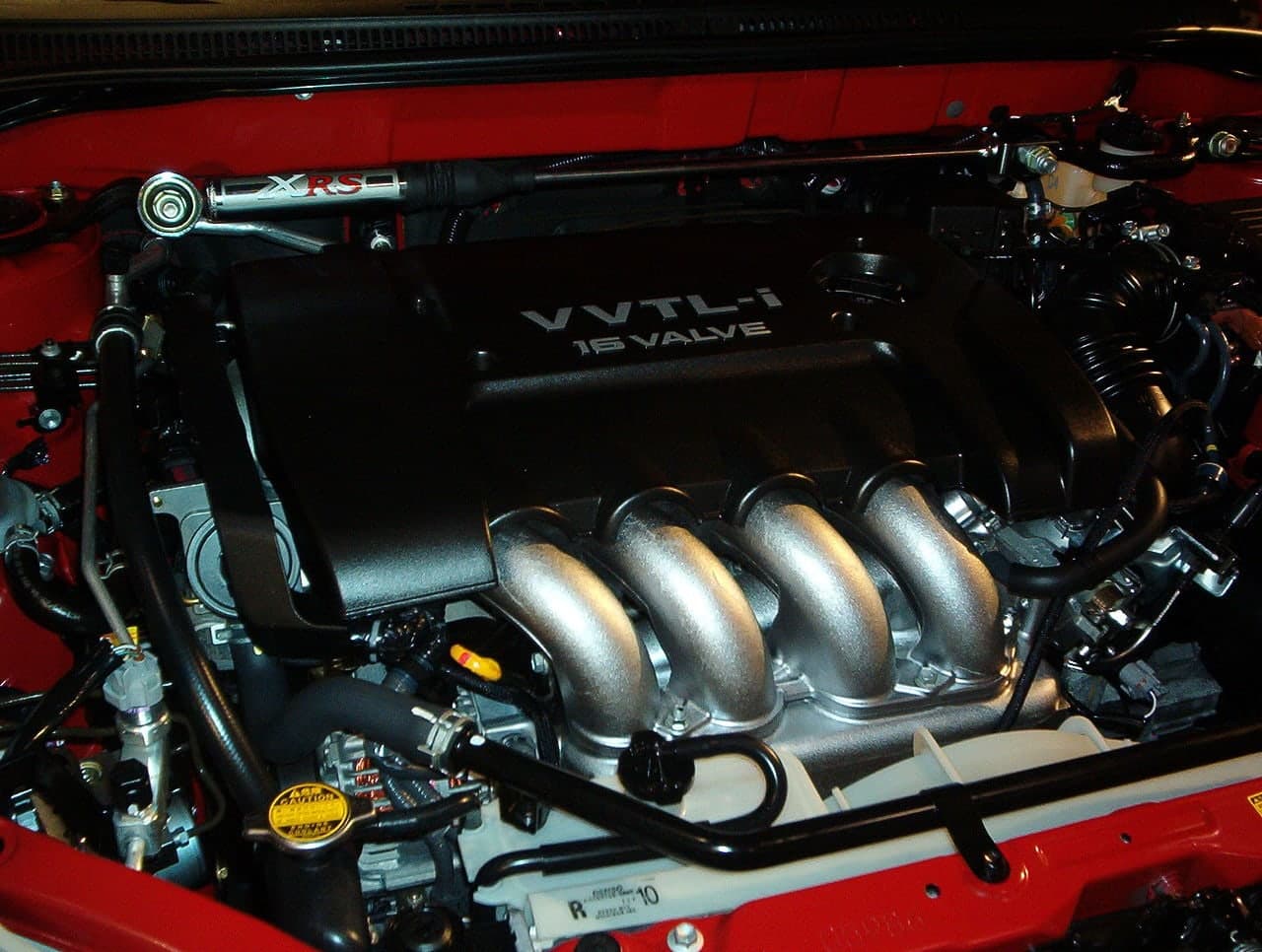
Image: Sr16 neovvl, CC BY-SA 3.0. Licence: CC BY-SA 3.0. Source.