II · THE DISCOVERY · HISTORY OF SCIENCE
Refrigerator
Before refrigeration, keeping food cold meant harvesting ice in winter and hoping it lasted. The machine that changed that moves heat rather than making cold.
At a glance
- Discovery date
- 1856
- What it does
- Transfers heat from inside an insulated box to outside it, cooling the interior below room temperature
- Predecessor
- The icebox, which used ice harvested in winter and stored in insulation
- Effect on food
- Slows bacterial reproduction, reducing spoilage rate
Look closer
It moves heat rather than making cold
A refrigerator does not generate coldness. It contains a heat pump — a device that transfers heat from one place to another. The pump moves heat from inside the insulated compartment to the air outside it, which is why the back or underside of a refrigerator is warm to the touch. The inside cools because heat is being removed, not because cold is being added. Cold, in this sense, is the absence of heat rather than a substance of its own.
The temperature matters for bacteria, not chemistry
The low temperature inside a refrigerator — a few degrees above the freezing point of water — reduces the rate at which bacteria reproduce. Slower reproduction means food spoils more slowly. The temperature does not stop bacterial growth entirely, which is why refrigerated food still spoils eventually, just not as quickly as food left at room temperature. A freezer, which maintains a temperature below the freezing point of water, slows spoilage further still.
The icebox lasted nearly a century and a half
Before the refrigerator, households used an icebox: an insulated cabinet that held a block of ice, usually delivered by an iceman who cut it from frozen lakes in winter and stored it in sawdust. The ice melted slowly, keeping the cabinet cool. The refrigerator replaced this arrangement, which had been common for almost a century and a half, by producing the cooling effect mechanically rather than relying on harvested ice.
The story
A refrigerator is an insulated box with a machine attached that moves heat from inside the box to outside it. The inside cools as a result, reaching a temperature a few degrees above the freezing point of water. That temperature slows the rate at which bacteria reproduce, which slows the rate at which food spoils. The machine doing the work is called a heat pump, and it can be mechanical, electronic or chemical in design.
The technology that made artificial refrigeration possible began developing in the mid-1750s and continued into the early 1800s. The record names 1856 as the discovery date, though what that date marks — whether a working prototype, a patent, or a commercial machine — is not specified in the material here. A working vapour-compression refrigeration system, using the same technology seen in air conditioners, was built in 1834. A commercial ice-making machine was invented in 1854. How these dates relate to one another, and whether the 1856 date refers to a domestic appliance rather than an industrial one, is not stated.
Refrigerators for home use were invented in 1913. In 1923 Frigidaire introduced a self-contained unit — one that did not require separate machinery installed elsewhere in the building. The introduction of Freon, a refrigerant, in the 1920s expanded the refrigerator market during the 1930s. Home freezers as separate compartments, larger than the small space needed for ice cubes, were introduced in 1940. Frozen foods, previously a luxury, became commonplace after that.
The freezer-over-refrigerator style had been the basic design since the 1940s, until side-by-side refrigerators became common. A vapour compression cycle is used in most household refrigerators and freezers. Newer models may include automatic defrosting, chilled water, and ice dispensed from the door.
Commercial refrigerator and freezer units were in use before the common home models appeared. The refrigerator allows the modern household to keep food fresh for longer than was possible with an icebox. Freezers allow people to buy perishable food in bulk and eat it over time, rather than buying only what can be consumed immediately.
Why it mattered then
Before refrigeration, keeping food cold required ice. In climates with cold winters, ice could be cut from frozen lakes, stored in insulated buildings filled with sawdust, and delivered to homes throughout the year. The icebox — an insulated cabinet that held a block of this ice — had been a common household appliance for almost a century and a half before the refrigerator replaced it. But the system depended on winter, on lakes, on storage, and on regular delivery. A refrigerator produced the same cooling effect without any of that infrastructure. A commercial ice-making machine was invented in 1854, which meant ice could be manufactured rather than harvested. But a machine that made ice still required the ice to be transported and the icebox to be restocked. The refrigerator, by contrast, sat in the home and ran continuously. Refrigerators for home use were invented in 1913, and in 1923 Frigidaire introduced a self-contained unit. Commercial refrigerator and freezer units had been in use before the home models became common, which suggests the technology was proven in industry before it reached households. The introduction of Freon in the 1920s expanded the market during the 1930s, and by 1940, home freezers with compartments large enough to store more than ice cubes were being introduced. Frozen foods, which had been a luxury, became commonplace after that.
Why it matters now
The refrigerator is now an essential part of food storage around the world. The low temperature it maintains reduces the reproduction rate of bacteria, which slows spoilage. A refrigerator keeps food at a temperature a few degrees above the freezing point of water — the optimal range for perishable food storage is given as 3 to 5 degrees Celsius. A freezer, which maintains a temperature below the freezing point, slows spoilage further. The effect on daily life is that people can buy perishable food in bulk and store it, rather than shopping for what they will eat that day. Freezers make this even more pronounced: frozen food can be stored for long periods and eaten at leisure. The refrigerator allows the modern household to keep food fresh for longer than was possible before it, which changes both how often people shop and what they can buy. Domestic refrigerators are made in a range of sizes. A large domestic refrigerator stands as tall as a person and may be about one metre wide. Refrigerators and freezers may be free-standing or built into a kitchen. Most household units use a vapour compression cycle — the same technology used in air conditioners. Newer refrigerators may include automatic defrosting, chilled water, and ice from a dispenser in the door. The basic function, though, remains what it was: an insulated box with a heat pump that moves heat from inside to outside, keeping the contents cold.
The surprising detail
The refrigerator replaced an arrangement that had lasted for almost a century and a half. The icebox, which used blocks of ice cut from frozen lakes in winter and stored in sawdust, was a common household appliance for that long before the refrigerator made it obsolete. The infrastructure behind it — ice harvesting, ice storage buildings, ice delivery routes — was substantial, and it worked well enough that the mechanical refrigerator took decades to displace it even after the technology was proven. Commercial refrigerators were in use before home models became common, which suggests the cost or complexity of the machines kept them out of households long after they were practical for industry. Frozen foods were a luxury item until home freezers with compartments large enough to store them became available in 1940. The technology that made artificial refrigeration possible began developing in the mid-1750s, but it was not until 1913 that refrigerators for home use were invented, and not until 1923 that a self-contained unit — one that did not require separate machinery elsewhere in the building — was introduced.
What is disputed
The record gives 1856 as the discovery date but does not specify what that date marks — whether a working prototype, a patent, a commercial machine, or something else. The material notes that a working vapour-compression refrigeration system was built in 1834 and that a commercial ice-making machine was invented in 1854, but how these dates relate to the 1856 discovery date is not explained. The record also does not name who is credited with the discovery.
Remember this
A refrigerator moves heat out of an insulated box. The inside cools because heat is removed, not because cold is added.
Test yourself
Why does a refrigerator slow food spoilage rather than stop it entirely?
The low temperature inside a refrigerator reduces the rate at which bacteria reproduce, which slows spoilage. But it does not stop bacterial reproduction entirely, which is why refrigerated food still spoils eventually, just not as quickly as food left at room temperature. A freezer, which maintains a temperature below the freezing point of water, slows spoilage further, but even frozen food does not last indefinitely. The refrigerator works by slowing a biological process — bacterial growth — rather than halting it.
Go deeper
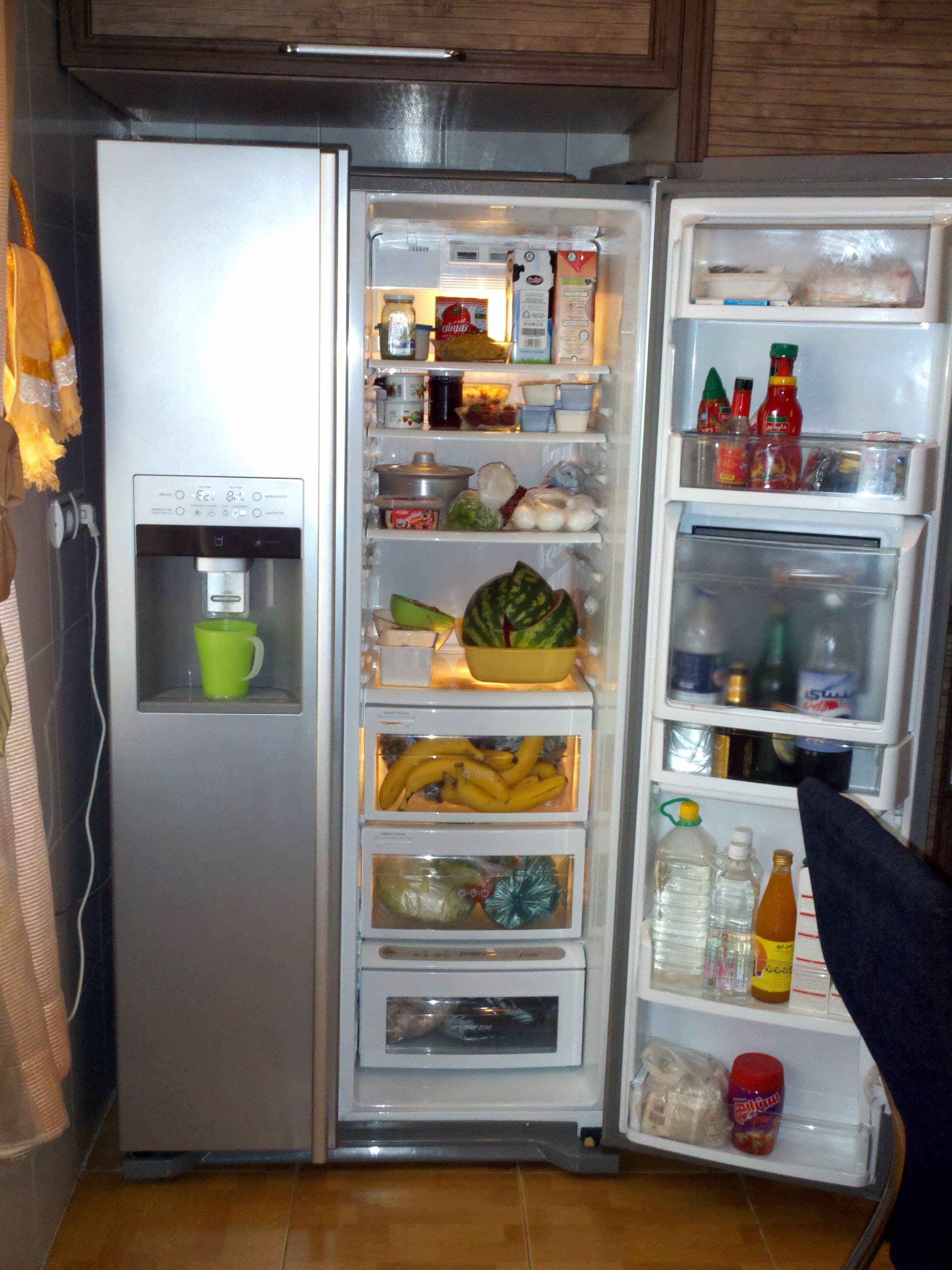
Image: Milad Mosapoor, Attribution. Licence: Attribution. Source.