II · THE DISCOVERY · HISTORY OF SCIENCE
Gunpowder
Before gunpowder, no mixture of substances was known to release energy fast enough to throw a stone from a tube. This one did, and did not blow the tube apart.
At a glance
- Known since
- Roughly the 9th century
- Discoverer
- Berthold Schwarz
- Composition
- Sulfur, charcoal (carbon), and potassium nitrate (saltpetre)
- Classification
- Low explosive (deflagrates rather than detonates)
Look closer
Three ingredients, two roles
Sulfur and charcoal act as fuels — substances that burn when given oxygen. Potassium nitrate, also called saltpetre, is the oxidiser: it supplies the oxygen the other two need, which means the mixture does not depend on air to burn. Pack it tight in a closed space and it will still combust, releasing gas that expands and pushes outward.
Low explosive means subsonic
Gunpowder is classed as a low explosive, which refers not to its power but to the speed at which it burns. It deflagrates — burns at subsonic speeds — rather than detonating, which would produce a supersonic shockwave. That slower burn matters because it generates enough pressure to force a projectile from a gun barrel at high speed without usually rupturing the barrel itself. A faster explosion would shatter the weapon.
Good for pushing, less good for shattering
The subsonic burn makes gunpowder effective as a propellant but less suitable for breaking rock or fortifications, where a high explosive that detonates would deliver more shattering force. Gunpowder was nonetheless used to fill artillery shells and for blasting in mining and construction until the second half of the 19th century, when the first high explosives became available.
The story
Gunpowder is a mixture of three powders: sulfur, charcoal — which is mostly carbon — and potassium nitrate, commonly called saltpetre. The sulfur and charcoal are fuels. The potassium nitrate is an oxidiser, meaning it supplies oxygen. When the mixture burns, it does not need air: the oxygen comes from within the mixture itself, which is why gunpowder packed into a closed tube will still combust.
The combustion releases gas rapidly, and that expanding gas can push a projectile. Pack gunpowder behind a stone or metal ball in a barrel, light it, and the pressure generated is enough to force the projectile out at high speed. That makes it a propellant — a substance that moves things by burning.
Gunpowder is classified as a low explosive. That term refers to the speed of decomposition. Low explosives deflagrate, meaning they burn at subsonic speeds. High explosives detonate, producing a supersonic shockwave. The distinction matters because the slower burn of gunpowder generates pressure without usually rupturing the barrel of a gun. A faster, detonating explosive would shatter the weapon.
The same property that makes gunpowder useful in firearms makes it less effective for breaking rock or fortifications. Its relatively low brisance — breaking or shattering power — means it delivers less force to a target than a high explosive would. It was widely used in fused artillery shells and for blasting in mining and civil engineering projects, but that use declined in the second half of the 19th century as higher-yield explosives became available.
The reference material states that gunpowder was originally developed by Taoists for medicinal purposes and was first used for warfare around AD 904. Wikidata records that it has been known since roughly the 9th century and credits Berthold Schwarz as the discoverer, though the precision is to the century rather than to a year or day. The record does not resolve how a 9th-century Chinese development and a European figure both appear in the same discovery account, and the lesson cannot clarify what the sources leave unclear.
Why it mattered then
Before gunpowder, no chemical mixture was known that could release energy fast enough to propel a projectile from a tube without destroying the tube. Mechanical devices — catapults, trebuchets, bows — stored energy and released it, but they required large structures or human effort for each shot. A substance that burned rapidly in a confined space, generating gas pressure that could push a ball or stone, changed what a single person with a handheld or mounted tube could do. The reference material states that gunpowder was first used for warfare around AD 904, and its use in weapons spread from there. It made firearms and artillery possible: weapons that did not depend on the strength of a spring, a twisted rope, or an arm, but on a chemical reaction that could be triggered with a flame. That shift altered siege warfare, because a cannon loaded with gunpowder could batter fortifications that had previously withstood assault. It also altered personal combat, because a firearm could be operated by someone without the years of training required for a longbow. The same properties that made gunpowder useful in war made it useful in construction. Packed into drilled holes in rock and ignited, it could fracture stone for quarrying or tunnel-building. That application continued until the second half of the 19th century, when higher explosives replaced it.
Why it matters now
Gunpowder is no longer the propellant in modern firearms. Smokeless powder replaced it because it produces less smoke and residue, which means a weapon fouls more slowly and a shooter's position is less visible. The reference material notes that gunpowder's relative inefficiency also led to its replacement in industrial blasting by dynamite and ammonium nitrate mixed with fuel oil, both of which deliver more force per unit of material. What remains is its use in pyrotechnics — fireworks and signalling devices — where the visible smoke and flame that made it obsolete in firearms are part of the effect. It is also still used in some historical firearms and in black powder shooting as a recreational activity, where the technology is preserved for its own interest rather than for any advantage it offers over modern alternatives. The concept of a low explosive that deflagrates rather than detonates is still relevant in understanding how propellants work. The distinction between pushing and shattering, between subsonic burn and supersonic shockwave, remains the basis for choosing explosives in mining, demolition, and military applications. Gunpowder is no longer the substance used, but the principle it demonstrates — that the speed of energy release determines what a substance is good for — is still applied.
The surprising detail
The same property that makes gunpowder effective in a gun — its subsonic burn — is what makes it less effective for breaking things. A high explosive that detonates delivers a shockwave that shatters rock or steel. Gunpowder burns slower, generating pressure that pushes rather than smashing. That is why it works as a propellant without destroying the barrel, and also why it was eventually replaced in mining and demolition by explosives that release energy faster. The material that made firearms possible was, by the standard of later explosives, relatively gentle.
What is disputed
Wikidata credits Berthold Schwarz as the discoverer and records the discovery date as roughly the 9th century. The reference material states that gunpowder was originally developed in China by Taoists and first used in warfare around AD 904. The record does not clarify how a European figure and a Chinese origin both appear in the same account, and the sources consulted do not resolve the discrepancy.
Remember this
Gunpowder burns subsonic, which is why it pushes a projectile without shattering the barrel.
Test yourself
Gunpowder is classed as a low explosive, not because it is weak but because of how fast it burns. Why does that slower burn matter for its use in firearms?
A low explosive deflagrates — burns at subsonic speeds — rather than detonating with a supersonic shockwave. That slower burn generates enough pressure to propel a projectile from a gun barrel at high speed, but not so much force that it ruptures the barrel. A faster, detonating explosive would shatter the weapon. The same subsonic burn that makes gunpowder safe to use in a gun also makes it less effective for breaking rock or fortifications, where a high explosive's shockwave would deliver more shattering force. The speed of energy release determines what the substance is useful for.
Go deeper
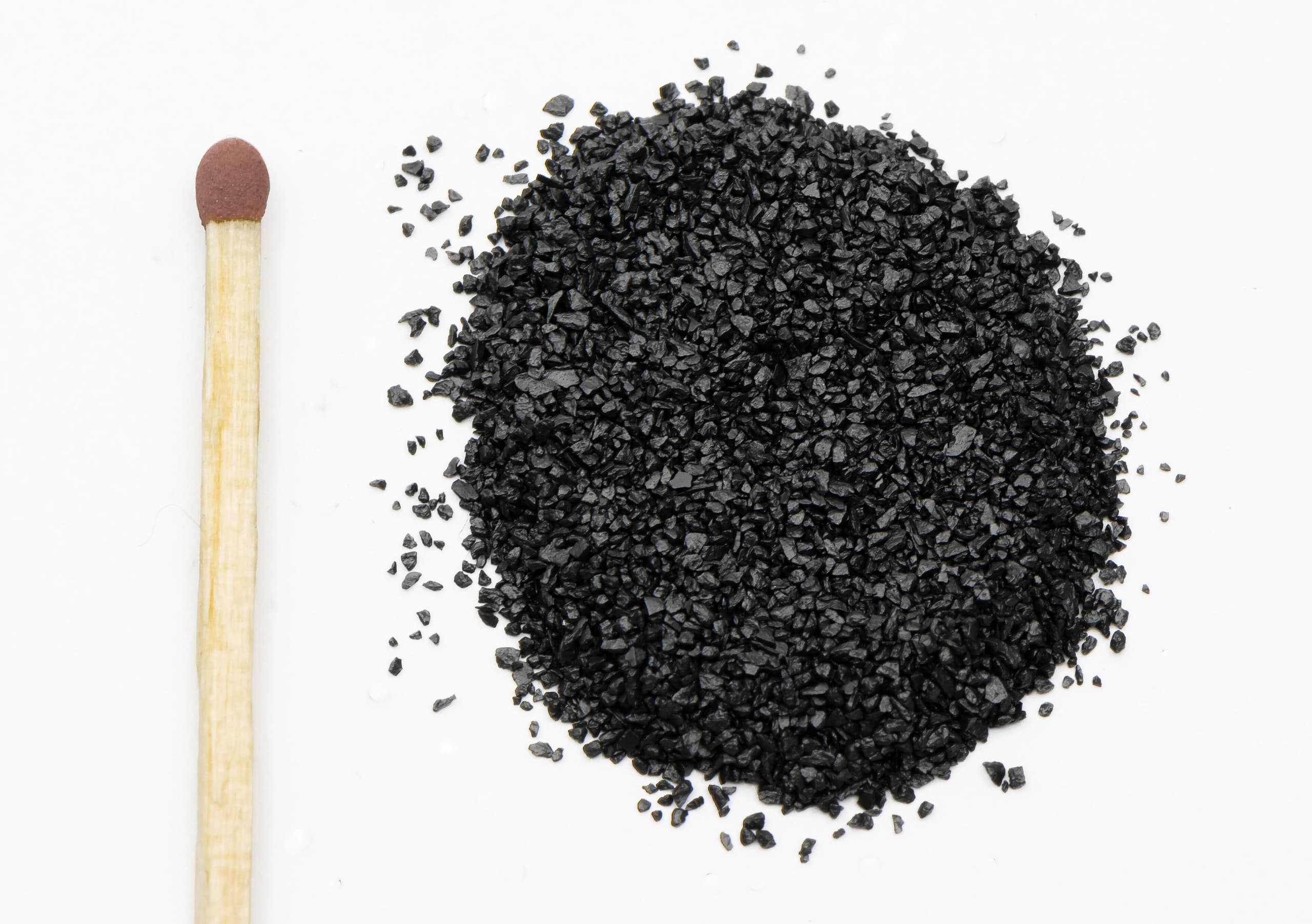
Image: Jacek Halicki, CC BY-SA 4.0. Licence: CC BY-SA 4.0. Source.