II · THE DISCOVERY · HISTORY OF SCIENCE
Electromagnetic radiation
The waves Hertz made in his laboratory are the same waves that carry radio signals, heat your skin in sunlight, and let doctors see inside your body.
At a glance
- Discovered
- 13 November 1886
- Discoverer
- Heinrich Hertz
- What it is
- A self-propagating wave of the electromagnetic field
- Behaviour
- Travels at the speed of light in a vacuum
Look closer
A self-propagating wave
The phrase means the wave does not need a medium to travel through — no air, no water, no solid material. An electric field changing in time creates a magnetic field; that magnetic field, changing in turn, creates an electric field. The two sustain each other as they move through space. This is why light from the Sun reaches Earth across a vacuum.
The spectrum is a classification by frequency
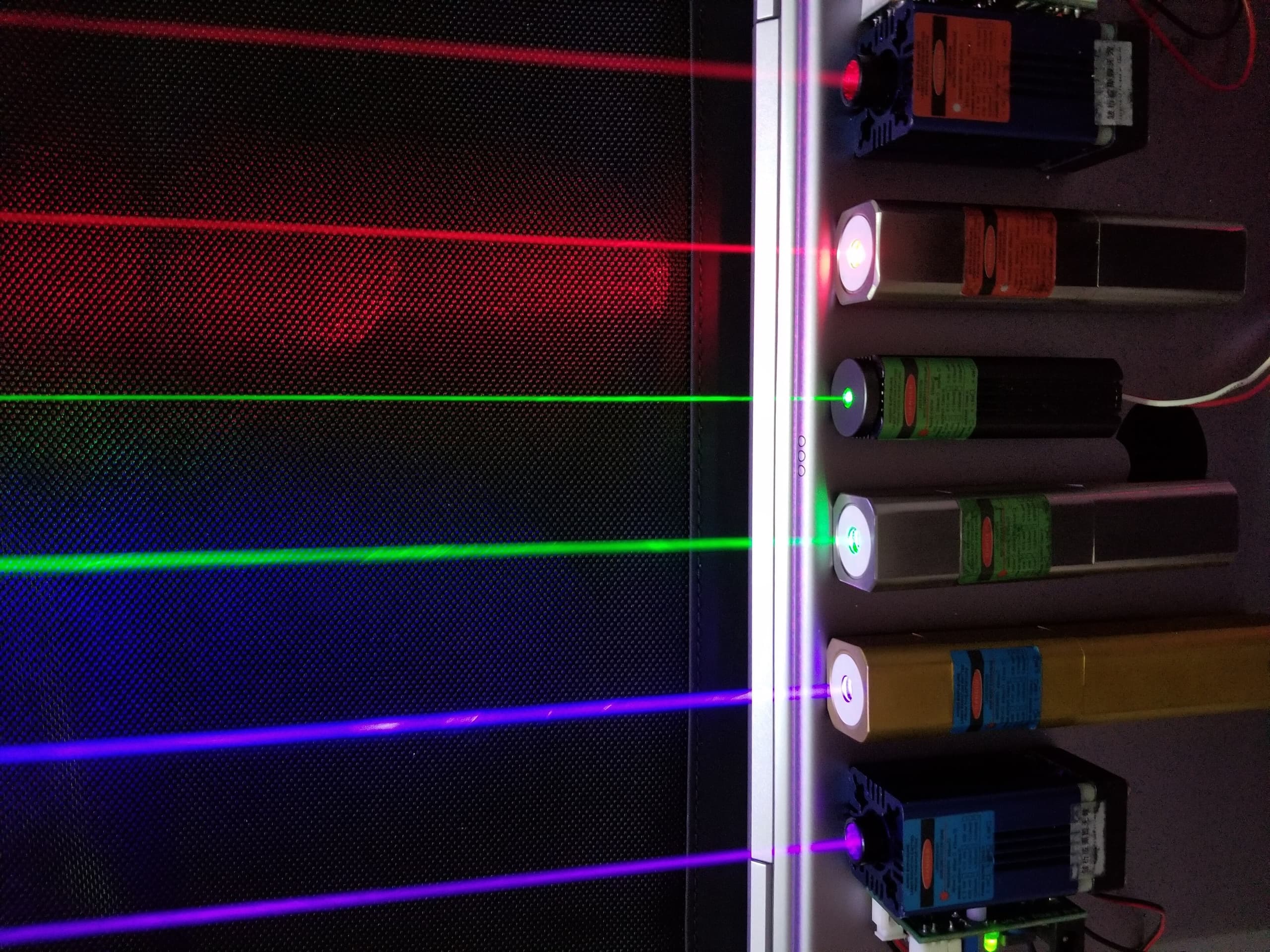
Electromagnetic radiation spans from radio waves through microwaves, infrared, visible light, ultraviolet, X-rays, to gamma rays. These names mark regions of a continuous spectrum, classified by frequency — the number of wave peaks passing a point each second. Frequency and wavelength are inversely proportional: high frequency means short wavelength. The different names reflect different sources and different interactions with matter, not different kinds of wave.
Wave–particle duality
Electromagnetic radiation behaves both as a wave and as discrete particles called photons. The wave picture explains interference and diffraction; the particle picture explains how radiation is emitted and absorbed in fixed amounts of energy. Quantum mechanics describes both behaviours as aspects of the same phenomenon, though the reference material does not detail when each picture applies.
The story
On 13 November 1886, Heinrich Hertz demonstrated that invisible waves could cross a laboratory room and produce a spark in a coil that was not connected to his apparatus by any wire. What he had made were electromagnetic waves — disturbances in the electromagnetic field that carried energy through space without needing a medium to travel through.
The idea that such waves existed had been predicted mathematically in earlier work, which showed that a changing electric field would create a magnetic field, and that changing magnetic field would in turn create an electric field. The two would sustain each other, propagating through space as a wave. The prediction included that these waves would travel at the speed of light, and proposed that light itself was an electromagnetic wave. Hertz's experiment confirmed the prediction.
What Hertz produced were waves at a much lower frequency than visible light — what we now call radio waves. His apparatus used a spark gap to generate rapidly oscillating electric currents, which radiated electromagnetic waves. A receiving coil across the room, tuned to the same frequency, produced its own spark when the waves reached it. The demonstration showed that electromagnetic waves could be generated artificially, that they propagated through air, and that they could be detected at a distance.
Electromagnetic radiation is produced by accelerating charged particles. The Sun and other celestial bodies emit it; artificial sources generate it for various applications. The interaction with matter depends on wavelength. Radio waves enable broadcasting and wireless communication. Infrared is used in thermal imaging. Visible light is essential for vision. Higher-energy radiation — X-rays and gamma rays — is applied in medical imaging, cancer treatment, and industrial inspection. Higher energy electromagnetic radiation, especially in the ultraviolet range and above, has been associated with negative health effects, though the reference material does not specify which effects or at what exposures.
In quantum mechanics, electromagnetic radiation consists of photons — uncharged elementary particles with zero rest mass. Photons are the quanta of the electromagnetic field, meaning the field's energy comes in discrete packets rather than continuous amounts. Quantum electrodynamics is the theory of how electromagnetic radiation interacts with matter on an atomic level. Quantum effects provide additional sources of electromagnetic radiation, such as the transition of electrons to lower energy levels in an atom and black-body radiation — the radiation emitted by any object due to its temperature.
Why it mattered then
Before Hertz's demonstration, the prediction of electromagnetic waves was a mathematical result without experimental confirmation. Physicists debated whether the waves existed, and if they did, whether they could be produced and detected in a laboratory. Hertz showed both were possible. His apparatus made waves at will and detected them across a room, turning a theoretical prediction into an observable phenomenon. The demonstration opened a question: if invisible waves could cross a room, could they cross greater distances? Could they carry information? The reference material does not record how quickly those questions were pursued or answered, but the principle Hertz established — that electromagnetic waves could be generated, transmitted, and detected — made wireless communication conceivable in a way it had not been before.
Why it matters now
Electromagnetic radiation is the mechanism behind radio, television, mobile phones, Wi-Fi, and satellite communication. The waves Hertz demonstrated at low frequencies are the same kind of wave as visible light, X-rays, and gamma rays, differing only in frequency. That unity lets physicists treat the entire spectrum with the same theory. Medical imaging relies on electromagnetic radiation at different frequencies: X-rays to see bone, infrared to detect heat, visible light in endoscopy. Cancer treatment uses higher-energy radiation to damage tumour cells. Industrial inspection uses X-rays to examine welds and gamma rays to check for cracks. Thermal cameras detect infrared radiation emitted by warm objects. All of these applications rest on the understanding that electromagnetic waves carry energy and interact with matter in ways that depend on their wavelength. Quantum mechanics describes electromagnetic radiation as both wave and particle, and that description is necessary to explain how atoms emit and absorb light, how solar panels generate electricity, and how lasers work. The theory Hertz helped confirm experimentally is the foundation for much of modern physics and engineering.
The surprising detail
Hertz's demonstration used a spark gap and a coil — simple apparatus by the standards of later physics experiments. The waves he produced were at frequencies far below visible light, yet they confirmed a theory that applied to the entire spectrum, from radio waves to gamma rays. The reference material does not record whether Hertz anticipated the practical applications that followed, or whether he saw the experiment as a test of theory and nothing more. What is clear is that the principle he established — that electromagnetic waves could be made, sent, and received — was the starting point for wireless communication, though the reference material does not say how many years passed before that application was developed.
What is disputed
The reference material states that higher energy electromagnetic radiation, especially in the ultraviolet range and above, has been associated with negative health effects, but does not specify which effects, at what doses, or under what conditions. The claim is recorded here as the material gives it, without detail.
Remember this
Electromagnetic waves are electric and magnetic fields sustaining each other as they travel through space, carrying energy without needing a medium.
Test yourself
Why does electromagnetic radiation not need air or any other medium to travel through, unlike sound waves?
A changing electric field creates a magnetic field, and that changing magnetic field creates an electric field in turn. The two fields sustain each other as they propagate through space, so the wave does not need a material medium to carry it. Sound, by contrast, is a compression wave in a substance — air, water, or a solid — and cannot travel where there is no material to compress. This is why light from the Sun crosses the vacuum of space to reach Earth, but there is no sound in space.
Go deeper
Image: 彭嘉傑 at Chinese Wikipedia. Licence: CC BY-SA 3.0. Source.