II · THE DISCOVERY · HISTORY OF SCIENCE
HIV
Knowing that a collection of symptoms forms a syndrome is not the same as knowing what causes it. Identifying HIV gave the epidemic a biological target.
At a glance
- Discovered
- 1983
- Type
- Two species of Lentivirus, a subgroup of retrovirus
- Causes
- Acquired immunodeficiency syndrome (AIDS)
- Transmission
- Blood, semen, vaginal fluids, breast milk
Look closer
Two species, one acronym
HIV is not one virus but two species of Lentivirus. Both infect humans, both cause the same syndrome over time, and both carry the same three-letter name. The distinction matters in research and epidemiology, but the shared mechanism — progressive immune failure — is what the name captures.
A subgroup of retrovirus
Lentivirus is a subgroup within the larger category of retroviruses, viruses that insert their genetic material into the host cell's DNA. That insertion is what makes the infection permanent: once HIV has written itself into a cell's genome, that cell carries the instructions to make more virus. The immune system cannot clear what has become part of the cell itself.
The target is the immune system itself
HIV infects the cells that coordinate the body's immune response: helper T cells, specifically those carrying a surface protein called CD4. As the virus kills these cells, the immune system loses its ability to mount a defence. The infections and cancers that follow are called opportunistic because they exploit the absence of immunity — they thrive only when the guard is down.
The story
Human immunodeficiency virus was identified in 1983. By then, doctors had been seeing clusters of patients with a shared pattern: infections that a healthy immune system would suppress, cancers that were rare outside of people whose immunity was already compromised, and a progressive decline that ended in death. The syndrome had a name — acquired immunodeficiency syndrome, or AIDS — but not a cause.
The virus responsible is a retrovirus, meaning it carries its genetic information as RNA and converts it into DNA once inside a host cell. That DNA is then inserted into the cell's own genome, making the infection permanent. HIV belongs to a subgroup of retroviruses called lentiviruses, from the Latin for slow, a reference to the long interval between infection and the onset of disease. Without treatment, that interval is estimated at nine to eleven years, depending on the subtype.
What HIV does is dismantle the immune system from within. It infects helper T cells, the white blood cells that carry a surface protein called CD4 and coordinate the body's response to infection. The virus also infects macrophages and dendritic cells, other components of the immune system. As CD4+ T cell numbers fall, the body loses what is called cell-mediated immunity — the ability to recognise and destroy infected or abnormal cells. Below a critical threshold, the immune system can no longer suppress infections that it would ordinarily control, and the opportunistic infections and cancers that define AIDS begin to appear.
Transmission occurs through contact with blood, semen, pre-ejaculate, vaginal fluids, or breast milk. The virus is present in these fluids both as free particles and inside infected immune cells. Sexual transmission is the most common route, but non-sexual transmission occurs from mother to infant during pregnancy, childbirth, or breastfeeding. Research has shown that if an HIV-positive person maintains an undetectable viral load through treatment, the virus is not transmitted during sex without a condom, a finding that applies to both same-sex and opposite-sex couples.
The mechanisms by which HIV reduces CD4+ T cell numbers are several. Some infected cells are killed directly by the virus. Others die through pyroptosis, a form of inflammatory cell death that occurs when the infection is aborted partway through. Uninfected bystander cells die through apoptosis, a programmed cell death triggered by signals from the infected environment. And some infected cells are killed by CD8+ cytotoxic lymphocytes, immune cells that recognise and destroy cells carrying viral markers. The result, through multiple pathways, is the same: a progressive loss of the cells the immune system depends on.
Why it mattered then
Before 1983, the syndrome existed but its cause did not have a name. Doctors could describe the pattern of immune collapse and the infections that followed, but they could not identify the agent responsible. Isolating the virus gave the epidemic a biological target. It meant that blood supplies could be screened, that transmission routes could be traced with precision, and that research could begin on drugs that might interfere with the virus's replication. The identification did not provide a treatment immediately, but it provided the necessary first step: knowing what to treat.
Why it matters now
HIV remains a global public health challenge, but the tools to manage it have changed the trajectory of infection. Antiretroviral therapy can suppress the virus to undetectable levels, preventing both disease progression and transmission. Pre-exposure prophylaxis — medication taken by people at risk of infection — has become a preventive tool. The finding that an undetectable viral load means the virus cannot be transmitted sexually has reshaped both treatment and prevention strategies. What was, in the early years of the epidemic, a diagnosis with no treatment and a predictable outcome, is now a chronic condition that can be managed with daily medication. The virus has not been eradicated, and no vaccine exists, but the gap between infection and immune collapse is no longer fixed.
The surprising detail
The virus was identified in 1983, but the mechanisms by which it kills immune cells are plural, not singular. HIV does not simply infect and destroy. Some cells it kills directly. Others die because the infection triggers an inflammatory self-destruct sequence. Still others are killed by the immune system itself, which recognises them as compromised and destroys them. And some uninfected cells, caught in the inflammatory environment the virus creates, die as bystanders. The syndrome is the sum of these mechanisms, not the product of one.
What is disputed
The discovery date of 1983 is recorded in Wikidata without attribution to a specific laboratory or researcher, though the scientific literature documents independent isolations of the virus in that year. The naming of the virus was not settled immediately, and the current designation — human immunodeficiency virus — was adopted later to resolve competing names from different research groups.
Remember this
HIV was identified in 1983. It infects the immune cells that coordinate defence, and without treatment, it dismantles immunity over a period of years.
Test yourself
Why does the interval between HIV infection and the onset of AIDS matter for understanding the virus?
The interval — estimated at nine to eleven years without treatment — reflects the nature of the virus as a lentivirus, a slow-acting retrovirus. HIV does not cause immediate immune collapse. Instead, it integrates into the host's cells and progressively reduces the number of CD4+ T cells through multiple mechanisms over years. That delay meant the epidemic was spreading long before the syndrome was recognised, because people carried and transmitted the virus while appearing healthy. It also means that treatment, which suppresses viral replication, can prevent the progression to AIDS if started before the immune system is irreparably damaged.
Go deeper
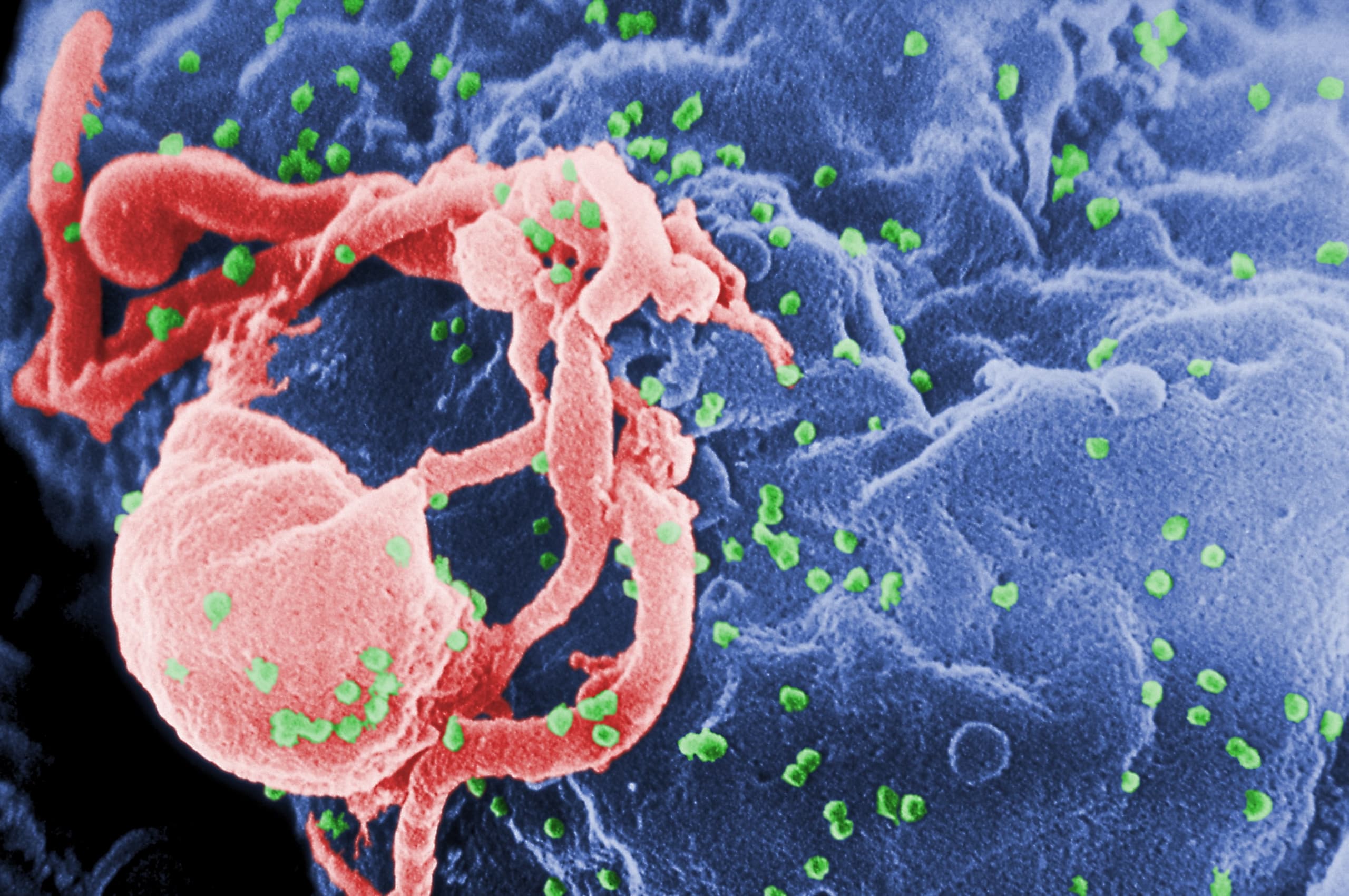
Image: Photo Credit: C. Goldsmith Content Providers: CDC/ C. Goldsmith, P. Feorino, E. L. Palmer, W. R. McManus, Public domain. Licence: Public domain. Source.